



-
-
-
Total payment:
-



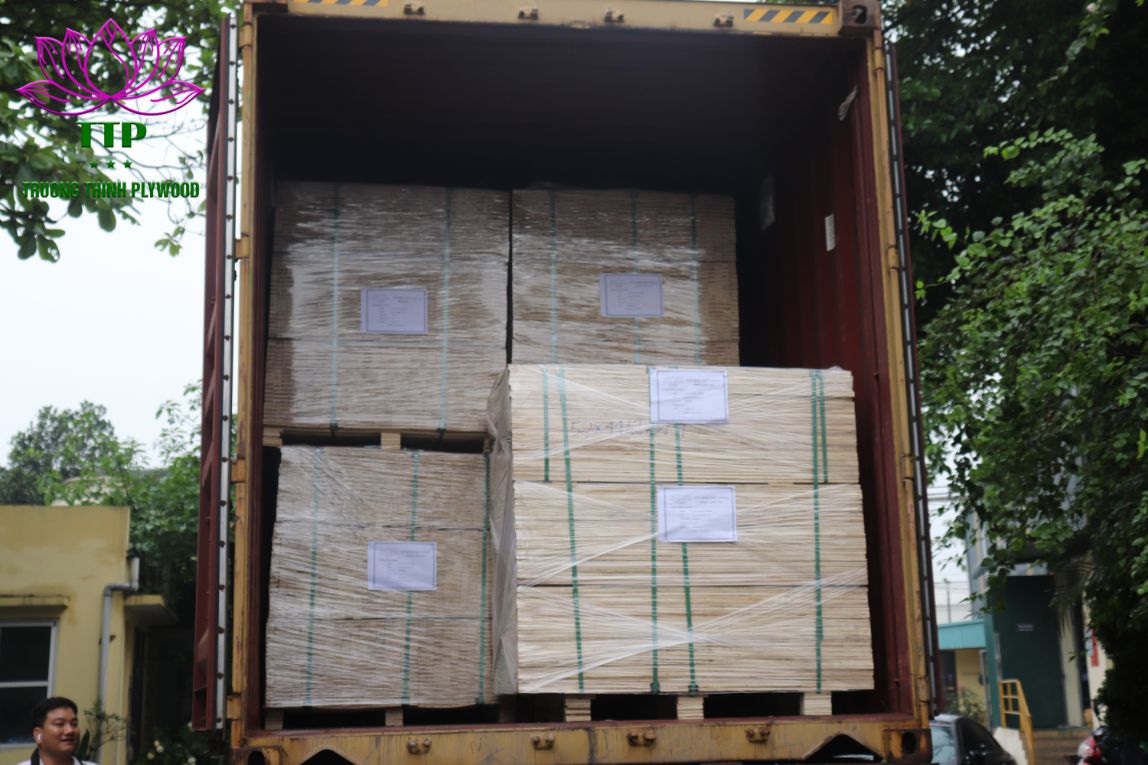
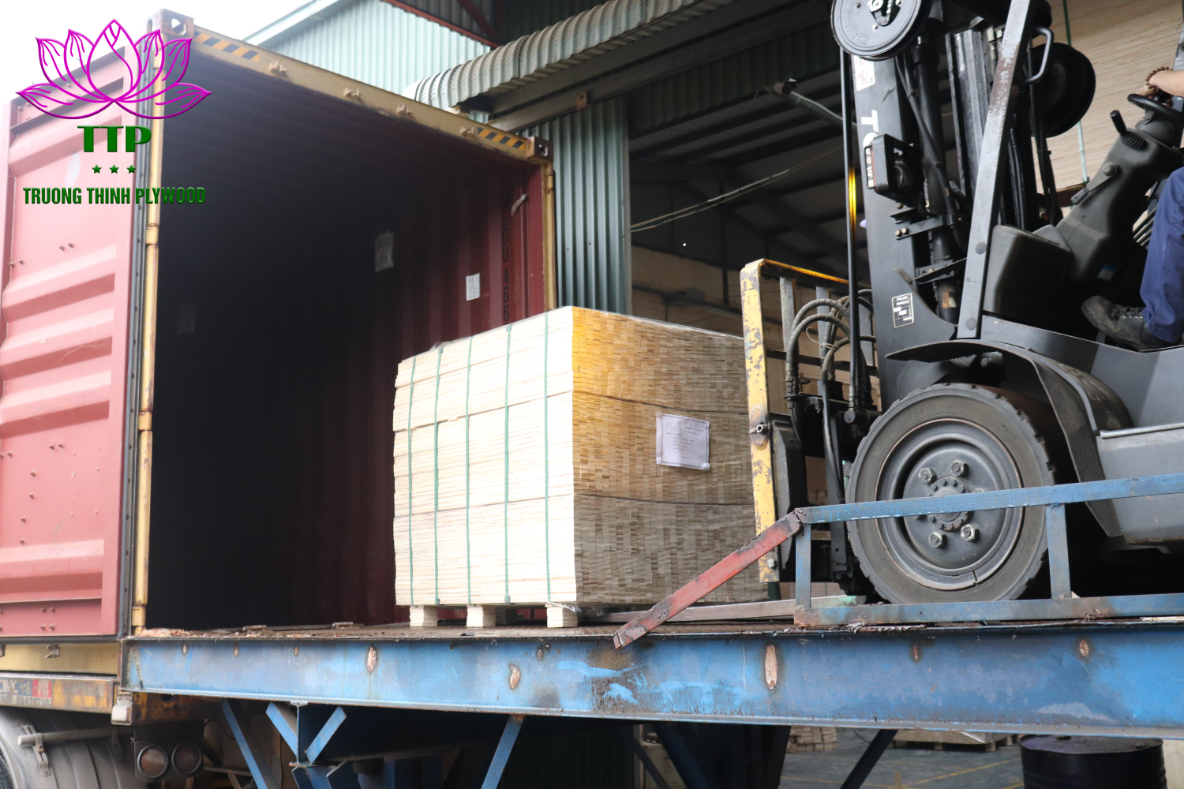
Load container of LVL to the USA
Posted by Đỗ Tiến Hải at 17/04/2023
Introduction
The United States is one of the world’s largest consumers of Laminated Veneer Lumber (LVL), using it across furniture manufacturing, construction, and industrial packaging. This growing demand has positioned Vietnam and other Asian suppliers as key sources for consistent, export-ready LVL. However, shipping LVL to the USA requires more than producing the material. Exporters must follow strict standards on moisture, packaging, fumigation, documentation, and container loading to avoid damage, delays, or customs issues. This guide provides a clear, practical overview of how to load a container of LVL to the USA, covering best practices that help exporters and buyers ensure a smooth and compliant shipment.
1. Understanding LVL Demand in the United States
The U.S. market consumes large volumes of LVL for both residential and industrial applications. Furniture manufacturers use LVL for bed slats, sofa frames, door rails, and cabinetry structures. Construction firms rely on LVL beams, headers, scaffold planks, and engineered framing components. Packaging companies import LVL in strips or boards for crate reinforcement, pallet runners, and industrial blocking.
This broad application range has created a stable and expanding market for imported LVL. Vietnam in particular has become a preferred supplier thanks to its flexible production, FSC-certified materials, and ability to produce customized dimensions for American specifications.
To supply this market effectively, exporters must understand U.S. import norms before loading even begins.
2. Production and Pre-Shipment Preparation
The LVL production phase is critical for ensuring container loads are accepted by U.S. customs and American clients. Manufacturers must focus on several factors:
Moisture Content
The moisture level of LVL destined for the United States typically should range between 8–14% depending on end use. Excessive moisture leads to mold, warping, or delamination during the long ocean transit.
Adhesive Requirements
U.S. buyers often specify E0 or E1 formaldehyde requirements. Third-party lab testing is encouraged for larger contracts.
Dimensions and Cutting Accuracy
American markets rely on imperial sizes as well as metric equivalents. Common dimensions include:
- Bed slats (e.g., 65 × 17 mm; 70 × 19 mm)
- Structural pieces (38 × 89 mm; 38 × 140 mm)
- Door core LVL strips
- Industrial LVL blocks (38 × 90 × 48 in)
Cutting tolerance must remain consistent across the shipment.
Surface and Edge Quality
Most LVL bound for the U.S. requires clean edges, consistent lamination, and minimal veneer gaps. Surface irregularities may lead to claims upon arrival.
Pre-shipment inspections by buyers or third-party QC teams (e.g., SGS, Intertek) are increasingly common and recommended.
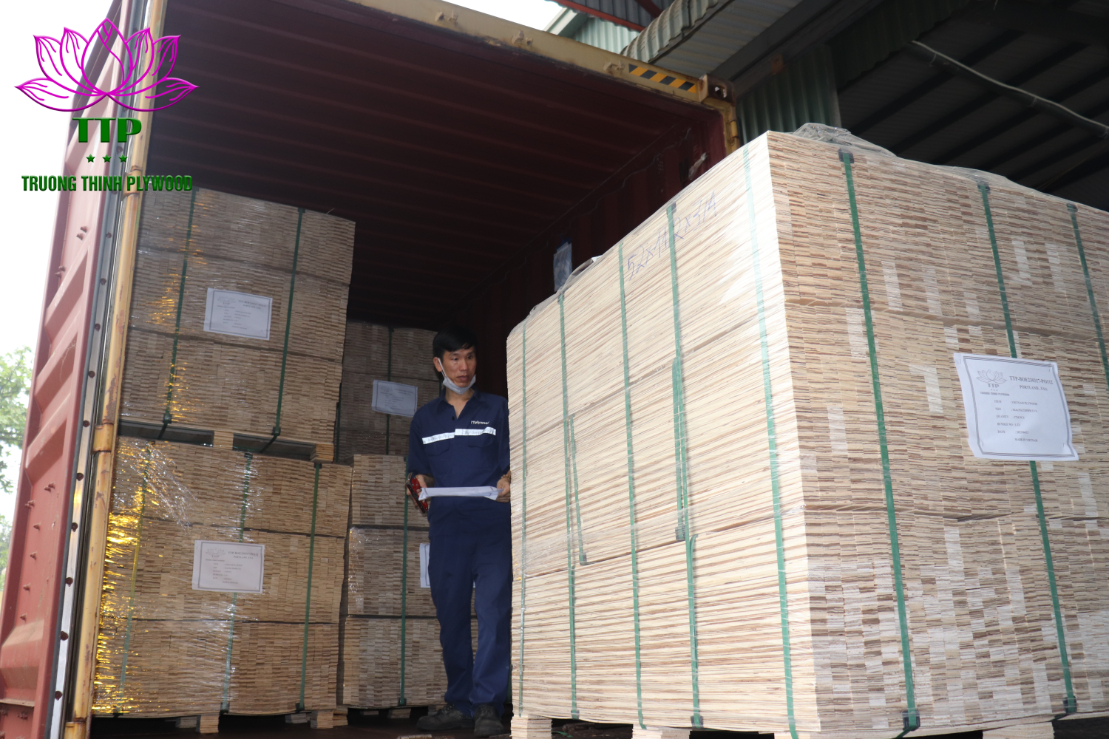
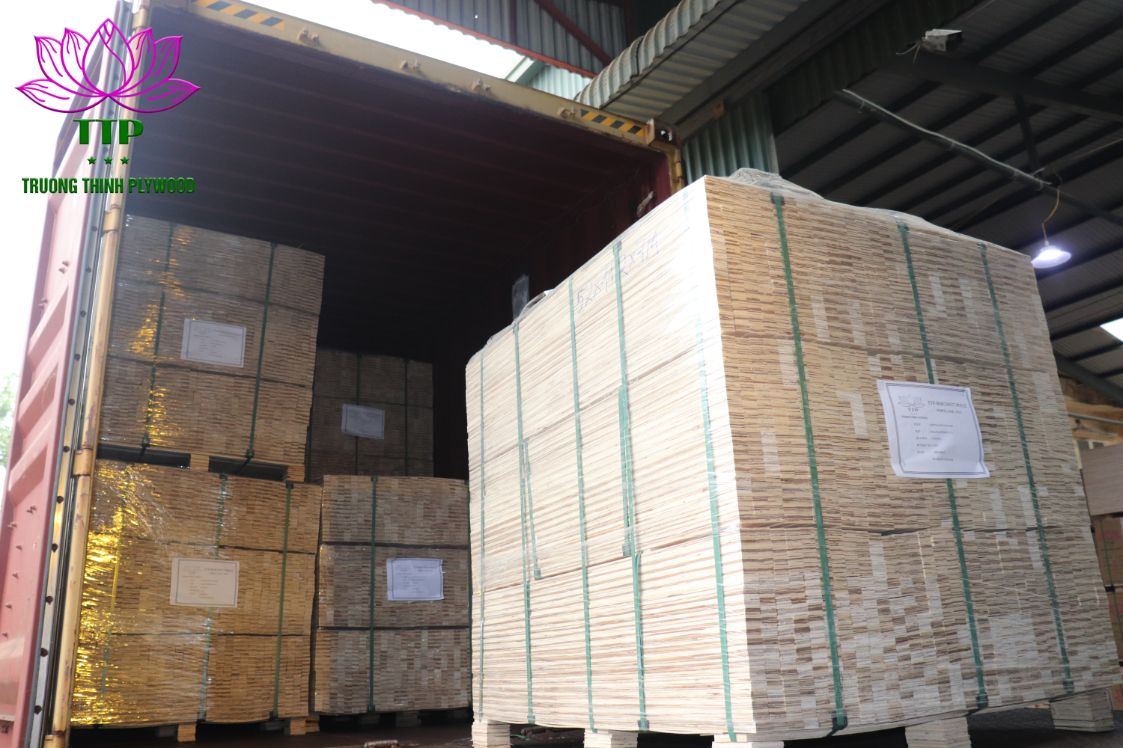
3. Packaging, Bundling, and Protection Requirements
Proper packaging enhances safety during loading and prevents product damage through the 25–35 day ocean journey. Exporters typically follow international packaging conventions:
Bundling Method
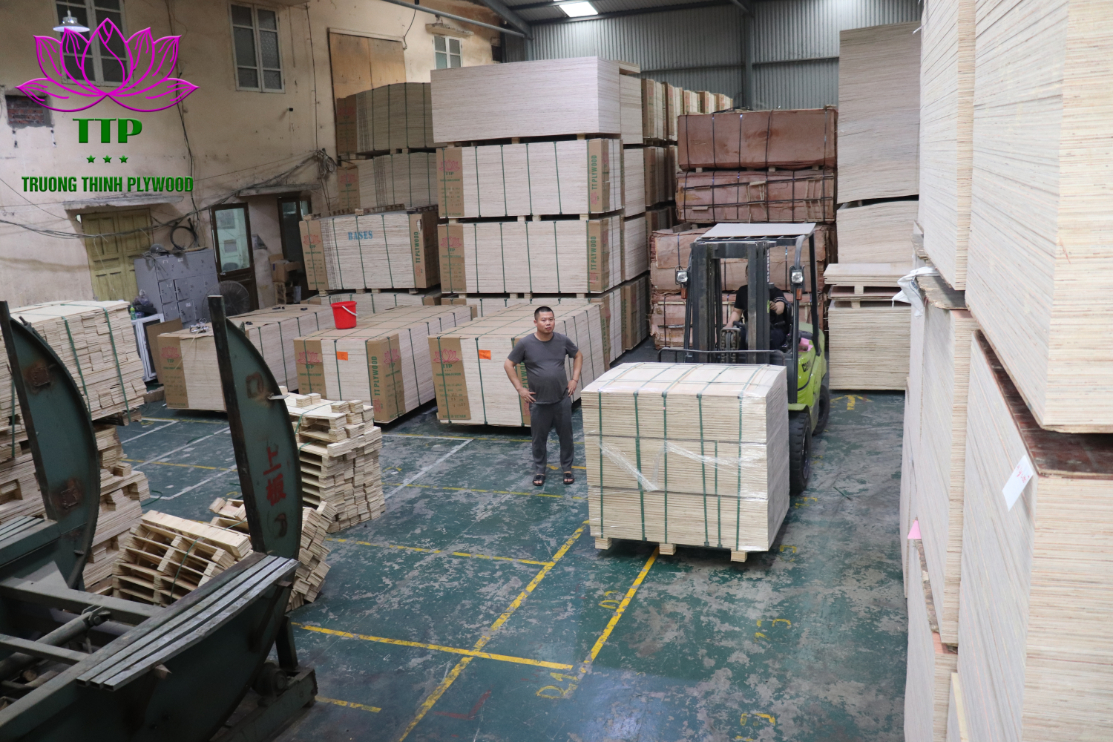
LVL is strapped into bundles using PET or steel straps. Bundles must be uniform, stable, and easy to handle by forklift or clamp truck. The number of pieces per bundle depends on thickness and customer requirements.
Edge Protection
Plastic or rubber corner protectors prevent strap pressure from damaging the top veneer layers of LVL.
Plastic Wrapping
For shipments to the USA, full plastic wrapping is highly recommended due to humidity changes in transit. Many buyers request:
- Internal moisture barrier
- Outer PE shrink wrap
- Waterproof pallet cover
These layers reduce mold risk and prevent moisture uptake.
Marking
Each bundle typically includes:
- Supplier name
- Product description (LVL / dimension / grade)
- Moisture level (optional)
- Country of origin (Vietnam)
- Bundle number and batch references
Bundle consistency is essential for fast unloading upon arrival.
4. Container Selection and Weight Planning
Selecting the right container affects shipping cost, loading capacity, and safety.
Container Options
- 40HC (High Cube) is the most common choice for LVL due to its taller interior height.
- 20GP is rarely used unless the product is extremely dense or heavy.
Weight Restrictions
The United States applies strict weight limits depending on port, state, and trucking regulations. Overloaded containers risk fines and penalties.
General guideline:
- Gross container weight: approx. 27,000–28,000 kg
- Payload: usually 25,000–26,000 kg
- Variations exist depending on discharge port (e.g., LA/LB vs Houston vs New York)
Exporters must calculate bundle volumes, LVL density, and internal space efficiency to avoid overweight issues.
5. How to Load a Container of LVL for the USA

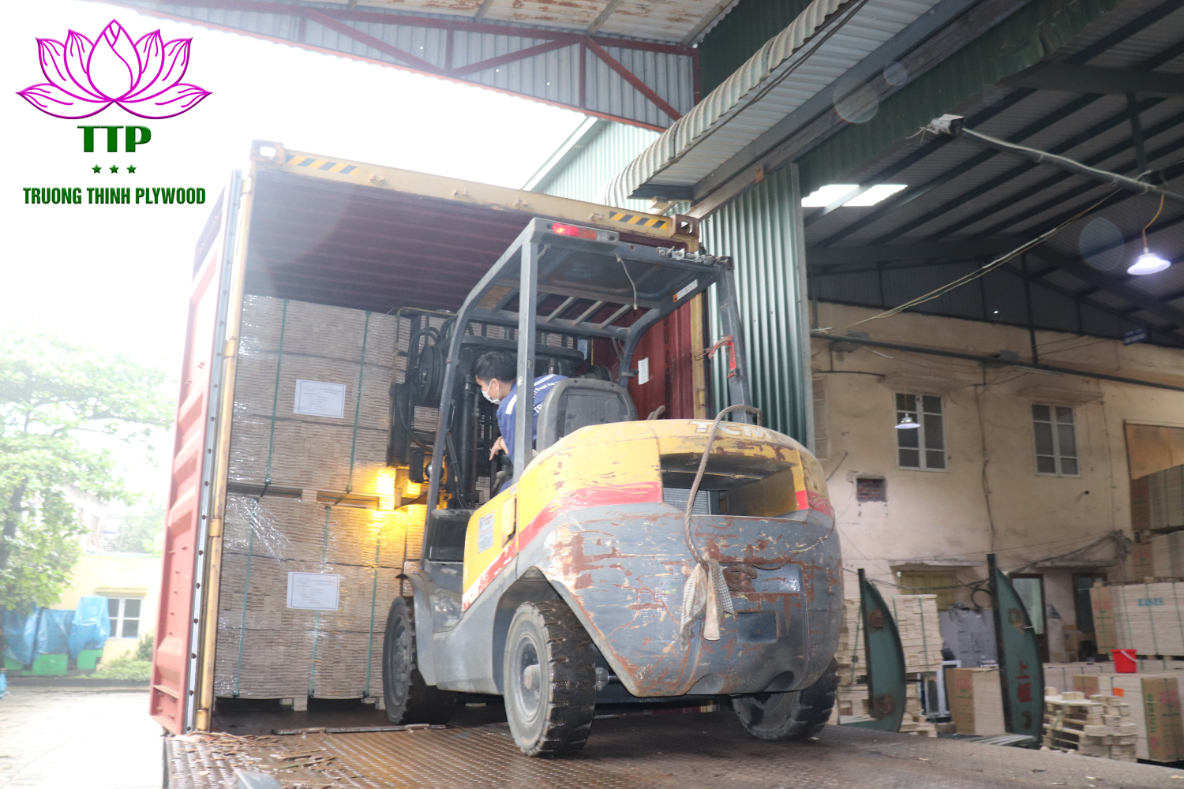
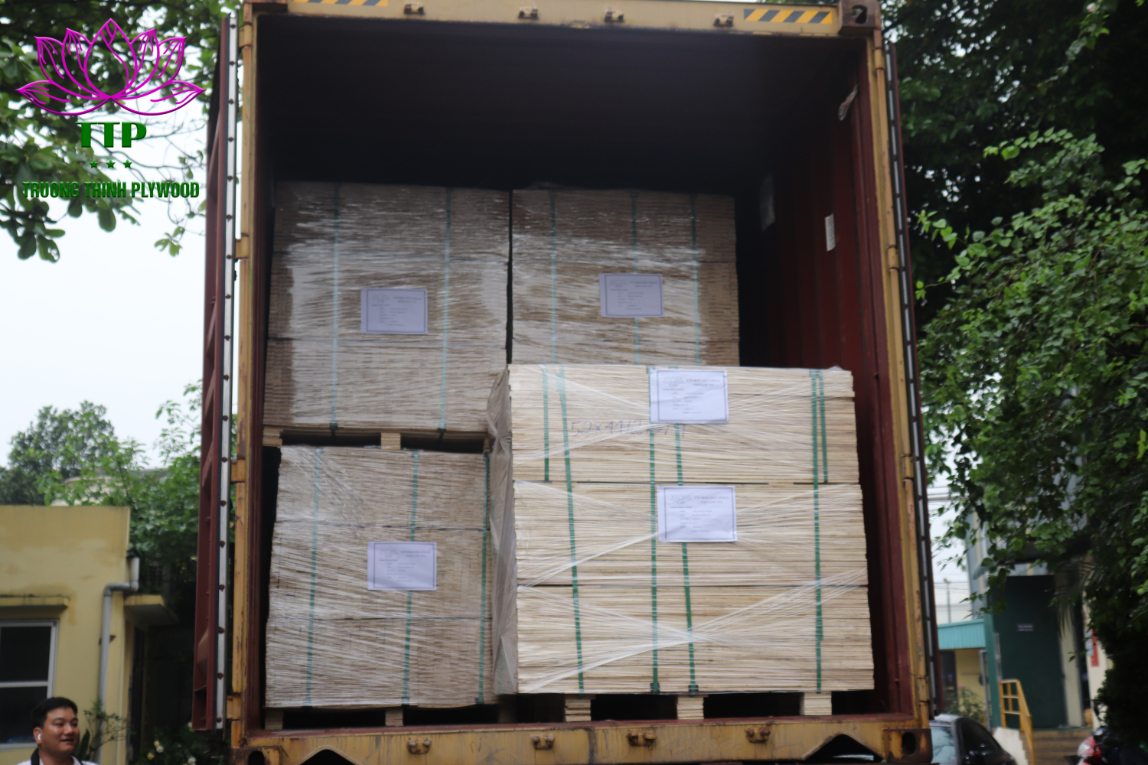
Loading structure strongly affects product integrity, customs approval, and client satisfaction. Below is a practical summary of best loading practices:
Container Loading Summary
• Arrange LVL bundles in tight, interlocked rows to minimize shifting during sea movement, prioritizing weight balance from front to back of the container.
• Use wooden blocks, anti-shift bars, or dunnage to reinforce the final row and ensure the cargo remains stationary under transport vibration and wave action.
These two principles form the foundation of a safe LVL container load.
Additional Loading Guidelines
- Heavier bundles should be placed on the bottom rows.
- Forklift operators must distribute weight evenly to avoid container tipping.
- Leave appropriate air gaps if moisture ventilation is required.
- Ensure that straps and bundle wires do not touch container walls, where condensation forms during ocean transit.
6. Fumigation and Phytosanitary Requirements
For wood products such as LVL, the U.S. Department of Agriculture (USDA) oversees phytosanitary compliance. While LVL is an engineered wood product (not solid timber), some buyers still require fumigation certificates depending on state regulations or internal company policy.
ISPM-15 Considerations
LVL does not typically require heat treatment certifications like pallets do, but local buyer requirements may vary.
Exporters should confirm with freight forwarders and U.S. recipients.
Fumigation Options
- Methyl bromide fumigation
- Heat treatment (for certain wood packaging)
Certificates of treatment must accompany the shipping documents if required.
7. Documentation Necessary for LVL Shipments to the USA

Customs clearance in the United States is documentation-heavy. Exporters must prepare:
- Commercial invoice
- Packing list
- Fumigation certificate (if required)
- Bill of Lading
- Certificate of origin
- HS code declaration (commonly 4412.* depending on LVL type)
- Test reports (formaldehyde / moisture / mechanical performance) upon buyer request
Accuracy is essential. Incorrect documentation can delay cargo release.
8. Transit Time, Arrival, and U.S. Customs Procedures
Transit time varies by port:
- Vietnam → Los Angeles / Long Beach: approx. 21–25 days
- Vietnam → Houston: approx. 28–32 days
- Vietnam → New York/New Jersey: approx. 32–38 days
Upon arrival, the shipment undergoes:
- ISF filing (Importer Security Filing)
- AMS manifest processing
- Customs entry and duty assessment
- Physical inspection or X-ray if flagged
- Final release to domestic trucking
Delays may occur due to incomplete paperwork, container weight issues, or USDA holds if organic contamination is suspected.
9. Quality Issues Commonly Found in LVL Containers
Despite careful production, several quality problems can emerge if the loading or packaging is insufficient:
- Mold growth from high moisture content
- Delamination from poor adhesive quality
- Cracking due to shrinkage during the voyage
- Warping caused by temperature change
- Edge damage during loading
- Water infiltration from condensation or poor wrapping
Understanding these risks helps exporters adopt preventive measures and protects buyers from unnecessary claims.
Conclusion
Shipping LVL to the United States is not simply a matter of loading wood into a container. It requires a deep understanding of moisture standards, packaging integrity, container weight planning, fumigation requirements, and detailed documentation. When executed correctly, the process ensures that American buyers receive stable, clean, and structurally dependable LVL suitable for furniture production, construction use, or industrial packaging.
Exporters who invest in careful preparation not only reduce the risk of claims but also build long-term credibility in the competitive U.S. engineered wood market. As demand for LVL continues to grow across the United States, mastering the container loading and export process becomes essential for suppliers aiming to scale.
Vietnam Alternatives & Supply Capability (Optional Product Insert)
(Bạn chỉ thêm phần này nếu muốn giới thiệu TT Plywood, không bắt buộc cho SEO)
Vietnamese manufacturers such as TT Plywood supply consistent, export-ready LVL engineered specifically for the U.S. market. Products include:
-
Bed-slat LVL
-
Door core LVL
-
Structural LVL beams
-
Industrial LVL packaging strips
These are produced with controlled moisture, WBP adhesives, strict veneer calibration, and export packaging that meets container-loading standards for the USA.
Call to Action (CTA)
If you are importing LVL into the United States or exporting LVL from Asia, our team provides full technical support—from specifications and moisture standards to container loading plans and documentation review. Contact us to receive detailed offers, packing lists, and export-ready LVL tailored to U.S. requirements.
FAQ
1. Does LVL require fumigation before entering the United States?
LVL is an engineered wood product and usually does not require fumigation, but some buyers or states may request it. Always confirm before shipping.
2. What moisture content is acceptable for LVL exported to the USA?
Most U.S. buyers expect 8–14%, depending on application. Higher moisture risks mold and deformation during transit.
3. Can LVL be damaged during long voyages to the U.S.?
Yes. Poor wrapping, incorrect loading, or excessive moisture can cause mold, warping, and cracking. Proper packaging prevents these issues.
References
APA – The Engineered Wood Association (2023). Engineered Wood Products for Construction. APA Publications.
U.S. Department of Agriculture (2022). Wood Packaging Material and Phytosanitary Compliance. Washington, DC.
Forest Products Laboratory (2023). Wood Handbook: Wood as an Engineering Material. Madison, WI: U.S. Department of Agriculture.
-------------------------------------------
 Hotline/WhatsApp/Line/Kakao: +84 326 942 288
 Email: info@ttplywood.com
 Website: https://ttplywood.com/
 Alibaba: https://ttplywood.trustpass.alibaba.com/
Tags :
construction plywood
EXPORT PLYWOOD
lamincated veneer lumber
LVL
pallet
pine face
PLYWOODVIETNAM
TTPLYWOOD
TT PLYWOOD


