



-
-
-
Total payment:
-



Film Faced Plywood for Australian Construction Projects
Posted by Thanh Uyên at 24/06/2026

Australia's construction industry continues to grow across residential housing, commercial developments, infrastructure upgrades, and large-scale civil engineering projects. As construction companies seek to improve productivity while controlling costs, selecting the right formwork material has become increasingly important.
Among the various formwork solutions available today, film faced plywood remains one of the most widely used materials for concrete casting applications. Its combination of durability, water resistance, smooth surface finish, and cost efficiency makes it suitable for a wide range of Australian construction environments.
However, not all film faced plywood delivers the same performance. Differences in core construction, glue quality, film weight, density, and manufacturing standards can significantly affect reuse cycles and project profitability.
For contractors, builders, project managers, and importers supplying the Australian market, understanding these factors is essential for selecting the right product and achieving the best return on investment.
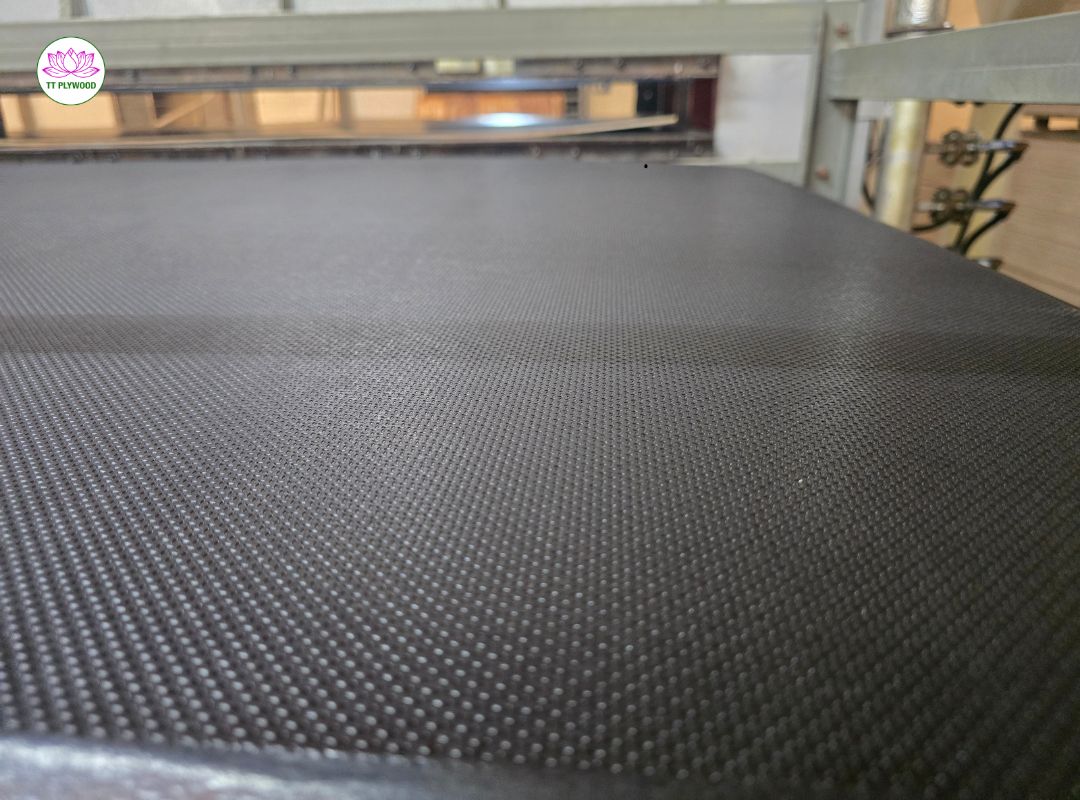
Why Film Faced Plywood Remains Popular in Australia
Concrete remains one of the most commonly used construction materials throughout Australia. Whether building residential foundations in Sydney, commercial towers in Melbourne, or infrastructure projects in Queensland, concrete formwork plays a critical role in project success.
Film faced plywood is widely preferred because it provides a reliable and economical formwork solution while maintaining a high-quality concrete finish.
Compared with traditional timber formwork, film faced plywood offers several practical advantages:
- Faster installation and stripping
- Improved concrete surface quality
- Better moisture resistance
- Lower maintenance requirements
- Higher reuse potential
These benefits help contractors reduce labor costs while maintaining construction quality standards.
In a competitive construction market where efficiency directly affects profitability, these advantages can make a significant difference across large projects.
Understanding Australian construction conditions
One reason material selection is important in Australia is the country's diverse climate conditions.
Construction materials may face:
- High temperatures in Western Australia
- Coastal humidity in Queensland
- Heavy rainfall in certain regions
- Rapid weather changes during project execution
These environmental conditions place considerable stress on formwork materials.
Low-quality plywood often absorbs moisture, swells, or delaminates when exposed to repeated wet-dry cycles. As a result, contractors increasingly prefer film faced plywood manufactured with waterproof bonding systems and stable hardwood cores.
For projects expected to achieve multiple reuse cycles, moisture resistance becomes one of the most important purchasing considerations.
What is film faced plywood?
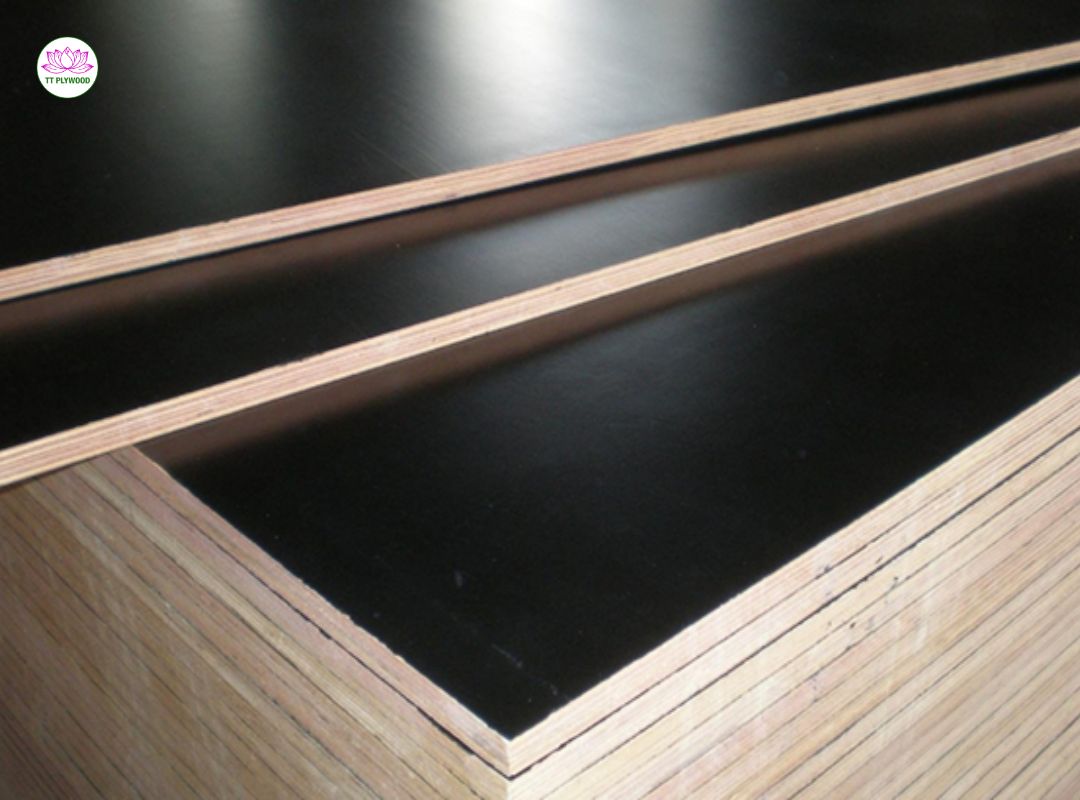
Film faced plywood is a type of engineered plywood specifically developed for concrete formwork applications.
The panel consists of a plywood core covered with phenolic resin-impregnated film on both surfaces. This protective layer improves water resistance and creates a smooth casting surface for concrete.
A typical film faced plywood panel includes:
- Hardwood or eucalyptus core veneers
- WBP phenolic adhesive
- Phenolic film overlay
- Waterproof edge sealing
Each component contributes to the overall performance of the panel.
While the surface film receives the most attention, the internal construction often determines how long the panel can actually perform on site.
Why WBP Phenolic Glue is critical
Many buyers focus on the appearance of film faced plywood while overlooking one of the most important quality factors: the glue system.
High-quality film faced plywood uses WBP Phenolic Glue, where WBP stands for Water Boiled Proof.
This adhesive system is designed to maintain strong bonding even under prolonged exposure to moisture and changing environmental conditions.
Compared with lower-grade adhesive systems, WBP phenolic glue offers:
- Superior water resistance
- Better bonding strength
- Reduced risk of delamination
- Improved structural stability
- Longer service life
For Australian construction projects where formwork panels may encounter rain, humidity, and repeated concrete pours, WBP phenolic glue is often considered essential.
Why Eucalyptus Core Plywood is commonly used
Core construction plays a major role in determining plywood durability.
Among the available options, eucalyptus has become one of the most widely used core materials for film faced plywood manufacturing.
Eucalyptus core plywood offers a balance of strength, density, and cost efficiency that suits many construction applications.
Key advantages include:
- High density
- Good screw-holding strength
- Improved dimensional stability
- Better resistance to deformation
Because of these characteristics, eucalyptus core plywood is commonly used in commercial construction and infrastructure projects throughout global markets, including Australia.
Film weight and surface durability
The phenolic film surface serves as the first line of protection against moisture and mechanical wear.
Film quality is commonly measured in grams per square meter (gsm).
The table below shows typical film weights and their applications:
| Film Weight | Typical Application |
|---|---|
| 120 gsm | Basic formwork projects |
| 165 gsm | Standard construction |
| 220 gsm | Commercial projects |
| 240 gsm | Infrastructure projects |
For Australian contractors seeking a balance between durability and cost, 220 gsm film is often regarded as one of the most practical choices.
Heavier film generally provides improved wear resistance and longer service life, particularly in projects requiring multiple reuse cycles.
Reuse cycles and cost efficiency
One of the most important performance indicators for formwork plywood is reuse potential.
The number of times a panel can be reused directly affects overall project costs.
Typical reuse expectations include:
| Plywood Grade | Estimated Reuse Cycles |
| Standard Grade | 5–10 Uses |
| Commercial Grade | 10–20 Uses |
| Premium Grade | 20–30 Uses |
| Infrastructure Grade | 30–50+ Uses |
Actual results depend on several factors, including panel quality, handling procedures, cleaning methods, and storage conditions.
A higher-quality panel may initially cost more but often delivers a lower cost per use throughout the project.
For contractors managing large developments, reuse efficiency frequently becomes more important than the initial purchase price.
Achieving better concrete finishes
Australian builders increasingly demand smooth concrete surfaces that require minimal post-treatment.
Film faced plywood contributes directly to this goal.
The phenolic film creates a consistent casting surface that reduces concrete adhesion and minimizes surface defects.
Benefits include:
- Cleaner concrete appearance
- Reduced patching work
- Improved architectural finish
- Faster project completion
For exposed concrete applications, the quality of the formwork panel becomes even more critical because surface imperfections remain visible after construction.
Common mistakes when purchasing Film Faced Plywood
Many procurement teams focus primarily on price while overlooking technical specifications.
This often leads to unexpected performance issues on site.
Common purchasing mistakes include:
- Ignoring glue specifications
- Choosing low-density cores
- Overlooking film weight
- Not verifying moisture content
- Failing to inspect edge sealing
A low-cost panel may appear attractive initially but can become significantly more expensive if reuse cycles are reduced.
The true value of formwork plywood should always be measured through total project performance rather than purchase price alone.
What Australian buyers should check before ordering
Before sourcing film faced plywood, buyers should request detailed technical specifications from suppliers.
Important factors include:
| Specification | Recommended Value |
| Glue Type | WBP Phenolic |
| Core Material | Eucalyptus Hardwood |
| Film Weight | 165–240 gsm |
| Moisture Content | Below 12% |
| Density | 600–700 kg/m³ |
| Thickness Tolerance | ±0.5 mm |
| Edge Sealing | Waterproof Paint |
These specifications provide a reliable foundation for comparing suppliers and evaluating product quality.
Buyers should also request quality inspection reports whenever possible.
Why Vietnam has become a key supplier for Australia
Vietnam has become one of the leading global exporters of film faced plywood.
Australian importers increasingly source from Vietnam because manufacturers can offer a competitive balance between quality, production capacity, and pricing.
Vietnamese producers have invested heavily in:
- Modern pressing technology
- Quality control systems
- Hardwood core production
- WBP glue development
- Export-oriented manufacturing
As a result, Vietnam continues to strengthen its position as a major supplier of construction plywood to international markets.
Sustainability and Responsible Sourcing
Sustainability has become an increasingly important consideration in Australia's construction industry.
Many contractors and developers now prioritize responsibly sourced wood products.
Film faced plywood manufactured from sustainably managed forests can contribute to environmental goals while maintaining strong technical performance.
When evaluating suppliers, buyers should consider certifications such as:
- FSC Certification
- CE Certification
- CARB Compliance
- TSCA Title VI Compliance
These certifications help demonstrate product quality and responsible sourcing practices.
Conclusion
Film faced plywood continues to play a vital role in Australian construction projects because it offers a practical combination of durability, water resistance, smooth concrete finishing, and cost efficiency.
However, successful sourcing requires more than simply comparing prices. Contractors and importers should carefully evaluate glue systems, core materials, film quality, density, and manufacturing standards before making purchasing decisions.
By selecting the right film faced plywood for the intended application, Australian construction professionals can improve project efficiency, reduce material waste, and achieve better long-term formwork performance.
FAQ
What is the best film faced plywood for Australian construction projects?
Film faced plywood with eucalyptus core, WBP phenolic glue, and 220 gsm phenolic film is often considered an excellent choice for commercial and infrastructure projects.
Why is WBP phenolic glue important?
WBP phenolic glue provides superior water resistance and bonding strength, helping prevent delamination and extending panel lifespan.
How many times can film faced plywood be reused?
Depending on product quality and site handling, reuse cycles typically range from 5 uses for standard panels to more than 50 uses for premium infrastructure-grade plywood.
Is eucalyptus core suitable for concrete formwork?
Yes. Eucalyptus core provides high density, good structural strength, and dimensional stability, making it a popular choice for formwork plywood.
What film weight should contractors choose?
For most commercial projects, 220 gsm film offers an effective balance between durability and cost.
References
- EN 314-2: Plywood Bonding Quality Requirements.
- EN 636: Structural Plywood Standards.
- APA – The Engineered Wood Association.
- Forest Products Laboratory. Wood Handbook: Wood as an Engineering Material.
- Australian Building Codes Board (ABCB).
- European Panel Federation (EPF).


