



-
-
-
Total payment:
-




Cable Drum Flanges Plywood for Industrial Cable Reels | Plywood Spools Guide
Posted by Thanh Uyên at 12/03/2026

Introduction
Across the global cable industry, packaging and transportation solutions play a critical role in maintaining cable integrity from factory to installation site. Among the most essential components used in cable logistics are cable drum flanges and industrial spools. These structural elements ensure cables remain stable during winding, storage, shipping, and installation.
In recent years, plywood cable drum flanges have become the preferred solution for many cable manufacturers and distributors because of their structural strength, lighter weight, and manufacturing efficiency. Modern engineered wood products used in industrial applications can be explored through the industrial plywood product portfolio offered by TT Plywood, which includes plywood materials suitable for manufacturing cable drum flanges, spools, and other engineered components.
Industries such as power transmission, telecommunications infrastructure, and renewable energy projects increasingly rely on industrial plywood spools and cable reel flanges to transport large volumes of cable safely and efficiently. A closer look at how these plywood cable drum components are manufactured and applied in real industrial environments can be seen in this industrial cable drum flange production example.
Understanding Cable Drum Flanges and Industrial Plywood Spools
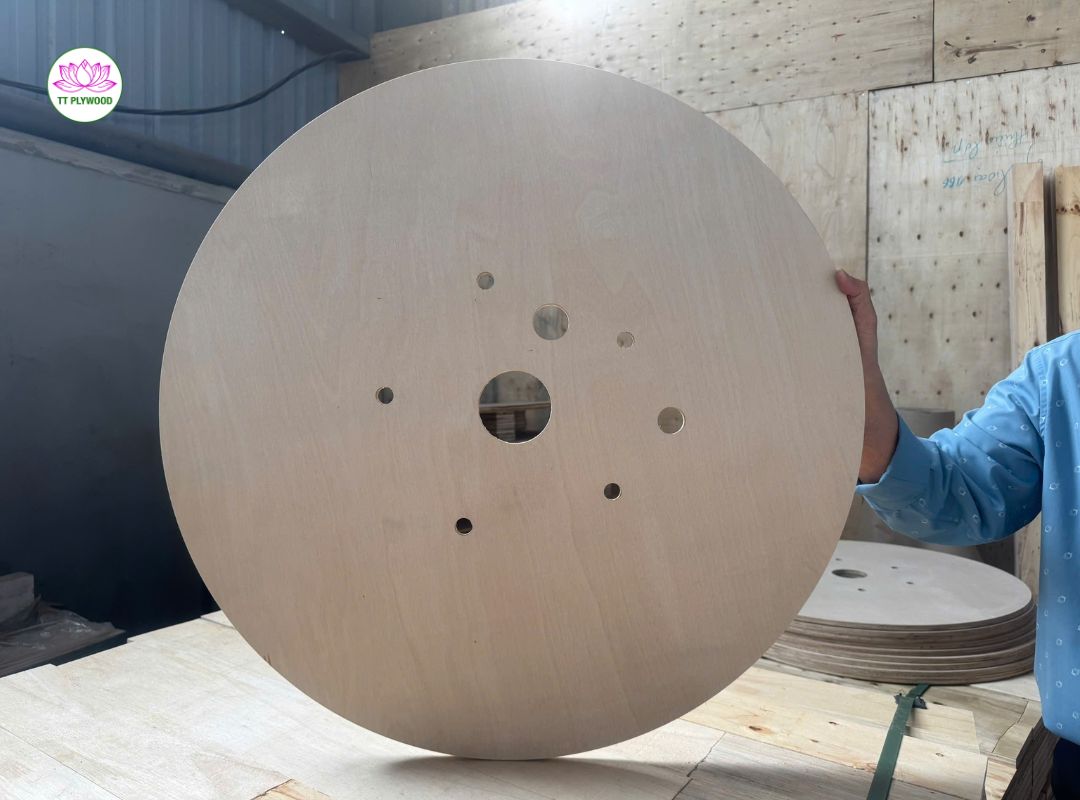
Cable drums are cylindrical reels designed to hold and transport cables. They typically consist of a central barrel and two circular side panels called flanges. These flanges play an essential role in maintaining the structural integrity of the reel and preventing the cable from slipping during handling and transportation.
When produced from engineered plywood panels, these components are known as plywood cable drum flanges. Compared with solid timber boards, plywood offers superior dimensional stability because the veneers are cross-laminated. This layered structure distributes stress across the panel and improves resistance to cracking.
Industrial manufacturers today rely on precision manufacturing technologies such as CNC cutting to produce these components with high accuracy. The industrial machining and finishing process used for plywood drum components can be observed in this plywood cable drum flange manufacturing process, which demonstrates how engineered plywood panels are transformed into circular cable reel flanges.
Why Plywood Is Ideal for Cable Drum Flanges
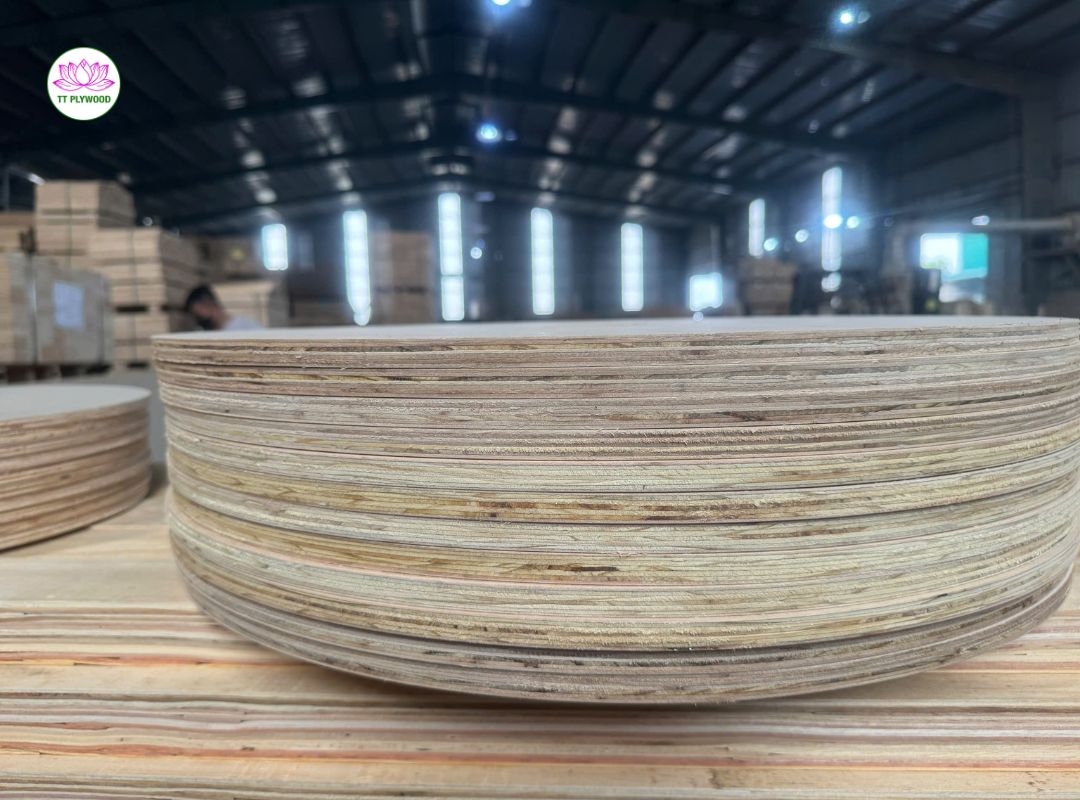
Structural Strength and Load Performance
One of the main reasons plywood is widely used in cable drum manufacturing is its balanced combination of strength and weight efficiency. Because plywood veneers are arranged with alternating grain directions, the material distributes mechanical stress more evenly than solid wood boards.
This structural advantage allows plywood cable drum flanges to support heavy cable loads while maintaining dimensional stability during transportation and storage.
For companies sourcing materials for cable drum production, engineered plywood solutions designed for industrial manufacturing can be found within the TT Plywood engineered wood product range, which includes various plywood materials suitable for cable reel structures, industrial spools, and other structural applications.
For cable drum applications, this means plywood flanges are capable of supporting heavy cable coils without structural failure.
Weight Efficiency in Transportation
Transportation cost is a critical factor in global cable logistics. Heavy packaging materials increase shipping expenses and reduce handling efficiency.
Compared with steel reels, plywood cable drums are significantly lighter. This weight advantage makes them easier to transport, store, and handle during installation.
Even a moderate reduction in reel weight can lead to measurable improvements in freight efficiency, especially for large shipments involving hundreds or thousands of cable drums.
Cost Efficiency for Industrial Production
Cable manufacturers require packaging solutions that can be produced consistently at large scale. Plywood provides a highly efficient manufacturing material because veneers can be processed in standardized dimensions.
This production efficiency reduces material waste and allows manufacturers to maintain consistent panel quality.
Additionally, plywood panels can be easily processed using automated CNC cutting systems, which improves precision and production speed.
Materials Used in Plywood Cable Drum Flanges
The performance of plywood cable drum components depends largely on the type of veneer used in the panel structure.
Different wood species provide different mechanical characteristics.
Birch veneer is often preferred for high-performance industrial plywood because it offers excellent density consistency and strength. Rubberwood and eucalyptus veneers are also widely used due to their good balance between cost and structural stability.
In many industrial plywood products, manufacturers combine multiple veneer species to optimize both strength and economic efficiency.
For buyers interested in engineered wood materials used across various industrial applications, a wider range of plywood products can be explored through the TT Plywood product portfolio, which includes multiple plywood solutions designed for manufacturing and industrial uses:
https://ttplywood.com/all-products
Manufacturing Process of Plywood Cable Drum Flanges
Veneer Preparation and Grading
The manufacturing process begins with veneer preparation. Logs are peeled into thin sheets and then dried to achieve appropriate moisture levels.
Each veneer sheet is inspected and graded based on quality characteristics such as knots, density, and structural defects.
Maintaining consistent veneer quality is essential because variations can affect the mechanical performance of the final plywood panel.
Adhesive Bonding and Hot Pressing
Once the veneers are prepared, they are assembled into multiple layers with alternating grain directions. Adhesive is applied between layers before the panels are pressed under high temperature and pressure.
Industrial plywood used for cable drum flanges typically relies on phenolic or melamine adhesive systems, which provide strong bonding and improved moisture resistance.
Bonding strength is a critical factor for cable drum flanges because poor bonding can lead to delamination under heavy loads.
European plywood standards often evaluate bonding performance using shear testing procedures described in EN 314 (European Committee for Standardization, 2013).
CNC Cutting and Finishing
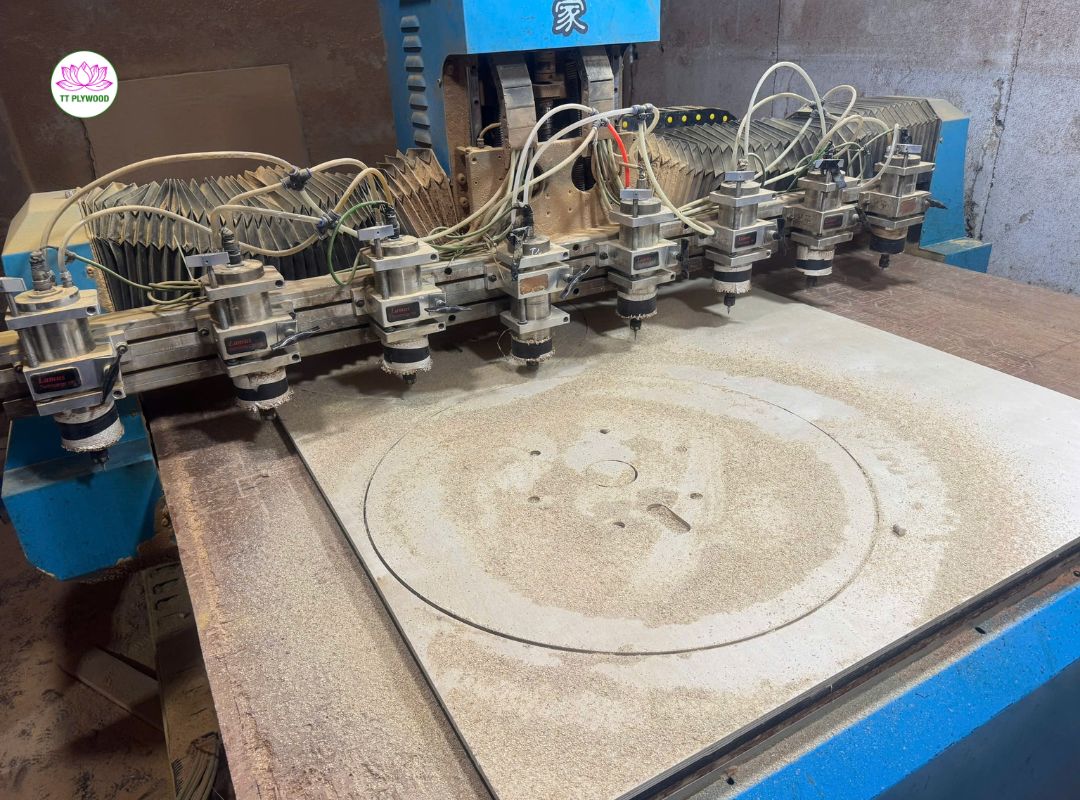
After pressing, plywood panels are cut into circular flange shapes using CNC machines. This step ensures accurate diameter and balanced geometry.
Precision cutting is essential because even small dimensional deviations can affect reel balance and cable winding performance.
Manufacturing examples of CNC-cut plywood drum components used in industrial cable reels can be seen in production updates such as this example from industry manufacturing practice:
https://www.linkedin.com/feed/update/urn:li:activity:7429079626376957953
During finishing, edges may be sanded and sealed to protect the plywood from moisture absorption and environmental exposure.
Key Quality Factors Buyers Should Evaluate
When sourcing plywood cable drum flanges or industrial plywood spools, buyers should focus on several technical factors that directly affect product performance.
Density Consistency
Uniform density throughout the plywood panel ensures balanced mechanical performance. Uneven density can create weak points within the structure, increasing the risk of failure during cable loading or transportation.
Typical density ranges for industrial plywood used in cable reels are between 550 and 700 kilograms per cubic meter, depending on the veneer species used.
Bonding Quality
The bonding strength between veneer layers is one of the most important indicators of plywood durability.
Poor bonding can cause the plywood layers to separate under mechanical stress or exposure to moisture.
Reliable manufacturers perform bonding tests according to international standards to ensure structural integrity.
Dimensional Precision
Cable drums must remain stable during winding and unwinding operations. Accurate flange diameter and thickness are essential to maintain reel balance.
Modern plywood manufacturers often rely on CNC machining technology to achieve consistent dimensional accuracy.
A closer look at industrial plywood flange manufacturing processes can be seen in the following production example:
https://www.linkedin.com/feed/update/urn:li:activity:7426907572194058241
Applications of Plywood Cable Drum Components
Power Cable Infrastructure
Power transmission cables require heavy-duty drums capable of supporting large cable coils. Plywood cable drum flanges are frequently used in this sector due to their strength and manageable weight.
As electricity infrastructure expands globally, demand for cable drums continues to grow.
The International Energy Agency reports that electricity networks worldwide require significant investment to support energy transitions and renewable energy deployment (IEA, 2023).
Telecommunications and Fiber Optic Networks
Telecommunication infrastructure relies heavily on fiber optic cables, which must be transported carefully to avoid bending damage.
Plywood spools provide a reliable and stable solution for transporting these delicate cables.
The dimensional stability of engineered plywood helps maintain spool shape and ensures smooth cable deployment during installation.
Industrial Wire and Manufacturing
Industrial sectors such as steel wire production, welding wire manufacturing, and rope production also rely on plywood reels.
In these applications, reels must withstand continuous mechanical stress during winding and unwinding processes.
Plywood flanges provide the durability required for repeated usage cycles.
Sustainability and Environmental Considerations
Sustainability has become an increasingly important factor in industrial purchasing decisions. Compared with plastic or steel packaging materials, plywood is derived from renewable forest resources.
When sourced from responsibly managed forests, plywood can support environmentally responsible supply chains.
Certification systems such as FSC help ensure that wood products originate from forests managed according to environmental and social sustainability principles.
The Food and Agriculture Organization reports that responsible forestry management is essential for maintaining long-term forest productivity and biodiversity (FAO, 2022).
For many European buyers, traceability and sustainable sourcing have become key purchasing criteria.
Future Market Trends
Several global trends are expected to influence the demand for plywood cable drum components.
The expansion of renewable energy infrastructure will continue to increase demand for power cables and related packaging solutions.
Telecommunication networks are also expanding rapidly as countries invest in fiber optic infrastructure and next-generation communication technologies.
At the same time, logistics companies are searching for packaging solutions that reduce transportation weight and improve supply chain efficiency.
These trends suggest that engineered plywood cable drum components will remain a key material in industrial cable logistics for the foreseeable future.
Frequently Asked Questions
What are plywood cable drum flanges used for?
Plywood cable drum flanges are circular structural panels installed on both sides of cable drums. They support the cable coil and prevent the cable from slipping off the reel during storage and transportation.
Why are plywood flanges preferred over solid wood?
Plywood provides better dimensional stability and mechanical strength because its veneer layers are cross-laminated. This structure distributes mechanical stress more evenly and reduces the risk of cracking.
What thickness is commonly used for plywood cable drum flanges?
The thickness depends on drum size and cable load requirements. Many industrial cable drum flanges use plywood panels between 12 mm and 30 mm thick.
Are plywood cable drums reusable?
Yes. Many plywood cable drums are designed for multiple usage cycles. With proper handling and storage, they can be reused several times in cable logistics operations.
Conclusion
Cable drum flanges and industrial plywood spools play a crucial role in modern cable logistics. Their structural strength, weight efficiency, and manufacturing flexibility make them an ideal solution for transporting cables across global supply chains.
As infrastructure development accelerates worldwide, reliable cable packaging systems will become increasingly important. Plywood cable drum components provide a proven solution that balances durability, cost efficiency, and sustainability.
For manufacturers, distributors, and logistics providers, understanding the material characteristics and quality requirements of plywood flanges can help ensure reliable performance throughout the cable transportation process.
Engineered plywood continues to demonstrate its value as a versatile and efficient material for industrial applications.
References
Forest Products Laboratory. (2021). Wood Handbook: Wood as an Engineering Material. USDA Forest Service.
European Committee for Standardization. (2013). EN 314: Plywood Bonding Quality Test.
International Energy Agency. (2023). Electricity Grids and Secure Energy Transitions. https://www.iea.org
Food and Agriculture Organization. (2022). Global Forest Products Statistics. https://www.fao.org


