


-
-
-
Total payment:
-


Film Faced Plywood Specification: 8 Purchase Order Terms
Posted by Hoàng Anh Tuấn at 10/11/2026

The sample looks right, the price is agreed, and the purchase order says “film faced plywood, x mm.” Weeks later, the shipment arrives with a different core, an unexpected reverse film and pack quantities that slow unloading.
A usable film faced plywood specification should make those details clear before production. The aim is to give the buyer and factory the same acceptance criteria, so a change can be identified while there is still time to address it.
These eight terms turn a general product description into something purchasing and inspection teams can actually check.
Define the Core and Bonding Requirement
1. Core Species and Construction
Name the agreed core species or combination, and describe the construction sufficiently to identify the product. Include the required ply arrangement or approved construction reference when it matters to the application.
A face photograph cannot establish what is inside the panel. Retain an approved cross-section sample and connect it to the written specification. If limits on gaps, overlaps or repairs are important, state the inspection basis and acceptable condition. Avoid an undefined phrase such as “premium core.”
Also agree how substitutions are handled. A replacement veneer supply should trigger review where it changes the approved construction, even if the finished sheet still looks similar.
2. Bonding Requirement and Evidence
Write the required bonding performance rather than using adhesive terminology alone.EN 314-1 specifies bonding test procedures, while EN 314-2 defines bonding-quality requirements. Buyers should request a report identifying the tested product, pretreatment, test method and results.
If a class is specified, request evidence relevant to the quoted panel. A statement naming phenolic or MUF glue is useful material information, but it does not replace the required product result. Separately identify any emission requirement and its assessment route.
Our plywood boil test guide explains why an informal demonstration cannot answer every bonding question
Describe the Film and Finished Dimensions
3. Film Specification for Each Face
Record overlay type, colour, surface finish and the stated film weight on each side. Confirm what that weight describes, such as resin-impregnated film rather than base paper alone. Use a supplier product code or approved reference where available.
If one side is textured and the other smooth, say so. If a logo or printed marking is required, attach its placement and artwork approval. Do not rely on “black film” to communicate all these choices.
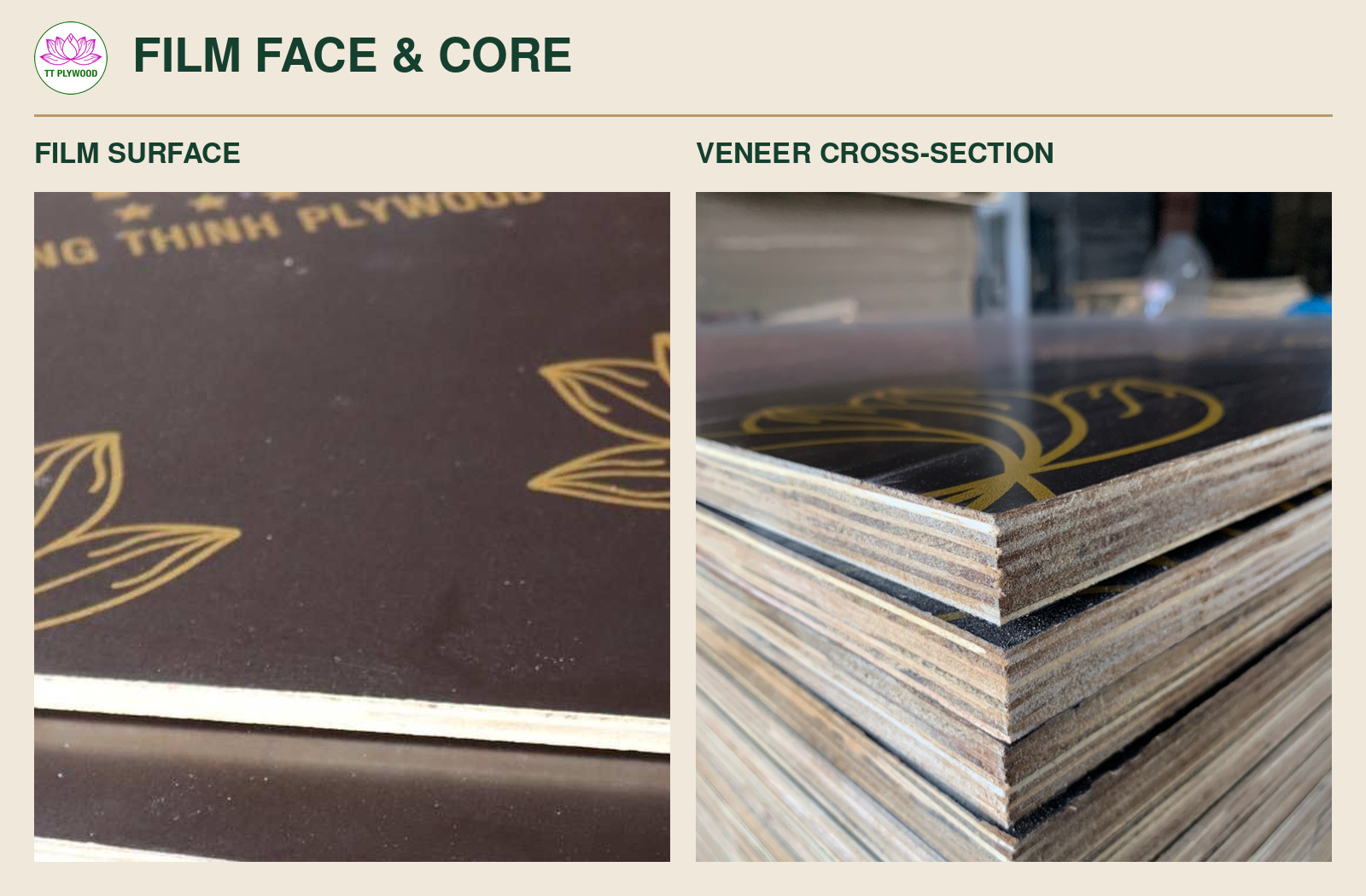
A film-weight figure does not establish reuse cycles or abrasion performance. Relevant supporting evidence needs to match the claim. Read our guide to film weight and plywood quality for more detail
4. Dimensions, Tolerances and Measurement
Specify finished length, width and thickness, with their agreed tolerances. Define how thickness is measured, where readings are taken and whether any special requirement applies to squareness, flatness or machined features.
Avoid combining dimensions from a drawing with conflicting figures in a spreadsheet. Identify the controlling revision and resolve differences before manufacture. If a quoted size includes an allowance for later trimming, label that allowance explicitly.
Set the Finishing and Acceptance Criteria
5. Edge Sealing and Machined Surfaces
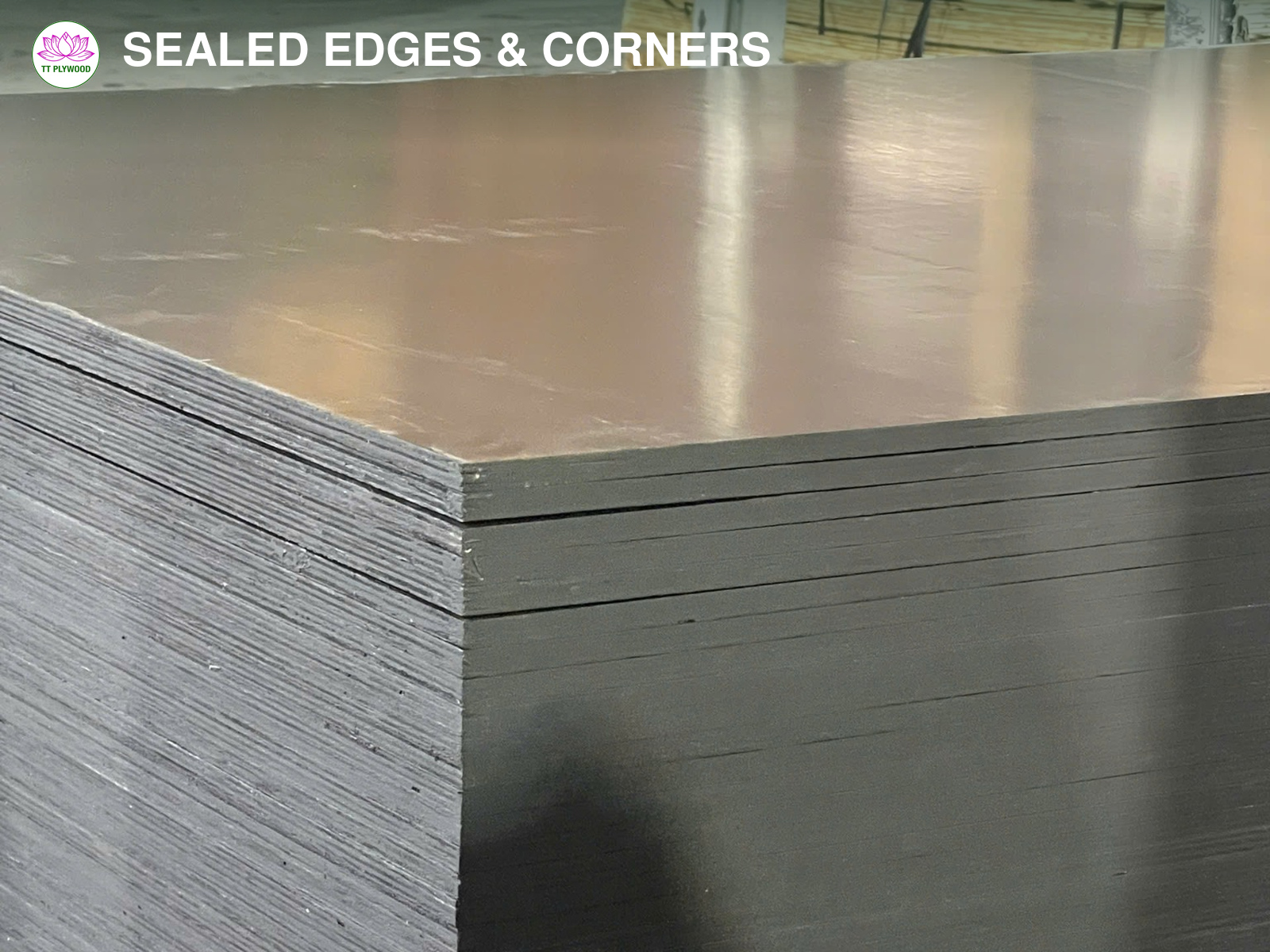
Describe which surfaces receive sealing, including factory-cut edges, holes and recesses. Record the agreed coating system, coverage requirements and any identification colour. If the buyer makes additional cuts, assign responsibility for subsequent protection.
Inspect corners and cut-outs, not only a straight outer edge. Ask whether the delivered component will be sealed before or after final machining. This question is especially useful when plywood is supplied as finished parts rather than full sheets.
6. Sample and Inspection Basis
Identify the approved sample by code, date and photographs. State which characteristics it represents: colour, texture, edge finish or construction. A sample cannot silently replace written limits for every property.
Agree defect categories, sampling, measurement methods and the process for holding or releasing a nonconforming lot. Include who reviews a discrepancy and what records are needed. If destructive checks are required, arrange sample selection before the packs are closed.
For context on separating appearance from internal construction, read our face grade and core quality guide
Connect Packing and Reports to the Shipment
7. Pack Quantities and Identification
Write the number of panels per pack, protection requirements, pack dimensions and identification details. If mixed thicknesses or sizes are being shipped, require a clear pack list and labels that distinguish each item.
Confirm whether quoted weights include pallets and protective materials. A purchase order can be correct at panel level while still creating a warehouse problem if the pack size cannot be handled by the receiving equipment.

8. Test Evidence and Change Approval
List the required reports and the information needed to connect them to the supplied product. Review sample description, thickness, construction, method, dates and limitations. Agree whether additional testing or shipment inspection is required.
Do not describe a panel as approved for an application merely because one laboratory result is available. EN 636 addresses plywood specifications for different service conditions and applications; bonding is one part of that assessment (BSI, 2015).
Require written approval for changes affecting the agreed specification. This is more useful than discovering an undocumented change in the final inspection photographs.
A Practical Purchase Order Example
This is an illustrative specification format, not a legal clause or a statement of TT capabilities:
“Film faced plywood to approved specification FFP-01, revision B; finished dimensions and tolerances as attached drawing; core construction and bonding requirement as approved; face and reverse overlays identified separately; all specified machined surfaces sealed; inspection and pack identification to the agreed plan. Any proposed material or construction change requires written review before production.”
|
Document |
What should agree |
|---|---|
|
Quotation and PO |
Product identity, quantity and specification reference |
|
Drawing |
Finished dimensions, machining and revision |
|
Sample record |
Approved appearance and construction references |
|
Inspection plan |
Methods, sampling and acceptance criteria |
|
Report pack |
Required evidence and relevant product description |
Frequently Asked Questions
Can an Approved Sample Replace a Specification?
It can support one, but written requirements are still needed for measurable characteristics and properties that are not visible.
Should Every Order Require New Laboratory Testing?
Set that requirement according to product changes, risk, applicable rules and the agreed quality plan. First confirm whether the available evidence actually covers the product being ordered.
References
British Standards Institution (BSI) (2004) BS EN 314-1:2004: Plywood. Bonding quality. Test methods. Standard catalogue entry. Available at: knowledge.bsigroup.com /
British Standards Institution (BSI) (1993) BS EN 314-2:1993: Plywood. Bonding quality. Requirements. Standard catalogue and scope. Available at: knowledge.bsigroup.com /
British Standards Institution (BSI) (2015) BS EN 636:2012+A1:2015: Plywood. Specifications. Standard catalogue and scope. Available at: knowledge.bsigroup.com /


