



-
-
-
Total payment:
-




Does Heavier Film Mean Better Film-Faced Plywood?
Posted by Hoàng Anh Tuấn at 29/10/2026

One supplier offers film-faced plywood with a 120 g/m² overlay. Another quotes 220 g/m² at a higher price. Both panels look smooth and carry similar claims about durability. Is the heavier film worth buying?
A heavier film can improve surface wear resistance within a comparable coating system. However, film weight alone does not establish the quality, structural performance or service life of the finished panel.
For film faced plywood importers and formwork buyers, the useful question is what the additional film weight delivers-and whether that benefit addresses the problems occurring on site.
What Does Film Weight in GSM Actually Mean?
GSM means grams per square metre, also written as g/m². It describes mass per unit area, rather than thickness in millimetres or microns.
Phenolic film-faced plywood uses a resin-impregnated paper overlay pressed onto the plywood surface. Metsä Wood, for example, describes its formwork panels as having a durable phenolic film hot-pressed onto the panel (Metsä Wood, n.d.).
Confirm What the Supplier Is Measuring
When reviewing a quotation, ask whether the stated weight refers to the base paper or the resin-impregnated overlay. Also confirm the specification for each face.
A quotation stating “220 GSM film” should identify the overlay product and clarify whether the same specification applies to both sides.
Do not convert GSM directly into coating thickness without the relevant material data. Weight and thickness describe different properties.
Keep Film Weight Separate from Panel Weight
Film GSM does not describe the weight or density of the plywood core. A heavier finished sheet may reflect differences in thickness, wood species or moisture content.
When Can a Heavier Film Improve Performance?
When Surface Wear Is the Main Limitation
If panels remain structurally suitable but their working faces wear out, upgrading the overlay may be worth investigating.
Manufacturer data illustrates the potential benefit. Latvijas Finieris lists the following abrasion results for selected Riga Form coatings:
|
Overlay specification |
Published Taber abrasion result |
|
Dark brown, 120 g/m² |
Up to 400 revolutions |
|
Dark brown, 220 g/m² |
Up to 900 revolutions |
|
Dark brown, 440 g/m² |
Up to 2,500 revolutions |
|
Special wear-resistant film, 350 g/m² |
Up to 10,000 revolutions |
These figures apply to the manufacturer’s specified products and test conditions. They are not universal ratings for films of those weights (Latvijas Finieris, n.d.).
When the Coating System Is Comparable
The table also shows why GSM cannot rank every overlay: the specialised 350 g/m² film has a higher published abrasion result than the standard dark brown 440 g/m² option.
Coating formulation matters alongside weight. Ask for comparable performance data rather than assuming the heaviest option must perform best.
Taber revolutions are laboratory abrasion results. They should not be interpreted as concrete pours or converted directly into reuse cycles.
What Can a Heavier Film Not Tell You?
Whether the Panel Meets Structural Requirements
A film specification does not establish the panel’s load capacity, suitable support spacing or allowable deflection.
APA treats concrete-forming plywood selection as a structural application requiring appropriate panel ratings and design information (APA, n.d.).
Check thickness, construction and relevant performance documentation separately. A higher GSM figure cannot substitute for those checks.
Whether the Edges Will Resist Moisture Entry
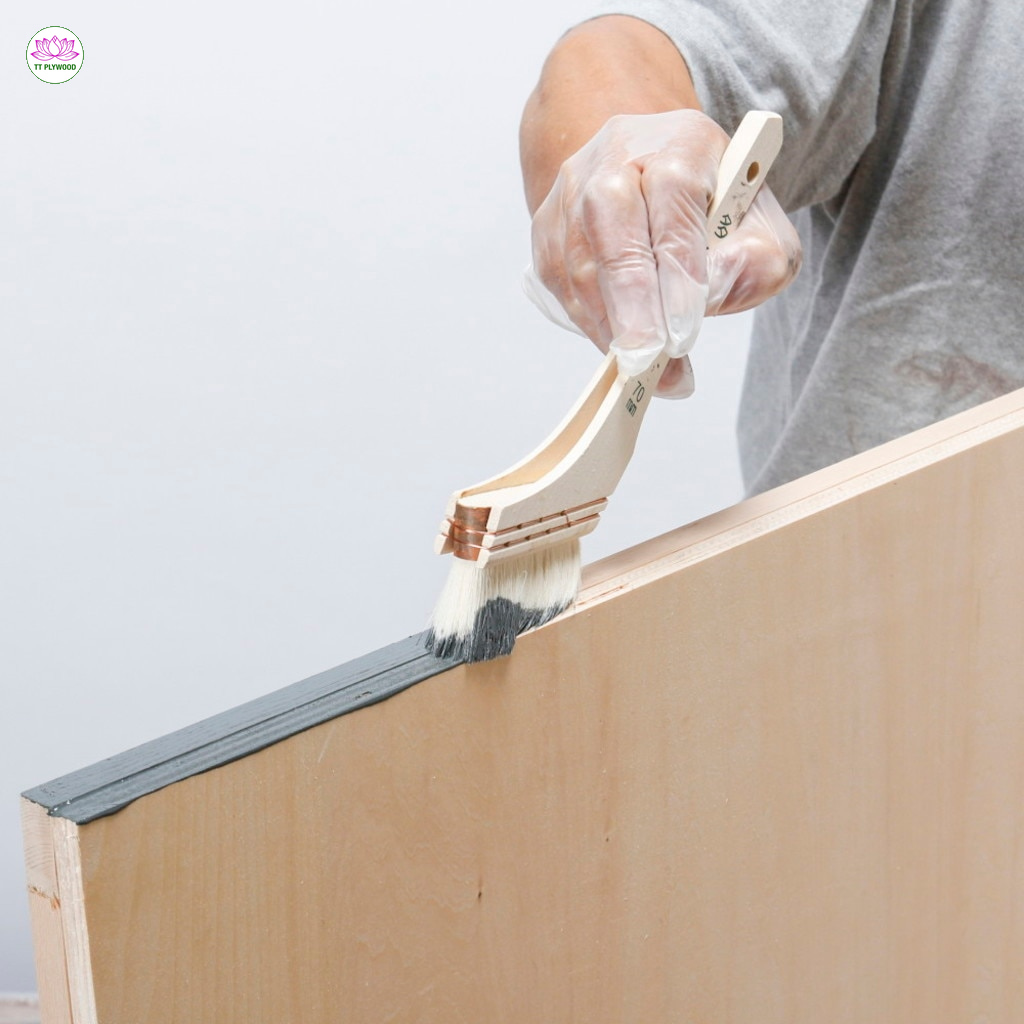
The working face is only part of the panel. Cutting and drilling expose areas that need appropriate protection.
Westag recommends sealing cut edges and anchor holes to reduce water absorption. Its processing guidance also recommends checking release-agent compatibility with the edge coating (Westag, n.d.).
If panels are being removed from service because of damaged or swollen edges, first investigate edge protection and handling. Buying a heavier face film may leave that problem unresolved.
How Many Acceptable Pours You Will Achieve
A surface abrasion result cannot account for every condition on a construction site.
APA recommends careful handling and inspection, cleaning, repair and suitable release-agent application between uses (APA, n.d.).
For the wider service-life discussion, read how many reuses you can really get from film-faced plywood
How Should Buyers Compare Different Film Weights?
Request Comparable Quotations
Keep the underlying panel specification consistent when assessing an overlay upgrade. Otherwise, a price difference may include changes to the core, bonding or dimensions.
Use this checklist:
|
Information to request |
Purpose |
|
Overlay identification and resin type |
Establish which coating systems are being compared |
|
GSM definition and face/back arrangement |
Confirm the basis of the quoted weight |
|
Abrasion report and test conditions |
Compare documented surface performance |
|
Core construction and actual thickness |
Identify other changes affecting the panel |
|
Bonding specification and supporting reports |
Assess the plywood separately from its overlay |
|
Edge coating and site-care instructions |
Plan protection after cutting and drilling |
|
Representative production samples |
Check the product proposed for the order |
An abrasion report should identify the tested product, method and endpoint. Results produced under different conditions may not support a direct ranking.
Compare Cost per Acceptable Use
A practical purchasing measure is:
Panel cost per acceptable use = delivered panel price ÷ verified acceptable uses.
These are hypothetical figures. The higher-priced option only delivers that saving if the additional acceptable uses occur. Include differences in preparation, cleaning and repair costs when comparing the overall economics.
Run a Controlled Site Trial
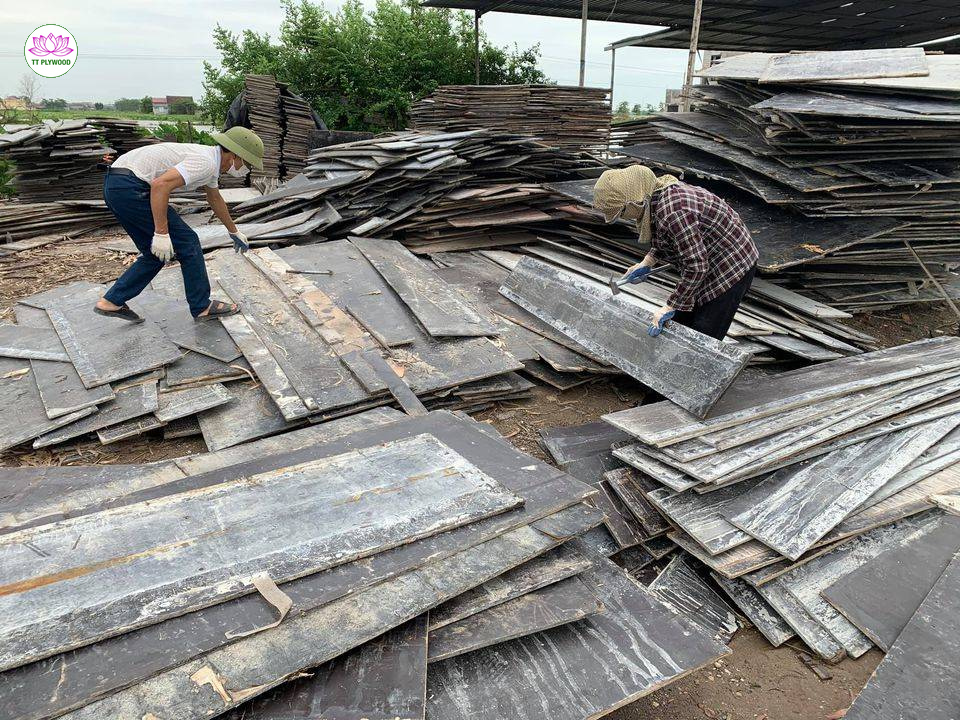
Trial comparable panels under similar conditions. Record the concrete mix, release agent, cleaning method and handling process.
Agree beforehand what makes a use acceptable: the required concrete finish, panel condition and repair limits. Photograph the working face and edges between pours, and record why each panel is retired.
Westag recommends a test pour for demanding exposed-concrete applications to assess compatibility between the concrete, release agent and formwork panel (Westag, n.d.).
Frequently Asked Questions
Is 220 GSM Film Always Better Than 120 GSM?
No. It may offer better wear resistance within a comparable coating range, but assess the documented coating performance and the complete panel specification.
Can You Identify Film GSM from Colour or Gloss?
Appearance alone is insufficient to verify a numerical weight claim. Request the overlay specification and supporting supplier records.
Should Every Buyer Choose the Heaviest Film?
No. Choose an overlay suited to the required finish, expected use and working conditions. An upgrade offers limited value if another issue causes the panel to be retired first.
Heavier film is worth considering when verified surface performance improves the economics of the job. Before ordering, establish what the GSM figure means, compare equivalent panels and test the proposed upgrade.
To discuss an order with TT Plywood, provide the intended application, panel dimensions and concrete-finish requirements alongside the requested film specification
References
APA – The Engineered Wood Association (n.d.) Concrete forming. Available at: https://www.apawood.org/applications-systems/industrial-applications/concrete-forming/ (Accessed: 29 October 2026).
Latvijas Finieris (n.d.) Riga Form. Available at: https://www.finieris.com/products/riga-form/ (Accessed: 29 October 2026).
Metsä Wood (n.d.) Plywood for concrete formwork. Available at: Metsä Wood concrete formwork brochure (Accessed: 29 October 2026).
Westag (n.d.) Processing recommendations: Concrete formwork panels. Available at: Westag processing recommendations (Accessed: 29 October 2026)


