



-
-
-
Total payment:
-

Comparing Rubberwood Core, Acacia Core and Eucalyptus Core in Birch Plywood Manufacturing
Posted by Thanh Uyên at 12/12/2025

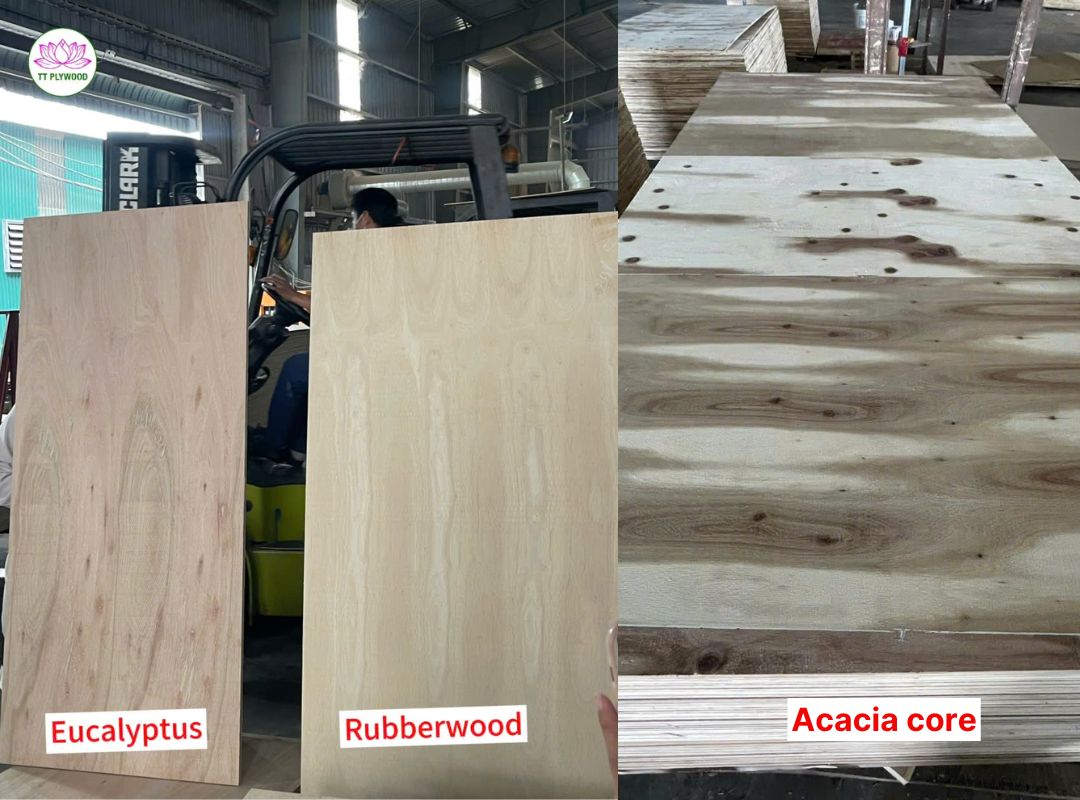
Birch plywood manufactured in Asia often uses tropical hardwood cores combined with imported birch face veneers. This hybrid construction provides a competitive alternative to full Baltic birch, especially for buyers in Europe and the United States where strength, stability and certification requirements continue to rise.
The performance of birch plywood depends heavily on the species used inside the core. Among the most common core options in Vietnam Rubberwood, Acacia and Eucalyptus each delivers a very different internal structure and mechanical profile. Understanding these differences is critical for furniture producers, packaging buyers, and importers seeking stable, high-quality birch plywood substitutes.
1. Rubberwood Core in Birch Plywood
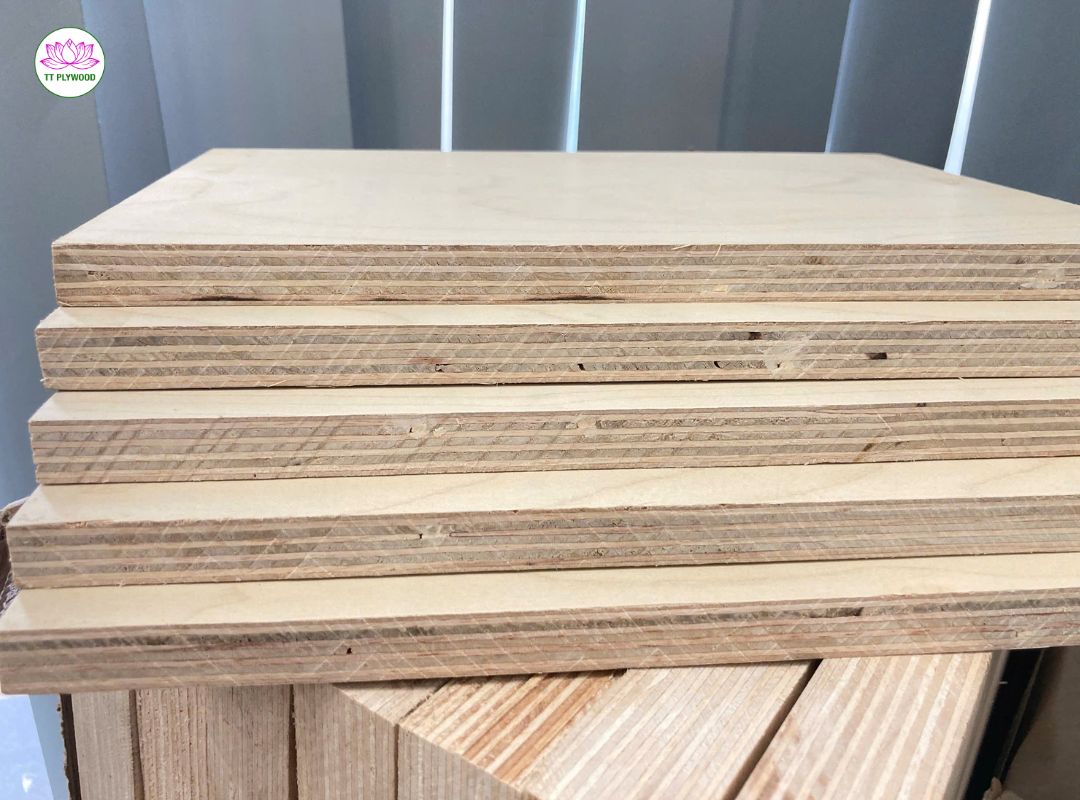
Rubberwood core creates a lightweight and easy-to-process panel. When paired with birch faces, it gives a smooth, furniture-friendly surface while keeping total panel weight lower than other hardwood cores. Because Rubberwood is softer with less dense fibers, it provides moderate screw-holding strength and limited stiffness.
Rubberwood-core birch plywood works best for indoor furniture components that require clean appearance but do not rely on heavy structural load. However, its moisture resistance is lower, and in humid conditions the panel may deform faster than Acacia- or Eucalyptus-core versions. For high-end applications exported to Europe, it requires excellent drying and strict glue quality to remain stable.
2. Acacia Core in Birch Plywood
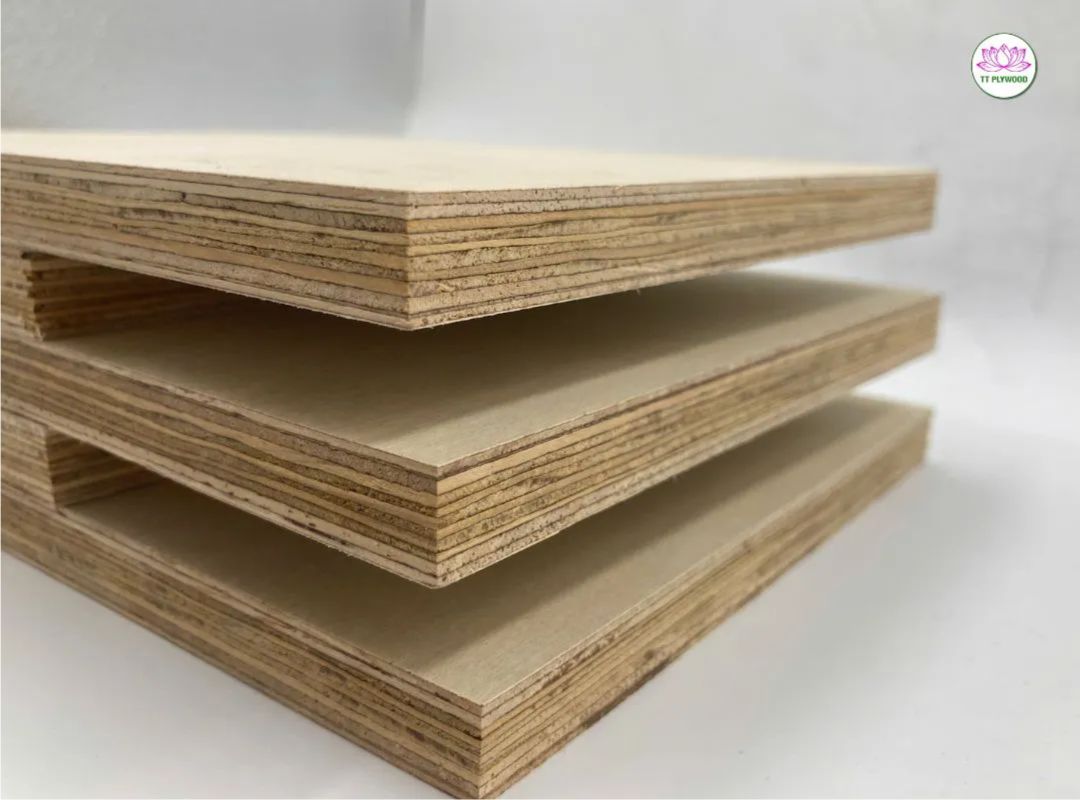
Acacia provides a stronger internal structure compared to Rubberwood. With naturally higher density and tighter fiber bonding, Acacia-core birch plywood offers better stiffness, improved durability and more reliable screw performance. Panels feel more solid during machining and remain stable across a range of indoor conditions.
Acacia is a strong middle option for furniture producers targeting EU or US markets. The core is durable enough for cabinets, shelving and furniture frames while still maintaining a good price–performance balance. It also tolerates moisture changes better than Rubberwood, though it still requires proper edge sealing for long-term stability.
3. Eucalyptus Core in Birch Plywood
Eucalyptus is the most robust and high-performance option for birch plywood cores. With superior density, uniform fibers and minimal internal gaps, Eucalyptus-core birch plywood delivers high structural strength and excellent screw retention. When pressed with birch faces, the panel behaves much closer to Baltic birch in rigidity and mechanical consistency.
Eucalyptus handles machining forces extremely well and remains dimensionally stable even in varying humidity. This makes it the preferred choice for coastal markets, high-demand furniture, flooring substrates and export applications requiring strong technical specifications. For European importers, it is also the core most commonly used for CE Marking compliance thanks to predictable density and mechanical properties.
4. Mechanical and Structural Comparison in Birch Plywood
The performance gap between the three species becomes clearer when they are used as the internal core under birch faces. Because the birch surface adds stiffness, the core species determines how the panel handles internal stress, bending and fastening.
Strength Ranking (highest → lowest):
• Eucalyptus → Acacia → Rubberwood.
Screw-Holding & Rigidity Ranking (highest → lowest):
• Eucalyptus → Acacia → Rubberwood.
These differences directly influence the type of birch plywood suitable for demanding markets like Germany, Netherlands, UK and the Nordic region.
5. Moisture Behavior When Used as Core
Rubberwood absorbs moisture faster and tends to swell earlier, especially at the edges of birch-faced plywood. Acacia offers moderate resistance and stays stable under typical indoor humidity. Eucalyptus outperforms both due to its dense fiber structure and low internal voids, making it more resistant to delamination or deformation when exposed to moisture cycles.
When used for birch plywood exported to Europe, Eucalyptus allows manufacturers to achieve more reliable bonding and pass stricter technical tests related to bonding quality and swelling thresholds.
6. Application Suitability for Birch Plywood Export
Each core type shapes the final product’s target market:
Application Suitability:
• Rubberwood Core – affordable birch-faced plywood for indoor furniture, drawers, wall panels, lightweight components
• Acacia Core – mid-strength birch plywood for cabinetry, tables, shelving, packaging, commercial interior use
• Eucalyptus Core – premium birch plywood for heavy-duty furniture, structural components, industrial use, high-end EU buyers and moisture-sensitive environments
7. Which Core Should You Choose for Birch Plywood?
Rubberwood works well for cost-sensitive indoor products where load and humidity are low. Acacia provides balanced performance for mid-range furniture and commercial projects. Eucalyptus is the top choice for buyers prioritizing long-term stability, European-spec compliance and high structural performance.
For manufacturers targeting strict markets, Eucalyptus-core birch plywood delivers the closest performance to full Baltic birch while maintaining competitive pricing.
Conclusion
The core species plays a decisive role in determining the quality and performance of birch plywood. Whether targeting affordable indoor furniture, mid-range commercial projects or high-performance EU-grade applications, choosing the right core—Rubberwood, Acacia or Eucalyptus—ensures consistency, durability and market acceptance.
Eucalyptus remains the strongest and most reliable option, especially for buyers seeking technical stability and CE-compliant products, while Acacia and Rubberwood serve important roles in their respective application ranges.
If you are sourcing birch plywood with Rubberwood, Acacia or Eucalyptus cores for EU or US markets, TT Plywood can supply stable, well-graded panels with FSC certification, E0/E1 glue systems and strict moisture control.
We support customized core structures, birch face grades, and factory testing based on EN or ASTM requirements.
Contact us to receive updated pricing, technical sheets, and sample arrangements tailored to your product line.
FAQ
1. Which core is most suitable for birch plywood exported to Europe?
Eucalyptus core is generally the best option because its density, uniform structure and low internal voids help manufacturers meet CE and EN-based testing standards more reliably.
2. Is Rubberwood core still acceptable for birch-faced furniture?
Yes, for indoor and low-load applications. Rubberwood provides a clean, workable core at a competitive price, but it should not be used where stiffness, moisture resistance or long-term durability are critical.
3. Why do buyers prefer Acacia or Eucalyptus cores instead of full tropical hardwood mixes?
Acacia and Eucalyptus offer more predictable density and mechanical behavior, ensuring consistent pressing results and better screw retention—key factors for high-quality birch plywood in demanding export markets.
References
APA – The Engineered Wood Association (2023). Structural Wood Panels: Mechanical Performance and Core Material Behavior. APA Publications.
European Wood Standardization Committee (2024). EN Testing Requirements for Plywood Core Materials: Density, Bonding and Moisture Stability. Brussels.
Forest Products Laboratory (2023). Comparative Study on Plantation Hardwood Species in Engineered Wood Cores. USDA.
Tags :
birch plywood
core plywood
EXPORT PLYWOOD
PLYWOODVIETNAM
TTPLYWOOD
TT PLYWOOD
Vietnamese plywood


