


-
-
-
Total payment:
-



Phenolic Film Faced Plywood for Formwork: Complete Buyer’s Guide
Posted by Thanh Uyên at 04/06/2026

In modern construction, formwork is far more than a temporary structure used to hold wet concrete. It directly affects concrete quality, labor efficiency, project timelines, and overall construction costs. Among the various formwork materials available today, phenolic film faced plywood remains one of the most widely used solutions for residential, commercial, and infrastructure projects.
The popularity of film faced plywood comes from its ability to combine durability, water resistance, smooth concrete finishing, and cost efficiency. However, many buyers still make purchasing decisions based solely on price, without fully understanding how core quality, glue systems, density, and film specifications influence actual performance.
As a result, two panels that look almost identical may deliver completely different reuse cycles and project costs.
This guide explains everything buyers need to know about film faced plywood for formwork, helping contractors, importers, distributors, and procurement managers make better purchasing decisions.
What Is Phenolic Film Faced Plywood?
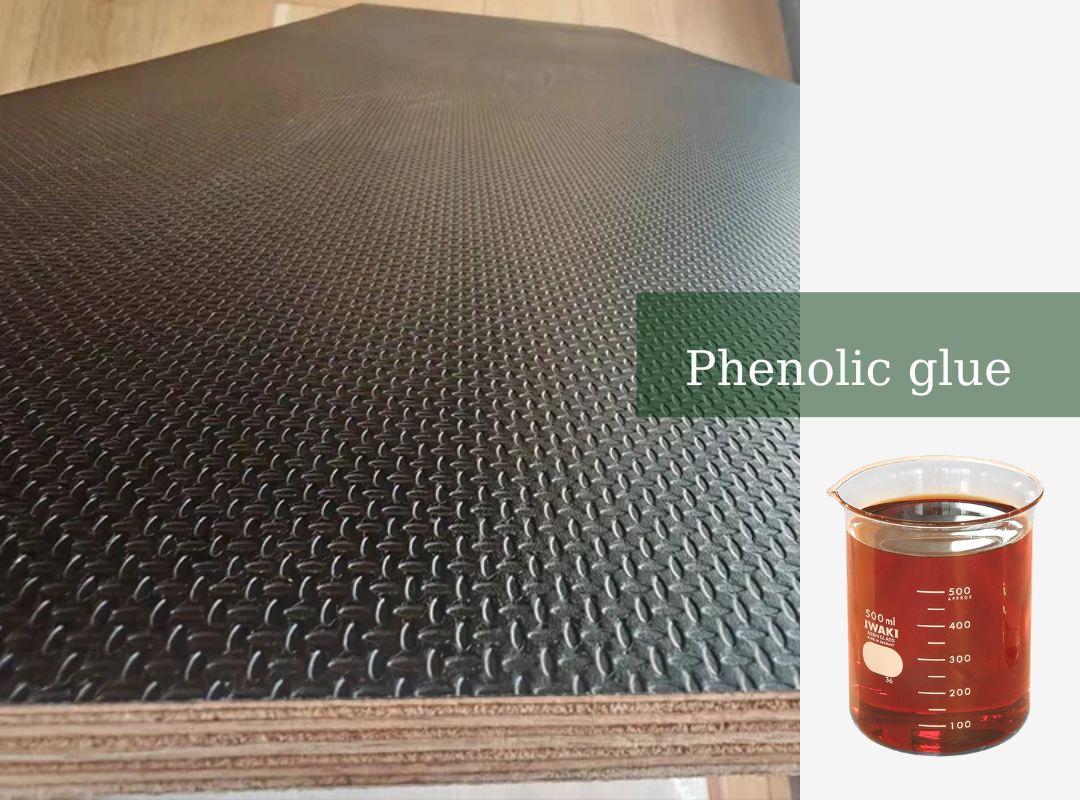
Phenolic film faced plywood is a type of construction plywood designed specifically for concrete formwork applications. The panel consists of a plywood core bonded with waterproof adhesive and covered with phenolic resin-impregnated film on both surfaces.
The phenolic film creates a protective barrier that helps prevent moisture penetration and reduces concrete adhesion during casting operations.
Compared with ordinary plywood, phenolic film faced plywood offers significantly better performance in demanding construction environments because it is engineered for repeated exposure to water, pressure, and outdoor conditions.
A typical film faced plywood panel includes:
- Hardwood or eucalyptus plywood core
- WBP phenolic glue bonding
- Phenolic film overlay
- Waterproof edge sealing
The combination of these components determines the overall durability and reuse performance of the panel.
Why Contractors Prefer Phenolic Film Faced Plywood
Construction companies around the world continue choosing phenolic film faced plywood because it provides a practical balance between performance and cost.
Compared with traditional timber formwork, film faced plywood offers a smoother surface and more predictable results throughout the construction process.
Key advantages include:
- Better concrete surface finish
- Faster installation and stripping
- Reduced concrete sticking
- Improved moisture resistance
- Higher reuse potential
- Lower maintenance requirements
These benefits help contractors improve productivity while reducing labor costs associated with cleaning and repairing formwork systems.
Understanding the Role of Phenolic Film
The dark brown or black surface commonly found on film faced plywood comes from phenolic film paper. This paper is saturated with phenolic resin and permanently bonded to the plywood surface during hot pressing.
The film serves several important functions. It protects the plywood from moisture exposure, improves abrasion resistance, and creates a smooth casting surface that reduces concrete adhesion.
Higher-quality film generally delivers better durability and more consistent reuse performance.
The most common film weights used in the market include:
| Film Weight | Typical Application |
|---|---|
| 120 gsm | Low-cycle projects |
| 165 gsm | Standard construction |
| 220 gsm | Commercial buildings |
| 240 gsm | Infrastructure projects |
For most commercial construction projects, 220 gsm film is often considered the most balanced option because it provides good durability without significantly increasing material cost.
Why WBP Phenolic Glue Matters
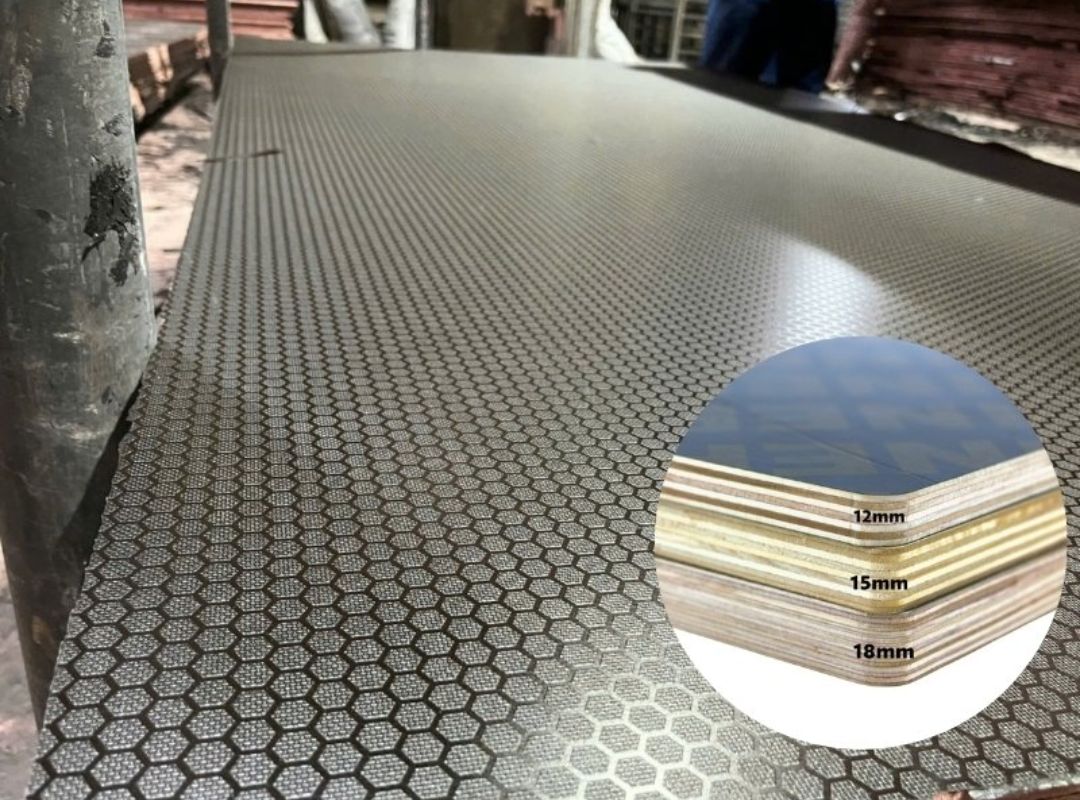
While buyers often focus on film quality, the glue system inside the panel is equally important.
WBP stands for Water Boiled Proof, a performance standard that indicates the plywood can maintain bond integrity under prolonged moisture exposure. High-quality film faced plywood typically uses WBP phenolic glue, which offers superior resistance against delamination and water damage.
Compared with lower-grade adhesive systems, WBP phenolic glue provides:
- Stronger veneer bonding
- Better moisture resistance
- Improved structural stability
- Lower risk of delamination
- Longer service life
For projects involving repeated exposure to rain, humidity, or wet concrete, WBP glue becomes one of the most important quality indicators.
Choosing the Right Core Material
The plywood core acts as the structural backbone of the panel. Core quality affects strength, density, screw-holding capability, and reuse cycles.
Among the various core options available, eucalyptus has become one of the most widely used species in film faced plywood manufacturing.
Eucalyptus core plywood is popular because it offers:
- High density
- Good load-bearing performance
- Stable dimensions
- Competitive cost
Acacia core plywood is another common option, particularly in applications requiring higher hardness and impact resistance.
Some manufacturers also use mixed hardwood cores to balance structural performance and production cost.
Regardless of the species used, buyers should evaluate the quality of the veneer construction and internal void control. Excessive gaps between veneer layers can significantly reduce panel lifespan and structural reliability.
Why Density Is an Important Specification
Density is often overlooked during sourcing discussions, yet it has a direct impact on durability and reuse performance.
Higher-density plywood generally offers better resistance to impact, improved screw retention, and greater dimensional stability. These characteristics become especially important when panels are repeatedly assembled, dismantled, and transported throughout a project.
For eucalyptus core film faced plywood, density typically ranges between:
600–700 kg/m³
Panels within this range generally provide a good balance between strength and handling efficiency.
Although lower-density panels may initially appear cheaper, they often produce fewer reuse cycles and lower overall value.
Understanding Reuse Cycles
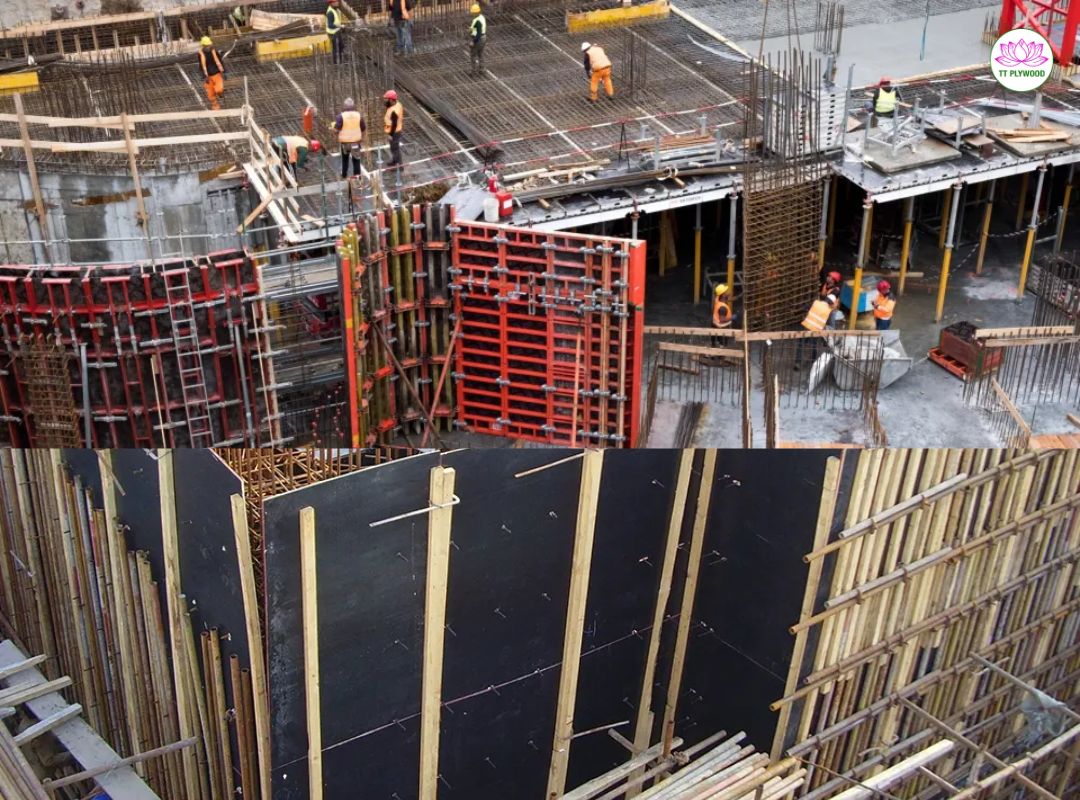
One of the most common questions buyers ask is how many times film faced plywood can be reused.
The answer depends on several factors, including panel quality, project conditions, and maintenance practices.
Typical industry expectations are shown below:
| Plywood Grade | Estimated Reuse Cycles |
|---|---|
| Standard Grade | 5–10 cycles |
| Commercial Grade | 10–20 cycles |
| Premium Grade | 20–30 cycles |
| Infrastructure Grade | 30–50+ cycles |
These figures should be treated as reference values rather than guarantees. Actual performance depends heavily on how panels are handled and maintained on site.
Why Some Panels Fail Prematurely
Many contractors assume reuse cycles depend entirely on product quality. In reality, site management often plays an equally important role.
Even premium film faced plywood may experience early failure if basic maintenance practices are ignored.
The most common causes include:
- Exposed and unsealed edges
- Improper storage conditions
- Aggressive stripping methods
- Concrete residue build-up
Moisture penetration through cut edges remains one of the leading causes of swelling and delamination. Proper sealing and storage can dramatically increase the lifespan of a panel.
Similarly, cleaning panels after each use helps preserve the phenolic film surface and improve future performance.
Concrete Surface Finish Quality
One of the main reasons contractors invest in phenolic film faced plywood is its ability to produce smooth and consistent concrete surfaces.
The phenolic film creates a uniform casting surface that minimizes defects and reduces patching work after formwork removal.
Benefits of a high-quality film surface include:
- Cleaner concrete appearance
- Fewer surface imperfections
- Reduced finishing costs
- Faster project completion
For exposed architectural concrete, formwork quality becomes even more important because imperfections are immediately visible.
Key Specifications Buyers Should Verify
Before placing an order, buyers should always request technical specifications from suppliers.
The following parameters are among the most important:
| Specification | Recommended Value |
|---|---|
| Glue Type | WBP Phenolic |
| Core Material | Eucalyptus / Hardwood |
| Film Weight | 165–240 gsm |
| Moisture Content | Below 12% |
| Density | 600–700 kg/m³ |
| Thickness Tolerance | ±0.5 mm |
| Edge Sealing | Waterproof Paint |
Reviewing these specifications helps buyers compare products objectively and avoid purchasing decisions based purely on price.
Common Mistakes When Buying Film Faced Plywood
Many procurement problems occur because buyers focus too heavily on initial material cost.
The most common mistakes include:
- Choosing panels based solely on price
- Ignoring glue specifications
- Overlooking density requirements
- Selecting inappropriate film weights
- Failing to request technical documentation
In many cases, a slightly more expensive panel delivers significantly lower formwork costs because it can be reused more times.
The true measurement of value is not purchase price per sheet, but cost per successful reuse cycle.
How to Choose the Right Film Faced Plywood for Your Project
The best plywood specification depends on the actual requirements of the project rather than selecting the highest specification available.
For residential projects, eucalyptus core plywood with standard WBP phenolic glue often provides excellent value.
Commercial buildings typically benefit from stronger panels with higher film weights and improved reuse performance.
Infrastructure projects such as bridges, tunnels, and high-rise developments generally require premium-grade plywood capable of achieving higher reuse cycles.
A simple selection approach is:
| Project Type | Recommended Specification |
|---|---|
| Residential | Eucalyptus Core + 165 gsm Film |
| Commercial | Hardwood Core + 220 gsm Film |
| Infrastructure | Premium Core + 220–240 gsm Film |
Matching specifications to project requirements is usually the most effective way to maximize formwork ROI.
Conclusion
Phenolic film faced plywood remains one of the most efficient formwork solutions available in modern construction. Its combination of moisture resistance, structural stability, smooth concrete finishing capability, and high reuse potential makes it a preferred material for contractors worldwide.
However, successful sourcing requires more than comparing prices. Buyers should carefully evaluate glue systems, core materials, density, film quality, and manufacturing standards before making a purchasing decision.
By understanding the factors that influence durability and reuse performance, contractors can select the right film faced plywood for their projects, reduce total formwork costs, and improve long-term profitability.
FAQ
What is the difference between film faced plywood and ordinary plywood?
Film faced plywood uses phenolic film overlays and waterproof adhesives, making it suitable for repeated concrete formwork applications. Ordinary plywood is generally intended for furniture and interior uses.
Is phenolic film faced plywood waterproof?
The plywood is highly water-resistant because of the phenolic film and WBP glue system. However, proper storage and edge protection remain important for maximum durability.
How many times can film faced plywood be reused?
Depending on panel quality and site handling practices, reuse cycles can range from approximately 5 uses for basic grades to more than 50 uses for premium infrastructure-grade panels.
Many contractors prefer 220 gsm phenolic film because it provides excellent durability while remaining cost-effective for repeated formwork applications.
References
-
EN 314-2: Plywood Bonding Quality Requirements.
-
EN 636: Structural Plywood Specifications.
-
APA – The Engineered Wood Association. Concrete Forming Design Guide.
-
Forest Products Laboratory. Wood Handbook: Wood as an Engineering Material.
-
European Panel Federation (EPF). Wood-Based Panels Industry Report.


