



-
-
-
Total payment:
-




Why Furniture Manufacturers Are Switching to Melamine Plywood
Posted by Hoàng Anh Tuấn at 02/06/2026

Furniture manufacturers are increasingly choosing melamine plywood to reduce production costs, improve efficiency, and maintain consistent product quality.
While veneer plywood remains popular for premium furniture, melamine plywood has become a preferred solution for many commercial and large-scale manufacturing applications.
Manufacturing Cost Advantages of Melamine Plywood
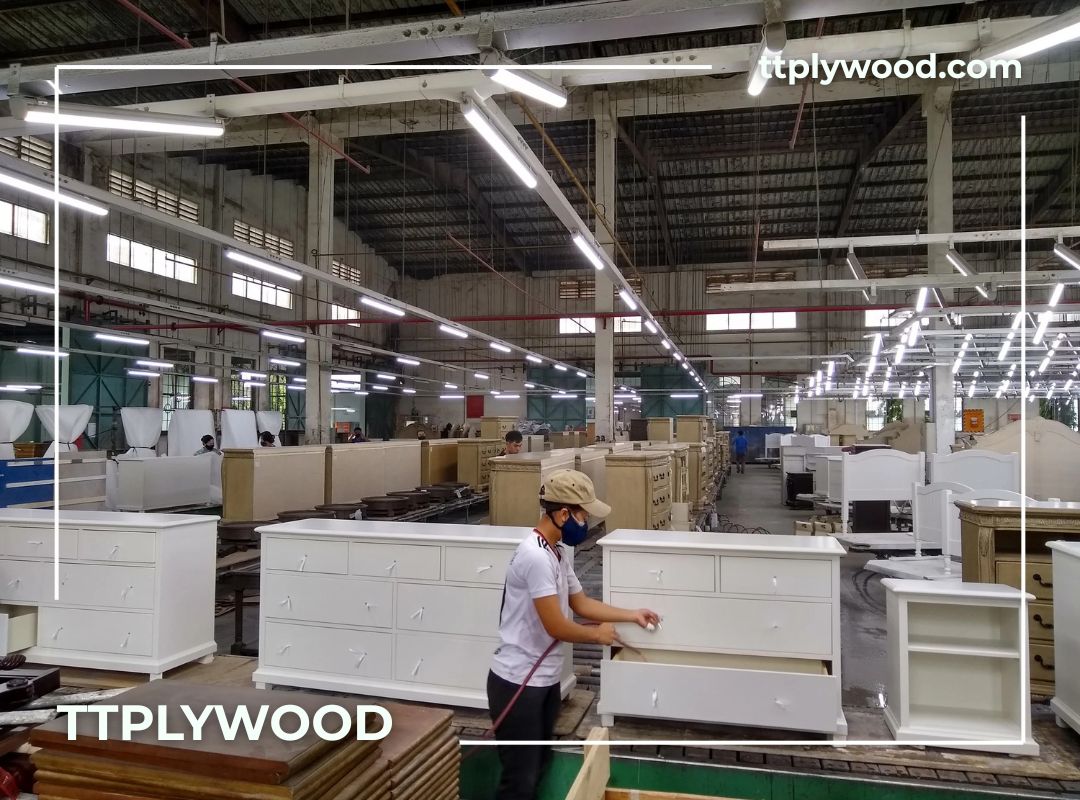
Furniture factory production line with automated panel processing equipment.
Rising Cost Pressures in Furniture Manufacturing
Furniture manufacturers are under constant pressure to control costs while maintaining product quality.
Labor expenses continue to rise in many regions, energy prices remain volatile, and supply chain disruptions can affect production schedules. In this environment, every additional manufacturing process affects profitability.
How Melamine Plywood Reduces Production Costs
Traditional veneer plywood typically requires several finishing stages, including sanding, staining, coating, drying, and final inspection. These processes demand additional labor, equipment, workspace, and production time.
Melamine plywood simplifies manufacturing because the decorative surface is already applied during production. By eliminating many finishing operations, manufacturers can reduce labor requirements, shorten production cycles, and lower overall manufacturing costs.
Production Efficiency Benefits of Melamine Plywood
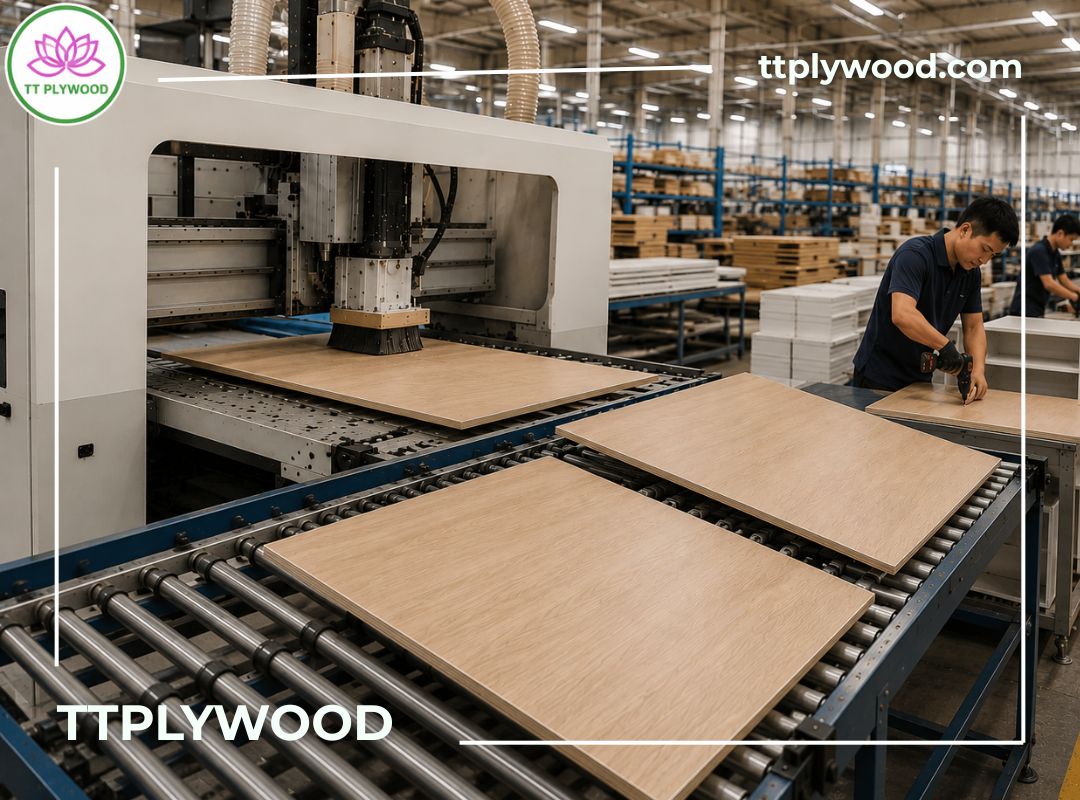
A Simplified Manufacturing Workflow
One of the biggest advantages of melamine plywood is its ready-to-use surface.
With veneer plywood, furniture components often pass through multiple finishing stages before they can be assembled. Melamine plywood streamlines this process because panels can move directly from cutting and machining to edge banding and assembly.
Faster Output and Shorter Lead Times
This simplified workflow helps factories increase output while reducing dependence on skilled finishing labor. Manufacturers also benefit from shorter lead times and more reliable delivery schedules, which are increasingly important in today's competitive furniture market.
For large-scale furniture production, these efficiency gains can have a significant impact on profitability.
Consistent Finishes for Large-Scale Furniture Production
Challenges of Natural Veneer Consistency
Natural wood veneer is valued for its beauty and uniqueness, but those same characteristics can create challenges during mass production.
Because every veneer sheet is different, manufacturers often encounter variations in grain pattern, color tone, and natural markings. Matching panels across large production runs can require additional time and careful quality control.
Why Manufacturers Prefer Melamine Plywood Consistency
Melamine plywood offers a more predictable solution. Decorative patterns, colors, and textures remain consistent from panel to panel, making it easier to achieve uniform results across hundreds or even thousands of furniture units.
For manufacturers serving commercial projects or large retail programs, this consistency helps improve efficiency while maintaining quality standards.
Modern Melamine Plywood vs Natural Veneer
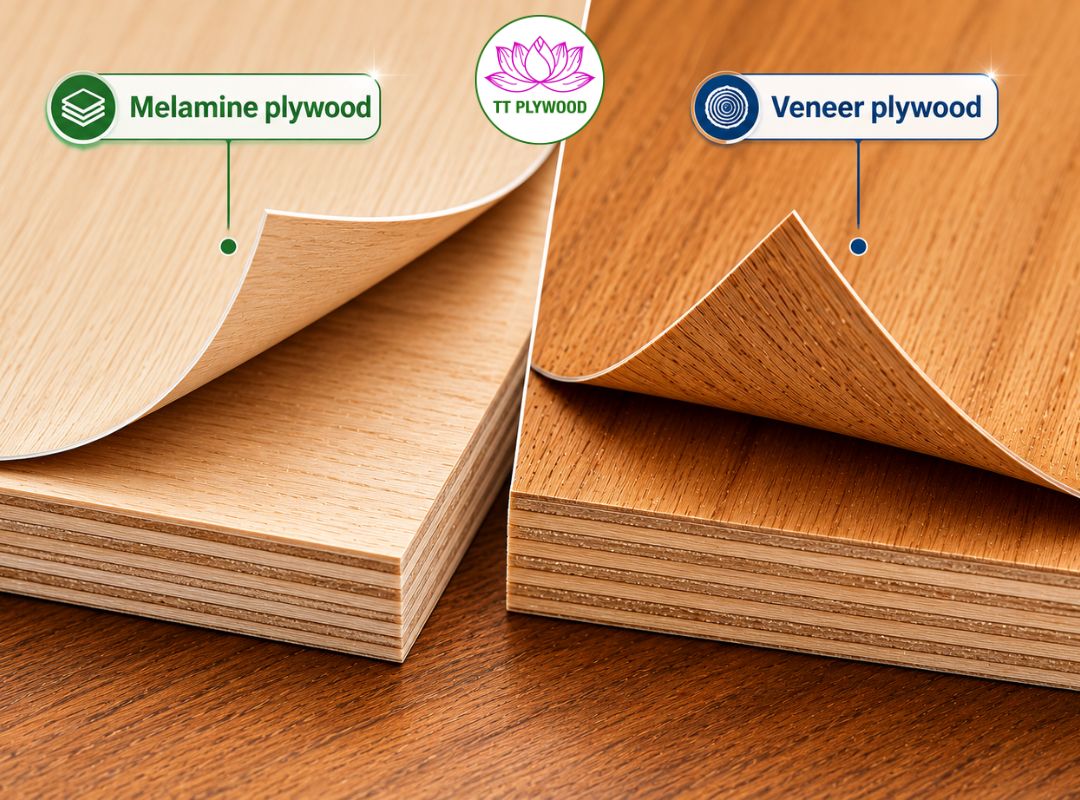
Improvements in Decorative Surface Technology
In the past, melamine surfaces often looked artificial and lacked the visual appeal of real wood.
Advances in decorative surface technology have changed that perception. Modern melamine plywood can feature highly realistic woodgrain designs, textured finishes, matte surfaces, and synchronized grain effects that closely mimic natural timber.
Can Melamine Faced Ply Match Real Wood Appearance?
As a result, many contemporary melamine faced ply products provide an appearance that satisfies both manufacturers and end users. In residential and commercial furniture applications, the visual difference between premium melamine surfaces and natural veneer is becoming increasingly difficult to detect.
While natural veneer still offers unmatched authenticity, modern melamine plywood has narrowed the gap considerably.
Durability Comparison: Melamine Plywood and Veneer Plywood
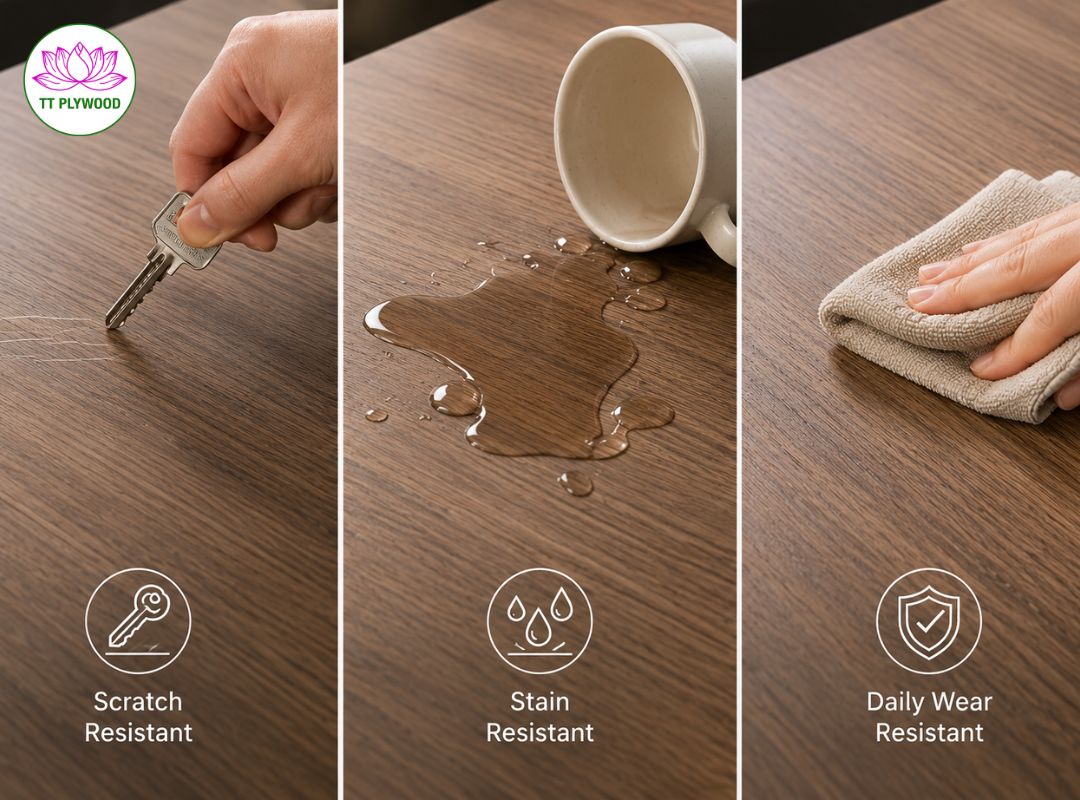
Durability Benefits of Melamine Plywood
Furniture surfaces must withstand years of daily use, especially in commercial environments.
Melamine plywood is known for its resistance to scratches, stains, abrasion, household chemicals, and frequent cleaning. These characteristics make it particularly suitable for furniture that experiences heavy use.
How Veneer Plywood Performs Over Time
Veneer plywood can also provide excellent durability when properly finished. However, because the surface consists of natural wood, it is generally more susceptible to visible scratches, dents, and wear over time.
For offices, schools, retail spaces, and other high-traffic environments, melamine plywood often delivers stronger long-term performance with less maintenance.
Why Commercial Furniture Projects Choose Melamine Plywood
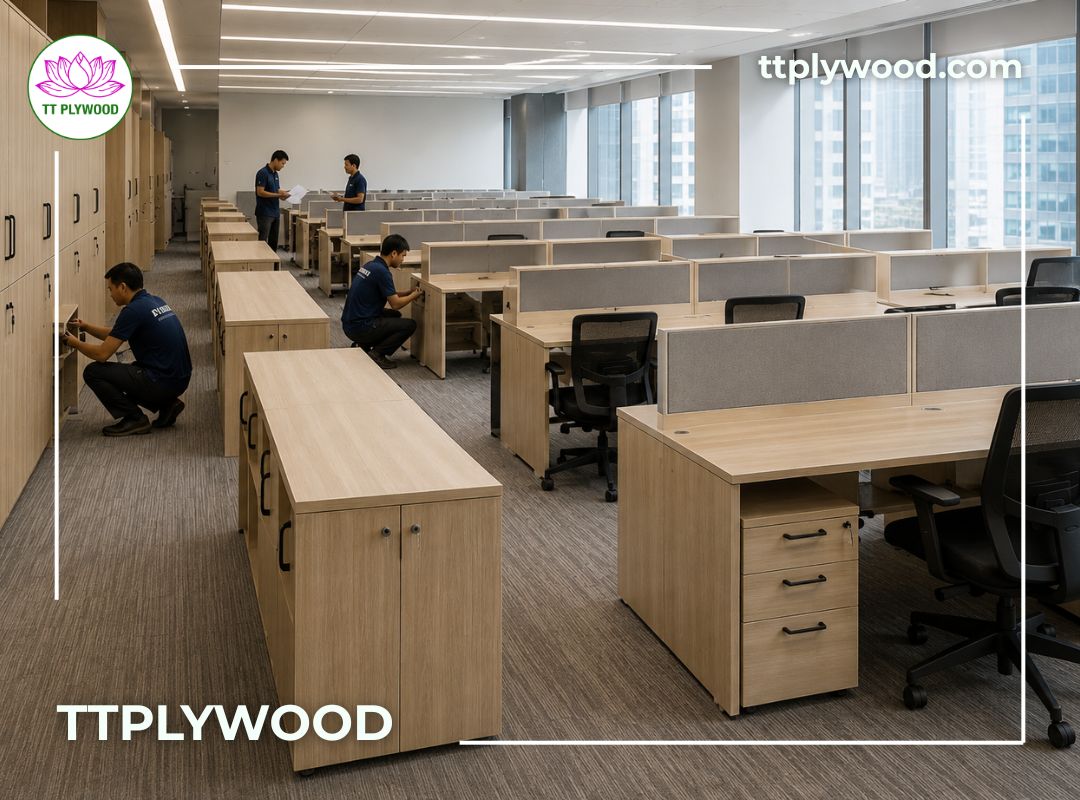
Requirements of Commercial Furniture Manufacturing
Large commercial projects depend on predictable costs, reliable schedules, and consistent quality.
Whether furnishing offices, schools, hotels, healthcare facilities, apartment developments, or retail chains, manufacturers must deliver large quantities of furniture within strict timelines and budgets.
Benefits for Large-Scale Projects
Melamine plywood supports these goals by reducing finishing requirements and simplifying quality control. The result is a more efficient production process with lower labor costs, less material waste, and improved planning accuracy.
For export-oriented furniture manufacturers, these advantages can strengthen competitiveness and help meet demanding project schedules.
Common Applications of Melamine Plywood in Furniture Manufacturing:
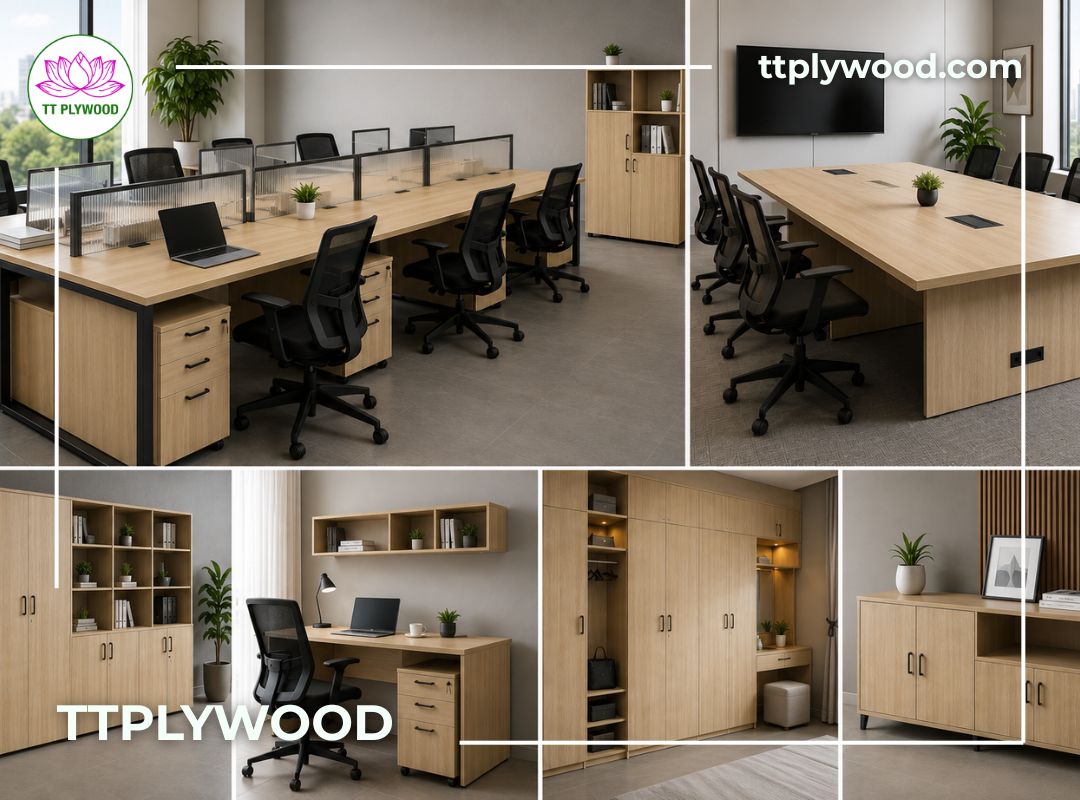
Melamine plywood is widely used throughout the furniture industry because it combines durability, consistency, and manufacturing efficiency.
|
Application |
Why Melamine Plywood Is Preferred |
Common Products |
|
Kitchen Cabinets |
Easy-to-clean surface and resistance to everyday wear |
Base cabinets, wall cabinets, pantry units |
|
Wardrobes |
Consistent finishes help maintain a uniform appearance across large projects |
Sliding wardrobes, closet systems, storage units |
|
Office Furniture |
Durable and scratch-resistant surface suitable for daily use |
Desks, workstations, filing cabinets |
|
Retail Fixtures |
Withstands frequent customer interaction while maintaining appearance |
Display shelves, counters, merchandising units |
|
Educational Furniture |
Durable, low-maintenance, and cost-efficient for high-traffic environments |
Student desks, storage cabinets, library furniture |
These applications demonstrate why melamine plywood remains a popular material choice for furniture manufacturers seeking reliable performance, consistent aesthetics, and efficient production.
When Veneer Plywood Is Still the Better Choice
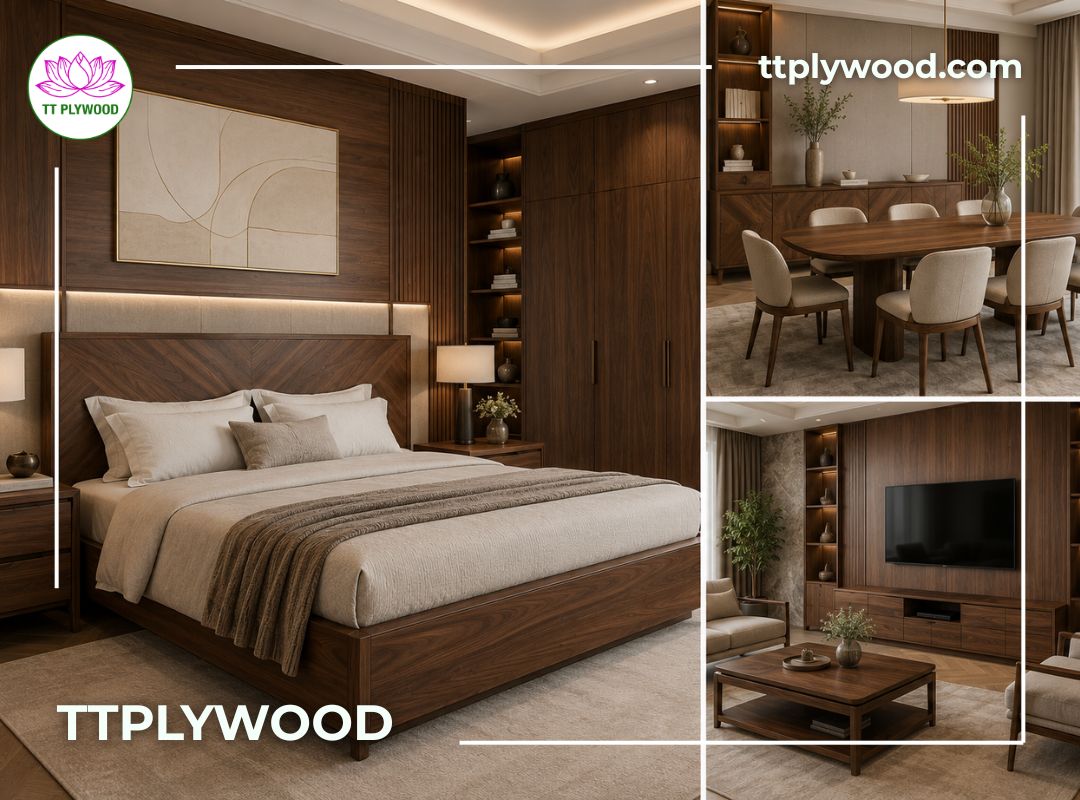
Despite the growing popularity of melamine plywood, veneer plywood continues to play an important role in the furniture industry.
Luxury Furniture
Natural wood veneer provides depth, character, and authenticity that many premium customers appreciate.
Hospitality Projects
Luxury hotels and executive spaces often favor genuine wood surfaces to create a more sophisticated and upscale atmosphere.
Architectural Interiors
Architects and designers frequently specify veneer plywood when craftsmanship, natural materials, and unique wood grain patterns are central to the design concept.
In these applications, veneer plywood remains difficult to replace.
The Future of Melamine Plywood in Furniture Manufacturing
Market Trends Driving Adoption
Manufacturers focused on efficiency, cost control, commercial furniture, and high-volume production are increasingly adopting melamine plywood because it supports faster and more predictable manufacturing processes.
Will Melamine Plywood Replace Veneer Completely?
At the same time, veneer plywood continues to serve luxury residential, hospitality, and architectural projects where natural aesthetics remain a priority.
Rather than replacing veneer plywood entirely, melamine plywood is expanding its role and becoming an essential material in modern furniture manufacturing.
Frequently Asked Questions About Melamine Plywood
What is melamine plywood?
Melamine plywood is a plywood panel covered with a decorative melamine-impregnated paper surface. It provides a finished appearance without requiring additional painting, staining, or coating, making it popular in furniture manufacturing.
Why do furniture manufacturers prefer melamine plywood?
Many furniture manufacturers choose melamine plywood because it reduces finishing costs, speeds up production, provides consistent surface quality, and offers good resistance to scratches and stains.
Is melamine plywood cheaper than veneer plywood?
In many furniture applications, melamine plywood can reduce overall production costs because it eliminates several finishing processes. While material prices vary, the savings often come from reduced labor and shorter manufacturing times.
Is melamine plywood durable?
Yes. Melamine plywood is known for its resistance to scratches, stains, abrasion, and routine cleaning. This makes it suitable for cabinets, office furniture, wardrobes, and commercial interiors.
Can melamine plywood look like real wood?
Modern melamine faced ply products can closely replicate natural wood grain through advanced printing and embossing technologies. Many consumers find it difficult to distinguish premium melamine surfaces from natural veneer at first glance.
What are the common uses of melamine plywood?
Melamine ply board is commonly used in kitchen cabinets, wardrobes, office furniture, retail fixtures, educational furniture, and a wide range of commercial interior projects where durability and consistency are important.
When should veneer plywood be used instead of melamine plywood?
Veneer plywood is often preferred for luxury furniture, high-end hospitality projects, and architectural interiors where authentic wood grain and natural aesthetics are important design requirements.
Conclusion
Melamine plywood helps furniture manufacturers reduce costs, speed up production, and maintain consistent quality. While veneer plywood remains the preferred choice for premium projects, melamine plywood continues to gain popularity in commercial and large-scale furniture manufacturing.
Looking for Reliable Melamine Plywood Solutions?
TT Plywood supplies high-quality melamine plywood, commercial plywood, and customized panel solutions for furniture manufacturers worldwide.
Contact our team today to discuss specifications, customization options, and export requirements.
References
APA – The Engineered Wood Association
https://www.apawood.org
Decorative Hardwoods Association
https://decorativehardwoods.org
USDA Forest Products Laboratory – Wood Handbook
https://www.fpl.fs.usda.gov
Architectural Woodwork Institute
https://www.awinet.org
Woodworking Network
https://www.woodworkingnetwork.com


