


-
-
-
Total payment:
-



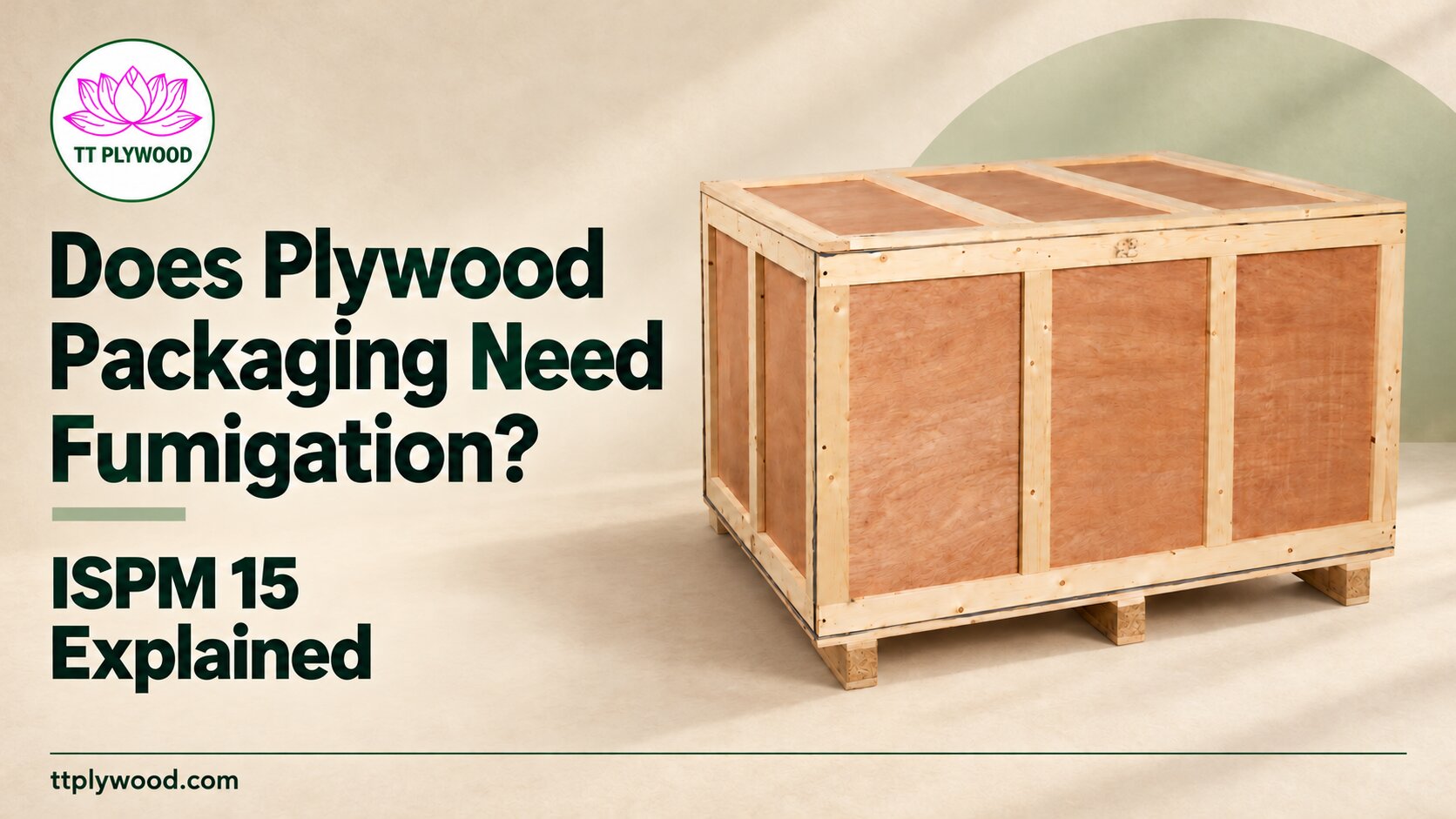
Does Plywood Packaging Need Fumigation? ISPM 15 Explained
Posted by Hoàng Anh Tuấn at 26/10/2026

A shipment is packed in plywood crates, but the freight forwarder asks for fumigation documents. Is treatment actually necessary?
Packaging made entirely from processed plywood is exempt from ISPM 15 treatment and marking requirements. However, solid-wood runners, frames, pallets or bracing used with it may still require treatment and marking.
The deciding factor is the complete packaging construction—not simply whether the supplier calls it a “plywood crate.” Checking every component before loading helps avoid unnecessary treatment costs and problems at the destination.
When Is Plywood Packaging Exempt from ISPM 15?
ISPM 15 addresses the risk of spreading quarantine pests through raw-wood packaging in international trade. It covers items such as pallets, crates and dunnage, while excluding packaging made from sufficiently processed wood, including plywood (IPPC Secretariat, n.d.).
Packaging Made Entirely from Processed Plywood
Plywood manufacturing involves processing veneers and bonding them into panels. ISPM 15 recognises processed wood materials as presenting a different pest risk from untreated solid timber.
A box made entirely from plywood, with metal fasteners and fittings, does not require additional treatment or an ISPM 15 mark under the standard. The IPPC explanatory document expressly confirms this exemption for packaging made completely from exempt processed materials (IPPC Secretariat, 2017).
The Exemption Is Not Limited to Thin Plywood
The exemption for processed plywood is separate from the exemption for wood measuring 6 mm or less in thickness.
A plywood panel does not lose its processed-wood exemption simply because it is thicker than 6 mm. Conversely, a thick solid-timber component does not become exempt because plywood is attached to it (European Commission, n.d.).
What If the Crate Contains Solid Wood?
Many crates have plywood walls but use solid timber underneath or around the edges. These components must be considered separately.
The IPPC explains that packaging combining processed wood with regulated wood should use appropriately treated wood, with the assembled unit marked to indicate compliance (IPPC Secretariat, 2017).
|
Packaging arrangement |
ISPM 15 position |
What to check |
|
Plywood panels with metal fasteners only |
Exempt from treatment and marking under ISPM 15 |
Confirm there are no regulated timber components |
|
Plywood box with solid-wood runners thicker than 6 mm |
Solid-wood components are subject to the applicable requirements |
Approved treatment and marking arrangements |
|
Plywood crate placed on a solid-wood pallet |
The pallet must be assessed separately |
Pallet construction, treatment and marks |
|
Plywood packaging secured with loose timber blocks |
Regulated timber dunnage remains subject to requirements |
Every block or brace added during loading |
|
Packaging made wholly from wood 6 mm thick or less |
A separate exemption applies |
Confirm the thickness of all wood components |
Check More Than the Crate Walls
Consider a machinery crate with plywood sides, a timber base and wooden blocks securing the equipment. Looking only at the walls misses the components most relevant to ISPM 15.
Ask the packer for a material list or clear photographs showing the underside, internal frame and securing blocks. Include the pallet and any materials the loading team plans to add later.
Do Not Overlook Dunnage
Dunnage includes loose wood used to support or secure cargo. A fully exempt plywood box does not make separate solid-timber bracing exempt.
The same distinction applies whether the timber is supplied by the crate manufacturer, warehouse or transport contractor. Review the finished load rather than only the packaging purchase order.
For broader applications, read about plywood packaging in international shipping
Does ISPM 15 Compliance Always Mean Fumigation?
No. Fumigation is one treatment route; it is not another name for ISPM 15 compliance.
Heat Treatment and Fumigation Are Different
Approved heat treatment can satisfy the relevant requirements without fumigation. APHIS describes separate heat-treatment and fumigation programmes and confirms that wood packaging does not need both treatments simply to comply with ISPM 15 (USDA APHIS, n.d.).
Therefore, when someone requests “fumigated packaging,” clarify whether they mean:
- A specific fumigation treatment.
- Any acceptable ISPM 15 treatment.
- Additional documentation required by the buyer or shipment instructions.
These are different requests and should be resolved before the crate is manufactured.
The Official Mark Is Not a Generic Supplier Stamp
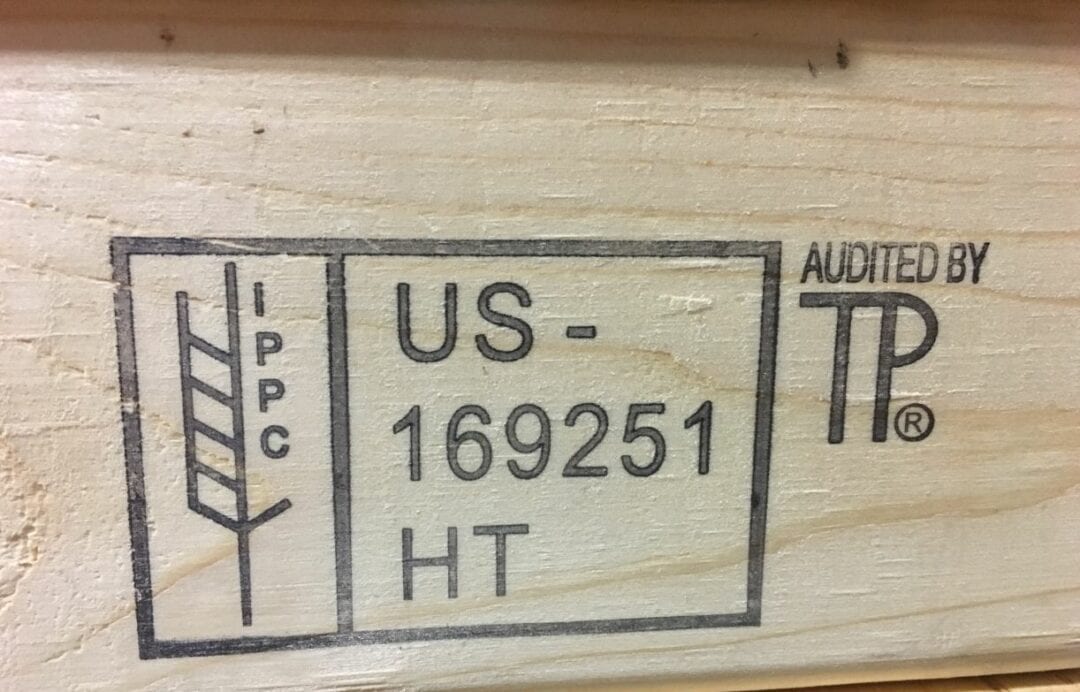
Example of an ISPM 15 mark on wood packaging. Source: SharkCrates.
For regulated packaging, the official mark identifies the country, authorised producer or treatment provider, and treatment applied, alongside the IPPC symbol.
In the United States, APHIS inspectors check the mark and look for signs of pests. APHIS also states that noncompliant regulated wood packaging will not be allowed entry (USDA APHIS, 2026).
Do not create a mark yourself or assume a supplier’s “export quality” stamp provides the same assurance.
What Should Buyers Check Before Shipment?
A short check during packaging design is easier than investigating missing information after the container has been loaded.
Use a Component-Level Checklist
Before approving the packaging:
- Identify the materials. List the panels, base, frame, runners, pallet and dunnage.
- Confirm the destination requirements. Check with the importer and the relevant plant-health authority.
- Resolve regulated timber components. Agree on treatment and authorised marking before manufacture.
- Review shipment documents. Make sure the packaging description matches its actual construction.
- Inspect the finished load. Check for timber additions or substitutions during packing.
For EU-bound shipments, the European Commission distinguishes regulated wood packaging from exempt processed-wood packaging. For US shipments, APHIS likewise lists plywood among alternatives outside its regulated wood-packaging category (European Commission, n.d.; USDA APHIS, 2026).
Separate Packaging Rules from Cargo Requirements
An exemption for the packaging does not establish that the cargo itself meets every import requirement.
For example, plywood sheets shipped as merchandise and timber used to support those sheets have different roles. Check the commodity requirements for the goods separately from the packaging requirements.
When discussing an order with TT Plywood , provide the destination, panel specifications and intended crate construction. This helps distinguish the plywood requirement from any treatment needed for other packaging components.
Frequently Asked Questions
Does a Plywood Crate Need an ISPM 15 Stamp?
A crate made entirely from exempt processed plywood does not require the mark under ISPM 15. A mixed-material crate containing regulated solid wood requires appropriate treatment and marking arrangements.
Can an ISPM 15 Mark Appear on a Plywood Wall?
Yes. For a compliant mixed-material unit, the mark may be placed on the processed-wood section for visibility. This does not mean the plywood itself required treatment (IPPC Secretariat, 2017).
Is “No Fumigation Needed” Enough to Approve Packaging?
No. That statement could describe exempt plywood packaging or heat-treated regulated packaging. Confirm which applies and inspect the complete assembly.
Does ISPM 15 Treatment Prevent Future Mold or Pest Contamination?
No. ISPM 15 measures are not intended to provide ongoing protection against contamination. Storage, cleanliness and moisture control remain separate considerations (IPPC Secretariat, n.d.).
The practical rule: check every packaging component. Plywood can remove the need for ISPM 15 treatment of the panels, but solid-timber additions can still bring treatment and marking requirements into the shipment.
References
European Commission (n.d.) Requirements for wood packaging & dunnage. Available at: https://food.ec.europa.eu/plants/plant-health-and-biosecurity/trade-plants-plant-products-non-eu-countries/requirements-wood-packaging-dunnage_en (Accessed: 20 October 2026).
IPPC Secretariat (2017) Explanatory document for ISPM 15: Regulation of wood packaging material in international trade. Rome: Food and Agriculture Organization of the United Nations. Available at: https://www.ippc.int/static/media/files/publication/en/2017/02/ISPM_15_ED_En_2017-02-10.pdf (Accessed: 20 October 2026).
IPPC Secretariat (n.d.) ISPM 15: Regulation of wood packaging material in international trade. Available at: https://www.ippc.int/en/publications/640/ (Accessed: 20 October 2026).
USDA APHIS (2026) Import ISPM 15-compliant wood packaging material into the United States. Available at: https://www.aphis.usda.gov/plant-imports/wood-packaging-material/import (Accessed: 20 October 2026).
USDA APHIS (n.d.) Export ISPM 15-compliant wood packaging material from the United States. Available at: https://www.aphis.usda.gov/plant-exports/wood-packaging-material/export (Accessed: 20 October 2026).
SharkCrates (n.d.) ISPM-15 certified wood packaging and shipping crates. Available at: https://sharkcrates.com/ispm-15-certified-wood-packaging-and-shipping-crates/ (Accessed: 20 October 2026).


