



-
-
-
Total payment:
-




How LVL Packaging Materials Reduce Export Damage Rates
Posted by Thanh Uyên at 11/06/2026

Introduction
International trade relies heavily on efficient logistics and reliable packaging solutions. Every year, exporters invest significant resources in protecting products throughout complex transportation networks that may involve multiple warehouses, ports, carriers, and handling operations. Despite these efforts, cargo damage remains a costly challenge across global supply chains.
Packaging failures can lead to product losses, delayed deliveries, customer complaints, and increased operational expenses. As a result, manufacturers and exporters are increasingly seeking packaging materials that offer greater strength, consistency, and reliability.
Among the available options, LVL packaging materials have become a preferred solution for many industrial export applications. Thanks to their engineered structure and predictable performance, LVL products help improve cargo stability and reduce the likelihood of damage during transportation.
This article examines how LVL packaging materials contribute to lower export damage rates and why they have become an important component of modern export packaging systems.
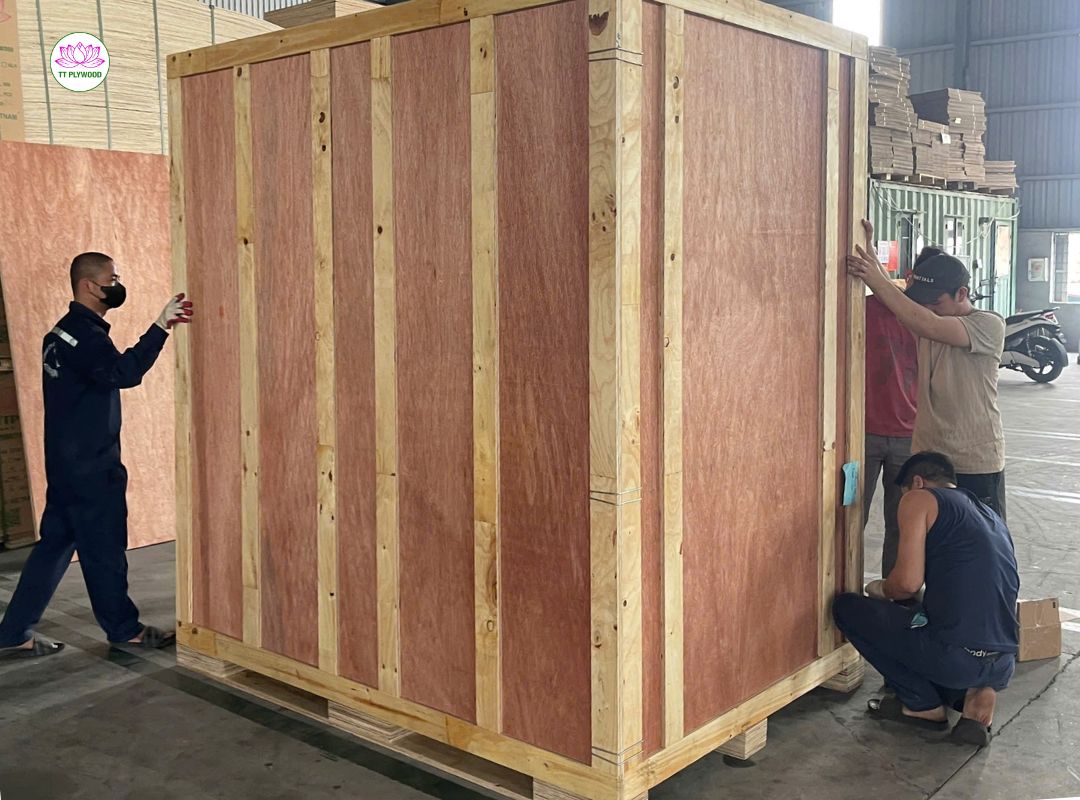
( Box Plywood with LVL frame)
Understanding LVL Packaging Materials
Laminated Veneer Lumber (LVL) is an engineered wood product manufactured by bonding multiple layers of thin wood veneers together under heat and pressure. Unlike traditional solid timber, which may contain natural defects such as knots, splits, or grain irregularities, LVL is designed to deliver consistent mechanical performance throughout the material.
The manufacturing process allows veneers to be arranged in a way that maximizes strength and stability. As a result, LVL offers predictable structural properties that are highly valued in industrial packaging applications.
Today, LVL packaging materials are commonly used in:
- Export pallets
- Crate frameworks
- Machinery skids
- Container blocking systems
- Heavy-duty transport supports
Because of their structural reliability, LVL products are frequently selected for international shipments involving valuable, oversized, or heavy cargo.
Why Export Damage Remains a Major Challenge
International transportation exposes products to a wide range of risks. During a typical export journey, cargo may experience repeated loading and unloading operations, stacking pressure, road vibration, container movement, humidity fluctuations, and accidental impacts.
Even when products themselves are manufactured to high standards, inadequate packaging can compromise shipment integrity.
The table below illustrates common causes of export-related damage:
| Cause of Damage | Impact on Cargo |
|---|---|
| Structural packaging failure | Product breakage or collapse |
| Load shifting during transit | Surface damage and deformation |
| Forklift handling incidents | Packaging penetration and impact damage |
| Excessive stacking pressure | Crate or pallet failure |
| Moisture exposure | Material deterioration |
| Inadequate support structures | Uneven load distribution |
These challenges highlight the importance of selecting packaging materials capable of maintaining structural integrity throughout the logistics process.
The Structural Strength Advantage of LVL Packaging
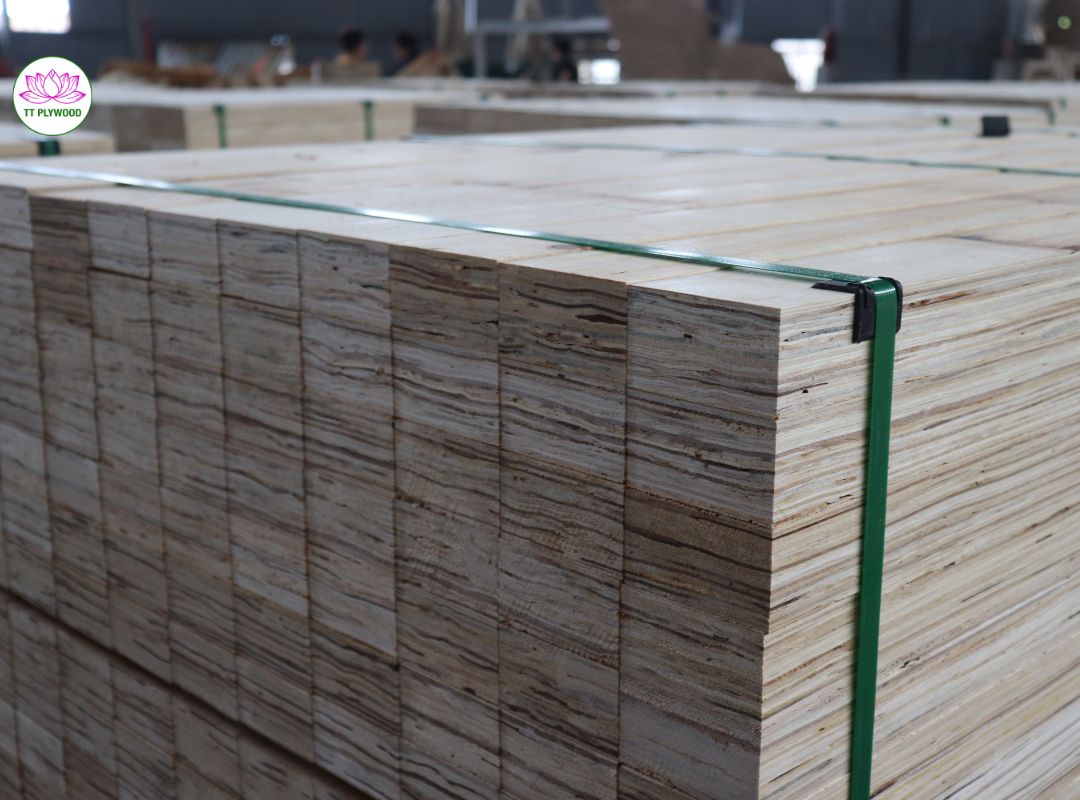
One of the primary reasons exporters choose LVL packaging materials is their superior strength.
Because veneers are laminated under controlled conditions, LVL achieves a more uniform load-bearing structure than conventional lumber. This consistency reduces the occurrence of weak points that can contribute to packaging failures during transportation.
For heavy industrial shipments, structural strength plays a critical role in protecting products from dynamic forces encountered during transit. Containers may experience sudden movement during ocean transport, while trucks and rail systems generate continuous vibration over long distances.
When packaging materials cannot withstand these stresses, the risk of cargo damage increases significantly.
LVL helps address this challenge by providing enhanced resistance to bending, compression, and deformation. The result is a packaging system that can better support heavy loads while maintaining stability throughout the shipment lifecycle.
Improved Dimensional Stability Supports Cargo Protection
Dimensional stability is another important factor influencing export damage rates.
Traditional solid wood packaging often reacts to environmental changes by expanding, contracting, twisting, or warping. These movements may compromise packaging performance and reduce cargo protection.
International shipments frequently travel through regions with dramatically different climates. A container loaded in Southeast Asia may encounter tropical humidity before passing through cooler or drier environments during transit.
Because LVL packaging materials are manufactured under controlled conditions, they generally exhibit greater dimensional stability than conventional timber products.
This stability helps maintain:
- Consistent package geometry
- Secure product positioning
- Reliable fastening performance
- Improved load retention
By minimizing structural movement, LVL contributes to a more secure shipping environment and reduces opportunities for cargo displacement.
Better Load Distribution Reduces Stress Concentration
Cargo damage often occurs when weight is distributed unevenly across a packaging structure.
When certain sections of a pallet or crate bear excessive loads, stress concentrations develop. Over time, these areas may weaken, crack, or fail, increasing the likelihood of product damage.
LVL's engineered composition allows for more uniform load distribution across the packaging system.
The comparison below illustrates the difference:
| Performance Factor | LVL Packaging Materials | Traditional Lumber |
|---|---|---|
| Load Distribution Consistency | High | Variable |
| Structural Uniformity | Excellent | Moderate |
| Defect-Related Weak Points | Minimal | More Common |
| Long-Term Stability | High | Moderate |
| Heavy Load Performance | Excellent | Good |
More even load distribution not only improves packaging durability but also helps protect sensitive cargo from excessive pressure and movement.
Enhanced Resistance to Handling Damage
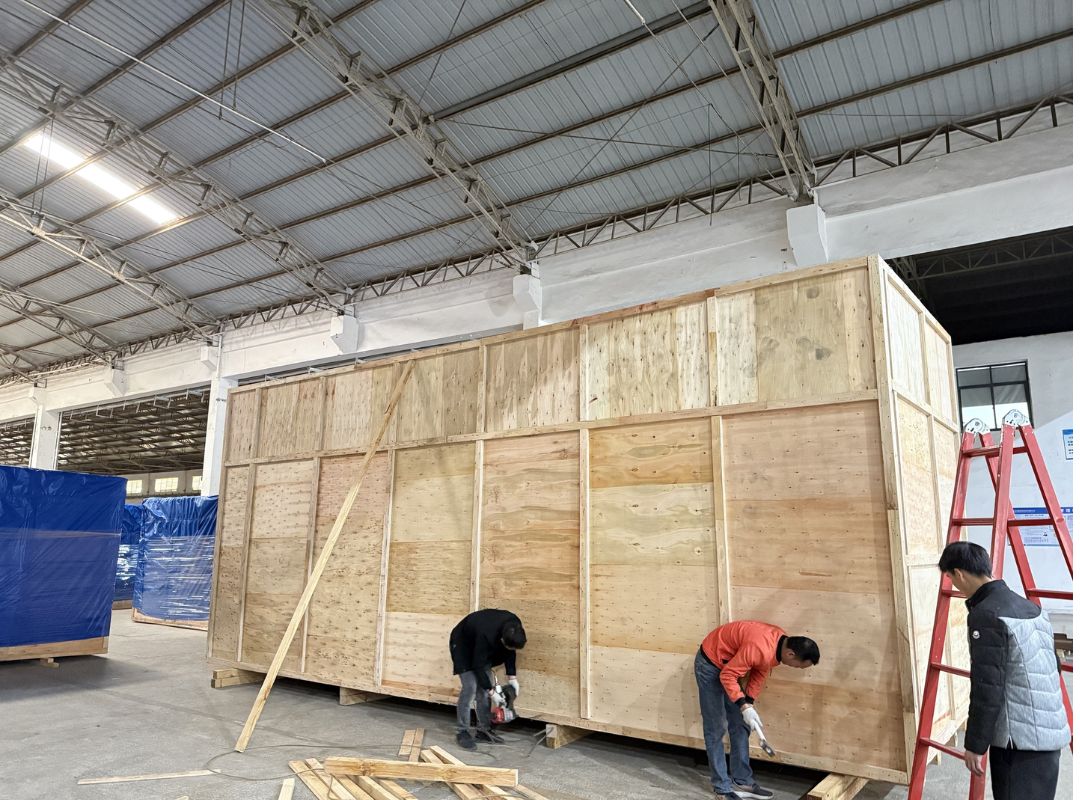
Export cargo is rarely handled just once. Throughout the supply chain, packaging may be moved multiple times by forklifts, cranes, pallet jacks, and warehouse equipment.
Each handling event introduces potential risks.
Forklift impacts are particularly common in busy logistics environments. When packaging materials split or crack during handling, cargo protection can be compromised immediately.
LVL packaging materials offer improved resistance to handling-related stresses due to their engineered structure and consistent density.
Compared with conventional lumber, LVL components are less likely to experience sudden failures caused by natural wood defects. This contributes to a more durable packaging system capable of withstanding demanding logistics operations.
For exporters shipping machinery, construction equipment, or industrial components, this added durability can significantly improve shipment reliability.
LVL Packaging for Heavy-Duty Export Applications
Heavy cargo requires packaging materials that can withstand substantial loads while maintaining structural integrity.
Industries commonly relying on LVL packaging include:
| Industry | Typical Cargo |
|---|---|
| Manufacturing | Industrial machinery |
| Construction | Building equipment and materials |
| Renewable Energy | Wind and solar components |
| Automotive | Engines, tooling, and spare parts |
| Mining | Heavy machinery components |
| Metal Processing | Fabricated steel products |
These sectors often ship products valued at thousands or even millions of dollars. Consequently, packaging reliability becomes a critical factor in risk management.
LVL packaging materials help create robust transport structures capable of supporting these demanding applications while reducing the probability of export-related damage.
Consistency Improves Packaging Quality Control
One of the greatest advantages of engineered wood products is manufacturing consistency.
Natural timber can vary significantly from one piece to another. Differences in density, grain orientation, moisture content, and internal defects may affect performance unpredictably.
By contrast, LVL is produced according to controlled specifications, resulting in a more uniform material.
This consistency offers several benefits:
- Predictable structural performance
- Reliable engineering calculations
- Improved manufacturing efficiency
- Better packaging quality control
For exporters operating at large scale, consistency translates into reduced variability and fewer unexpected packaging failures.
A Practical Example of Damage Reduction
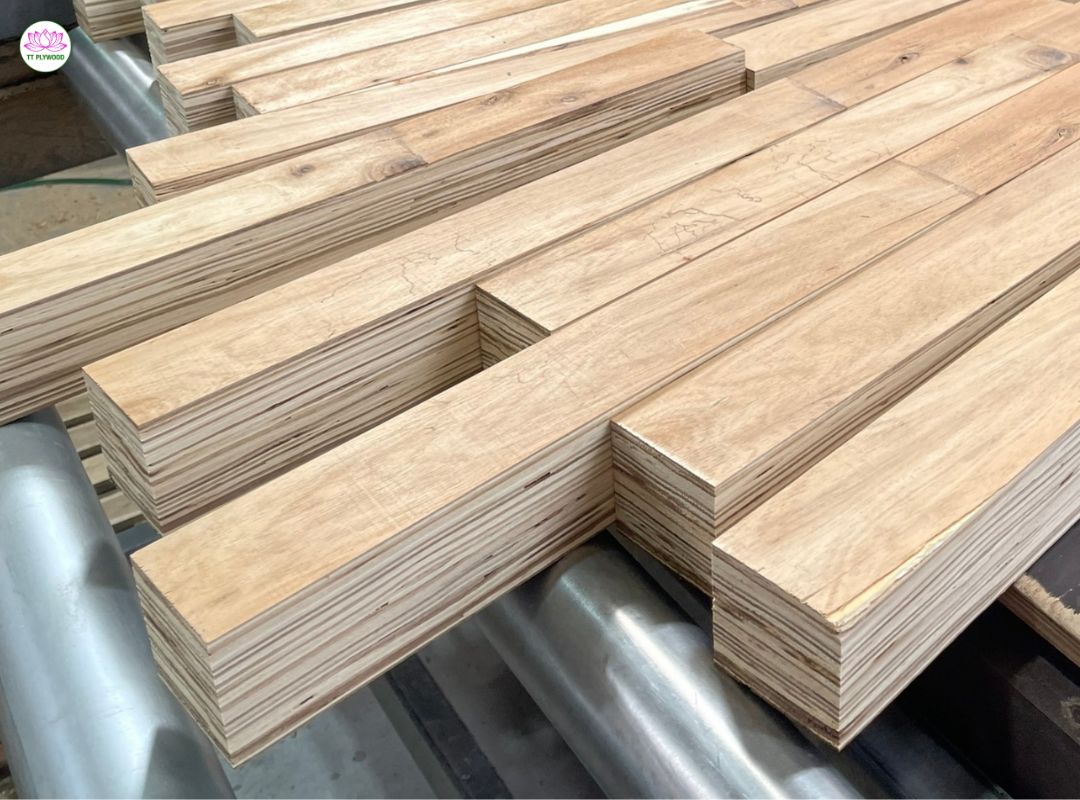
(Laminated veneer lumber - LVL )
Consider a manufacturer exporting industrial equipment weighing several tons per shipment.
Using conventional wood skids, the company experienced occasional structural cracking during transportation and repeated forklift handling. While the damage rate remained relatively low, each incident resulted in costly claims and delivery delays.
After transitioning to engineered LVL packaging materials designed specifically for the load requirements, the company reported improved packaging consistency and fewer structural failures during shipment.
Although packaging performance depends on multiple factors including design, handling practices, and transportation conditions the example illustrates how stronger and more predictable materials can contribute to better cargo protection outcomes.
Conclusion
Reducing export damage rates requires more than careful product manufacturing. Packaging materials must be capable of withstanding the physical demands of modern global logistics networks.
LVL packaging materials offer several advantages that directly support cargo protection, including superior structural strength, dimensional stability, consistent load distribution, and improved resistance to handling damage.
Compared with traditional lumber, LVL provides a more predictable and reliable packaging solution for exporters transporting heavy, valuable, or sensitive products.
As international supply chains continue to evolve, the use of engineered wood products such as LVL is expected to play an increasingly important role in improving packaging performance and minimizing transportation-related losses.
For businesses seeking to strengthen export packaging strategies, understanding the capabilities of LVL packaging materials can be an important step toward achieving safer and more reliable global shipments.
Frequently Asked Questions (FAQ)
What are LVL packaging materials?
LVL packaging materials are engineered wood products made by bonding multiple wood veneers together. They are widely used in export pallets, crates, skids, and industrial packaging systems.
How do LVL packaging materials reduce export damage rates?
LVL helps reduce export damage rates through greater structural strength, dimensional stability, and more consistent load distribution compared with traditional solid wood packaging.
Are LVL pallets stronger than conventional wood pallets?
In many industrial applications, LVL pallets provide more predictable strength and improved resistance to structural defects, making them suitable for heavy-duty export use.
Can LVL packaging be used for machinery exports?
Yes. LVL packaging materials are commonly used for machinery, construction equipment, renewable energy components, and other high-value industrial products.
Is LVL considered environmentally responsible?
LVL is generally regarded as a resource-efficient engineered wood product because it utilizes wood veneers effectively and can support sustainable forestry practices when sourced responsibly.
References
-
APA – The Engineered Wood Association. Engineered Wood Products Guide.
-
USDA Forest Products Laboratory. Wood Handbook: Wood as an Engineering Material.
-
International Plant Protection Convention (IPPC). ISPM 15 Regulation for Wood Packaging Material.
-
ASTM International. Standards for Structural Composite Lumber.
-
International Wood Products Association (IWPA). Wood Packaging Materials in International Trade.


