



-
-
-
Total payment:
-




Birch Plywood DIY Guide: How to Cut, Finish, and Choose the Right Specs
Posted by Hoàng Anh Tuấn at 20/05/2026

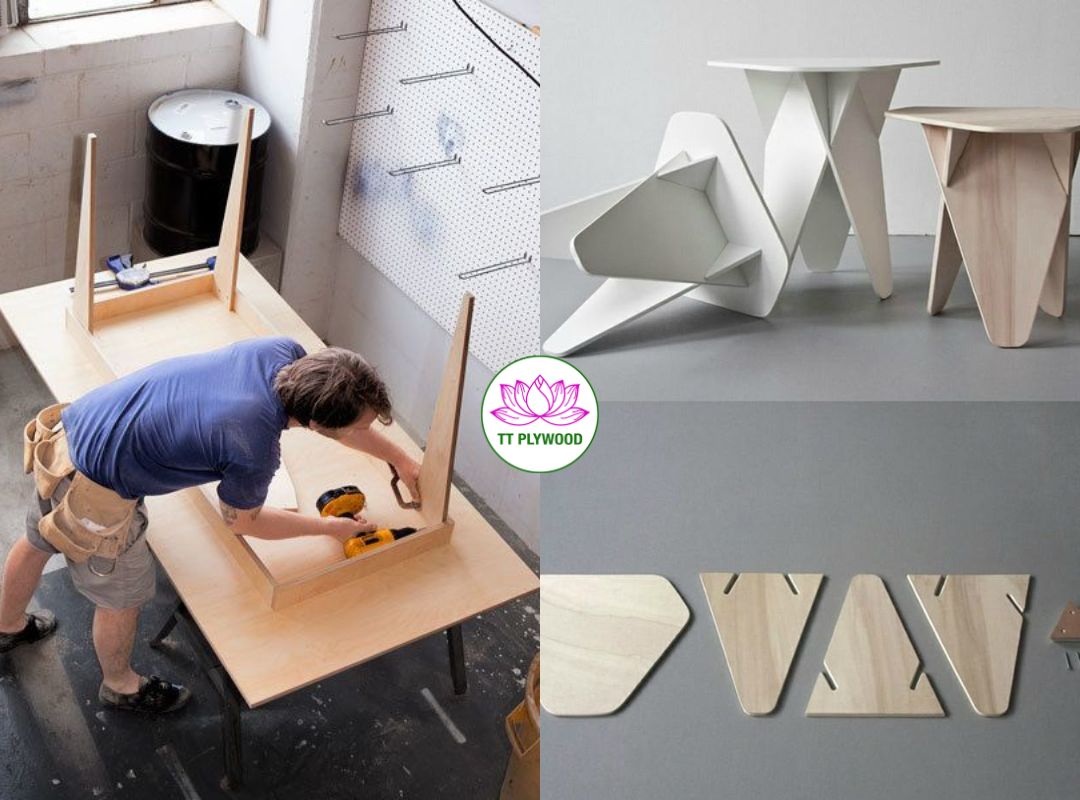
You've got a sheet of birch plywood in your workshop. Or you're about to buy one. Either way, you don't need a 5,000-word encyclopedia of plywood grades and formaldehyde emissions. You need practical answers: What thickness for a shelf? How to cut without tearing the face? Can I stain it without blotching?
This guide gives you exactly that: the DIY-first, no-fluff, spec-backed information to turn birch plywood into furniture, cabinets, or workshop projects. Let's start with what you'll actually do at the workbench.
DIY with Birch Plywood – From Cutting to Finishing
Cutting – get clean edges every time
Birch plywood cuts cleanly when you match blade and speed to the material. Follow these three rules:
- Blade: Use a 60-tooth carbide-tipped blade or higher.
- Speed: Set saw to 2500–3000 RPM. Too fast burns the adhesive.
- Tape: Mask the cut line with painter's tape – prevents top-face tear-out.
- For laser cutting (3–6mm thickness), choose Baltic birch plywood. Its void-free core delivers consistent cuts with minimal charring.
For laser cutting (3–6mm thickness), choose Baltic birch plywood. Its void-free core delivers consistent cuts with minimal charring.
Edge finishing - seal immediately after cutting
Raw edges absorb moisture quickly, leading to warping or delamination. Seal them right away:
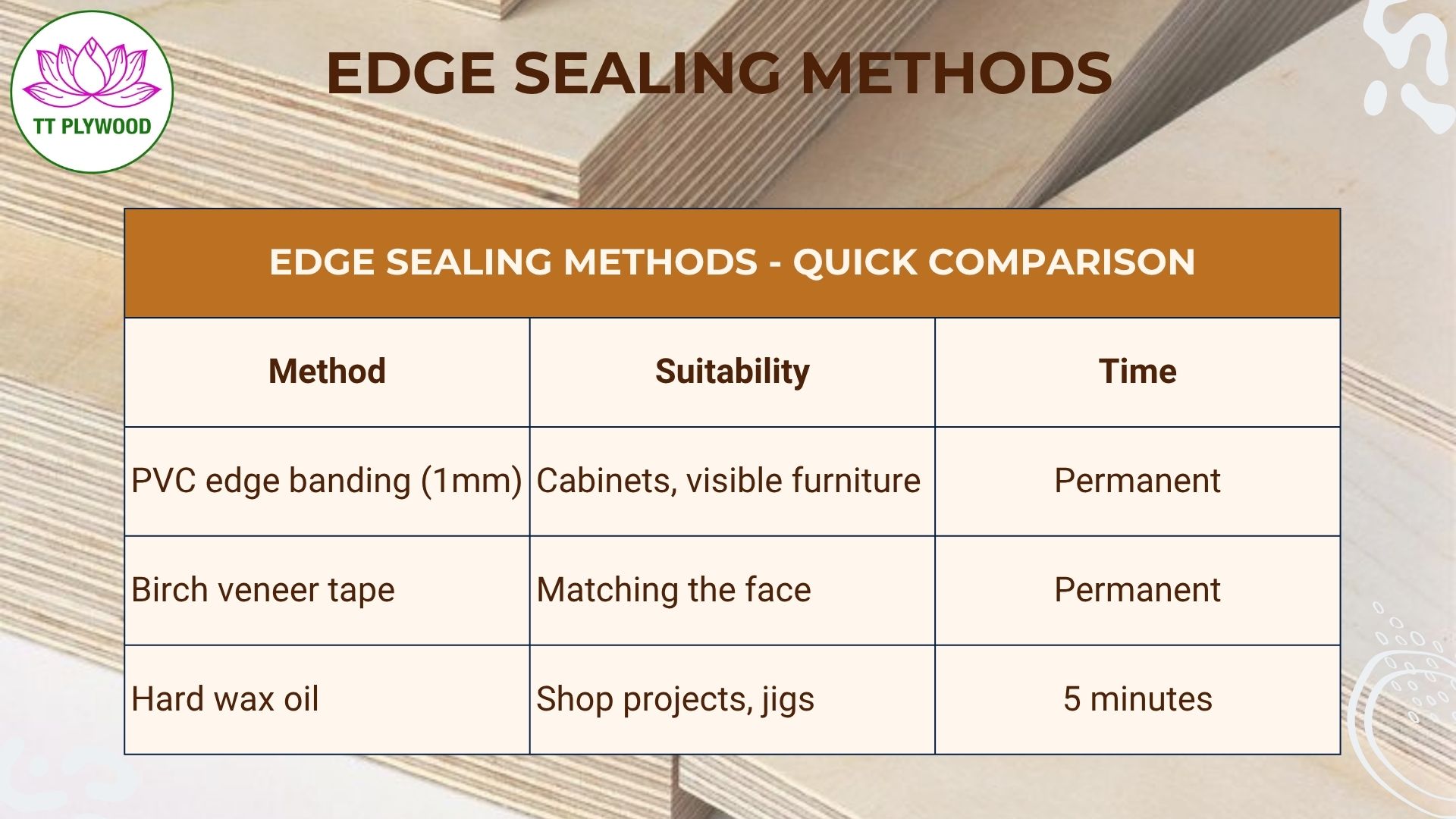
For indoor furniture, PVC banding applied with a household iron works perfectly. For outdoor or wet-area projects, use WBP-grade plywood and seal edges with two coats of exterior-grade paint or epoxy.
Drilling and screwing – avoid splitting
- Birch plywood has a dense hardwood core (Eucalyptus, Acacia, Rubberwood). Always pre-drill:
- Pilot hole diameter: 2.5mm for 4mm screws
- Edge distance: at least 12mm from the edge (for 18mm ply)
- Screw length: 4x40mm for joining panels, 4x30mm for attaching to framing
Pocket holes work well. Set your jig for the exact material thickness (e.g., 18mm) and use coarse-thread pocket screws. Clamp the joint before driving
Surface finishing- oil, stain, or paint
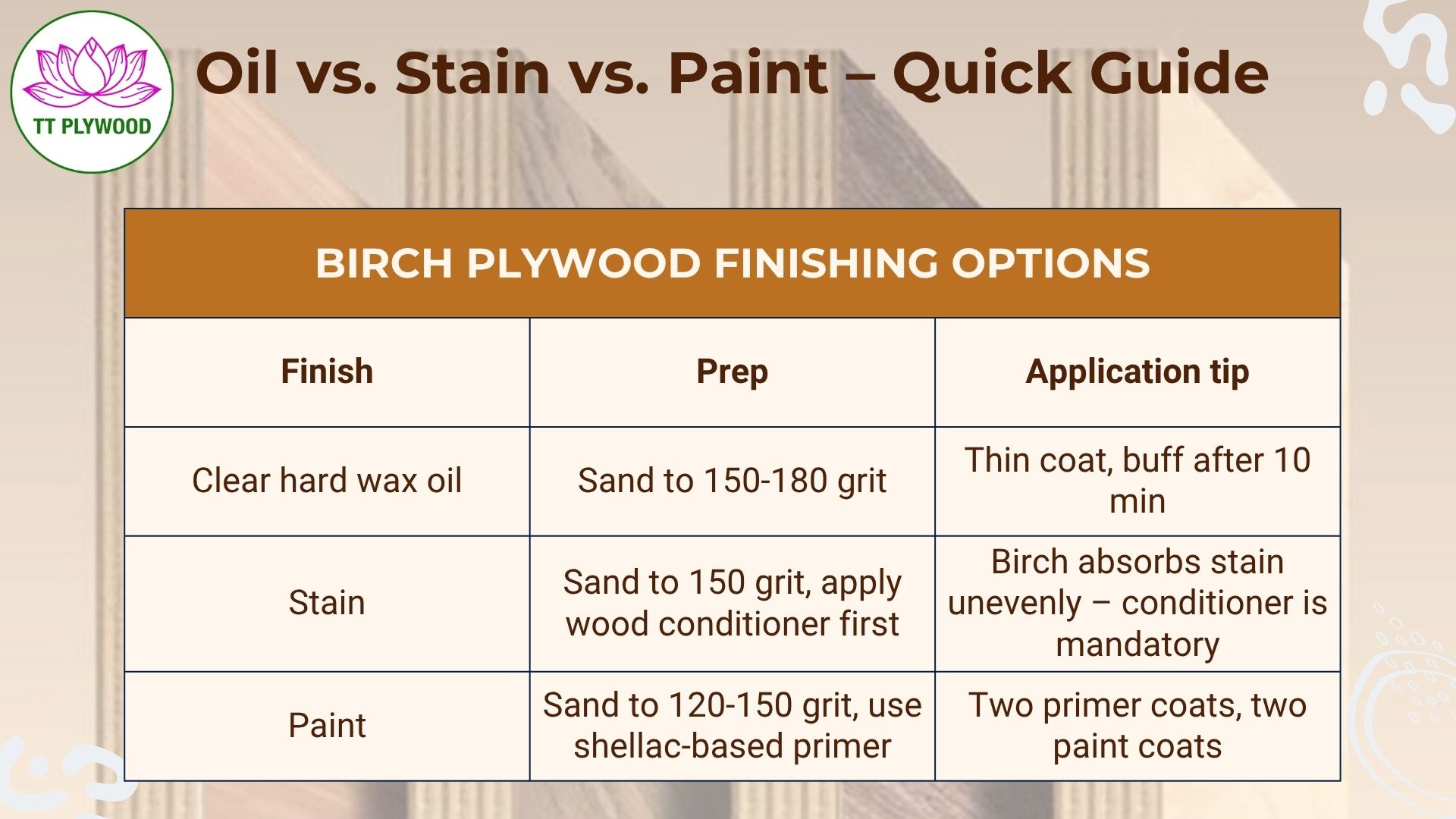
Avoid: Solvent-based lacquers directly on Melamine-bonded plywood. Solvents can soften the adhesive over time.
Technical Specifications - What's Inside Your Birch Plywood
Thickness, ply count, and core

All panels have moisture content below 12% – critical for stability in humid climates. The number of plies is always odd, creating a symmetrical stress distribution that prevents warping.
Adhesive and emission class
- Melamine Urea Formaldehyde (MUF): Interior use. E0 or E1 emission. E0 ≤0.05mg/m³ formaldehyde – safe for bedrooms and children's furniture.
- WBP Phenolic: Exterior / wet areas. Fully waterproof. Recommended for bathrooms, outdoor furniture, and marine-adjacent applications.
Both adhesives are properly cured – no strong odor. If you smell a sharp, acidic scent, reject the batch.
Grade guide - from face quality to application
Your local grades (C/D/D+/E) with EU equivalents:
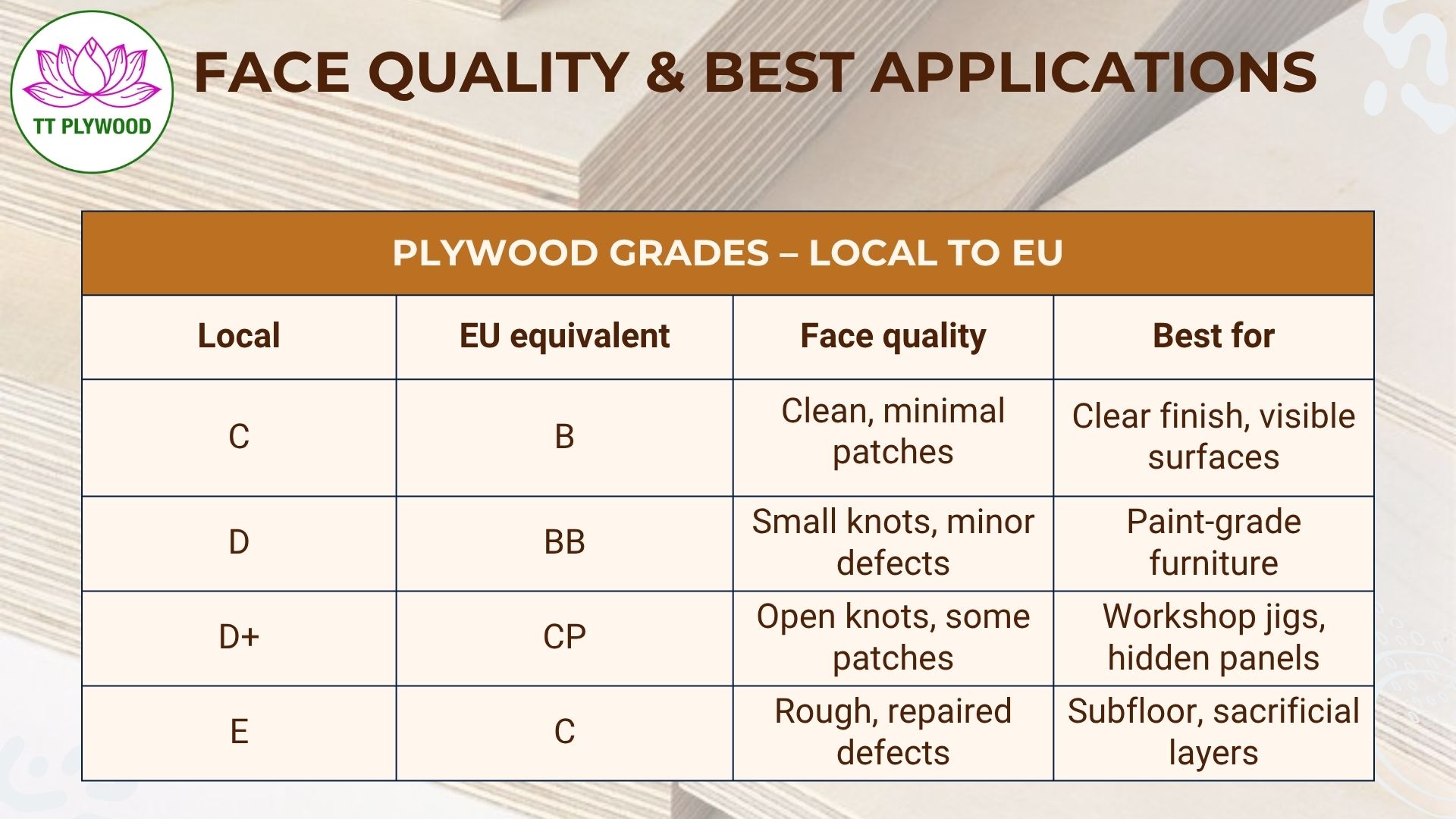
If you plan to stain or clear-coat, choose Grade C. For paint, Grade D is sufficient. For shop use or projects that will be covered, Grade D+ or E saves material cost without sacrificing strength.
Quick Reference - Suitable Birch Plywood for Which DIY Project?

Buyers sourcing birch plywood for furniture, CNC, or cabinet applications should evaluate both core consistency and adhesive class carefully
FAQ
1. Birch plywood vs Baltic birch – what's the difference?
Baltic birch = all-birch plies, void-free core. Standard birch = birch face + eucalyptus/acacia core. Use Baltic for laser cutting or exposed edges. Use standard for cabinets and painted projects.
2. Can I use birch plywood outdoors?
Only WBP phenolic grade. Interior E0/E1 will delaminate when wet. Seal edges with exterior paint or epoxy.
3. How to prevent tear-out when cutting?
60-tooth blade, painter's tape on cut line, or score with a knife first. Cut with a good face down on a circular saw.
4. Is E0 plywood formaldehyde-free?
No. E0 means ≤0.05mg/m³ – very safe but not zero. Truly formaldehyde-free uses soy or MDI adhesive.
5. What's the most durable finish for cabinets?
Hard wax oil (tough, repairable). For painted cabinets: shellac-based primer + acrylic enamel. Avoid solvent-based lacquer on melamine glue.
References
Mr. Handyman. (2022). How to Paint or Stain Plywood | Mr. Handyman. Mr. Handyman. https://www.mrhandyman.com/tips-ideas/what-is-plywood/how-to-paint-plywood/
N/A. (2024). The Plywood Primer: Beginner’s Guide to Building with Plywood. Kreg Tool. https://learn.kregtool.com/learn/beginners-guide-to-building-with-plywood/
N/A. (2026). Composite Wood Products Airborne Toxic Control Measure | California Air Resources Board. Ca.gov. https://ww2.arb.ca.gov/our-work/programs/composite-wood-products-program/about


