



-
-
-
Total payment:
-




How to Prevent Plywood Delamination
Posted by Thanh Uyên at 03/04/2026

Why Delamination Is a Critical Issue in Plywood

Plywood is widely used across construction, furniture manufacturing, packaging, and industrial applications due to its strength, stability, and versatility. However, one of the most common and costly issues buyers face is plywood delamination the separation of bonded veneer layers within the panel.
This problem is often not visible at first. Panels may appear structurally sound during inspection but fail during machining, installation, or after exposure to moisture. For importers in demanding markets such as Europe and the United States, delamination can lead to rejected shipments, production delays, and significant financial loss.
To better understand how plywood is constructed and why bonding performance matters, it is useful to explore this comprehensive guide to plywood structure and engineered wood materials available on the TT Plywood website.
What Is Plywood Delamination?
Delamination occurs when the adhesive bond between veneer layers fails, causing layers to separate either partially or completely. Unlike surface defects, this is a structural failure that directly affects the load-bearing capacity and durability of the panel.
Once delamination begins, the integrity of the plywood is compromised. This makes it unsuitable for applications that require strength, dimensional stability, or moisture resistance.
The Main Causes of Plywood Delamination
Poor Adhesive Selection
One of the most critical factors is the type of adhesive used during production. Different glue systems are designed for different environments.
Interior-grade adhesives such as UF may perform adequately in dry conditions but are not suitable for humid or exterior applications. In contrast, phenolic (WBP) glue offers superior water resistance and is required for demanding environments.
Melamine glue is often used as a balanced solution between cost and performance, but it still requires strict process control to ensure consistent bonding.
Choosing the wrong glue system for the intended application is one of the leading causes of delamination in plywood.
Incorrect Moisture Content
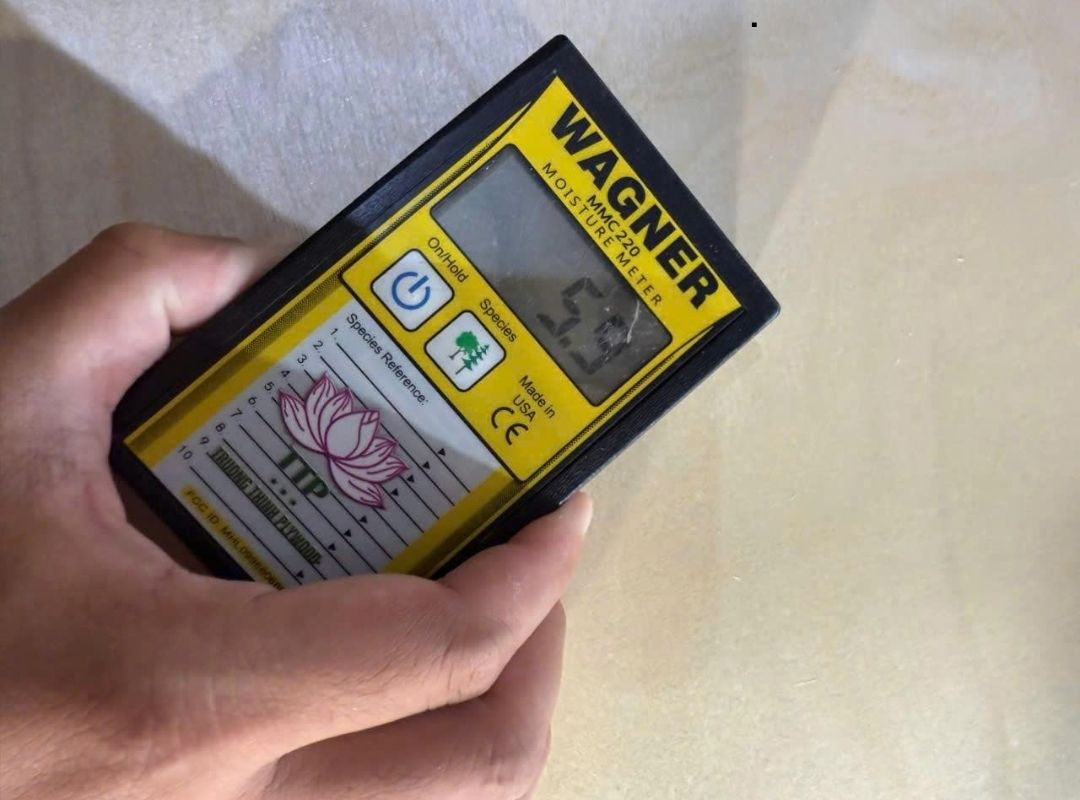
Moisture content plays a central role in bonding performance. If veneers contain excessive moisture, adhesives cannot penetrate properly. If veneers are too dry, bonding may become brittle and weak.
This imbalance weakens the glue line and increases the likelihood of failure over time. During long-distance export, especially to Europe, environmental changes can further amplify these issues if moisture is not properly controlled.
Inconsistent Veneer Quality
The quality of core veneers directly affects the strength of the bonding structure. Veneers with uneven thickness, internal defects, or inconsistent grading create weak points within the panel.
Even when high-quality adhesives are used, poor veneer quality can prevent uniform bonding, resulting in localized delamination.
For premium products such as birch plywood, veneer consistency is especially critical. You can explore specifications and applications in this birch plywood product overview from TT Plywood.
Improper Pressing Process
Hot pressing is the stage where bonding is finalized. If temperature, pressure, or pressing time are not properly controlled, adhesives may not cure correctly.
This leads to weak bonding lines that can fail under stress or environmental changes. While these defects may not be visible immediately, they often appear during usage, especially in demanding applications.
Poor Storage and Shipping Conditions
Even well-manufactured plywood can delaminate if exposed to poor storage or shipping conditions.
Factors such as humidity, temperature fluctuations, and container condensation can weaken the glue line over time. This is particularly relevant for export shipments with long transit durations.
Proper packaging, moisture protection, and controlled handling are essential to maintaining product integrity from factory to destination.
How to Prevent Plywood Delamination
Preventing delamination requires a system-based approach that combines correct material selection, controlled manufacturing, and proper logistics.
Select the Right Glue System
The choice of adhesive must align with the application environment.
- Exterior or high-moisture conditions require phenolic (WBP) glue
- Interior applications can use melamine for balanced performance
- Avoid using interior-grade glue in environments exposed to moisture
Understanding end-use conditions is essential before confirming specifications.
Control Moisture Throughout Production
Moisture must be controlled at every stage, from veneer drying to final conditioning. Stable moisture content ensures proper adhesive curing and long-term bonding strength.
Consistent moisture levels also prevent dimensional changes that may stress the glue line after production.
Use High-Quality Veneers
Strong bonding depends on consistent veneer quality. Uniform thickness, proper grading, and minimal defects all contribute to a stable structure.
This is particularly important in engineered products designed for precision applications such as furniture manufacturing or CNC processing.
Maintain Stable Pressing Conditions
Manufacturers must carefully control pressing parameters to ensure proper adhesive curing. Uniform pressure and temperature distribution are essential for achieving consistent bonding across the entire panel.
Factories with advanced quality control systems are better equipped to maintain these standards consistently..
Protect Plywood During Shipping
Export conditions can significantly affect moisture balance and bonding performance.
To reduce risk, suppliers should implement:
- Moisture-resistant packaging
- Proper palletization
- Controlled container loading
These measures help maintain stable conditions throughout transit, especially for shipments to long-distance markets.
Why Delamination Prevention Matters for Buyers
Preventing delamination is not only about avoiding defects, it is about ensuring long-term reliability.
For professional buyers, consistent plywood performance leads to improved production efficiency, reduced waste, and fewer quality claims. It also strengthens trust between suppliers and customers.
At TT Plywood, delamination prevention is built into the entire production system. From raw material selection to final inspection, each step is designed to ensure stable bonding and reliable performance.
Buyers looking for consistent quality can explore the full product range through theTT Plywood product portfolio, which includes solutions for construction, furniture, and industrial applications.
Common Mistakes Buyers Should Avoid
Many delamination issues originate from incorrect sourcing decisions rather than manufacturing defects.
Buyers often focus too heavily on price or surface appearance without fully understanding internal specifications such as glue type and moisture resistance.
Another common mistake is selecting plywood that does not match the intended application environment. Panels designed for dry interior use may fail quickly when exposed to moisture.
Clear communication with suppliers and a thorough understanding of specifications are essential to avoid these risks.
Conclusion: Prevention Starts with Understanding
Plywood delamination is not a random issue, it is the result of specific factors related to materials, production processes, and handling conditions.
By understanding these factors, buyers can make informed decisions and significantly reduce risk.
For importers in Europe and the United States, where quality expectations are high, preventing delamination is essential for maintaining competitiveness and reliability.
Choosing a supplier with strong process control and technical expertise is the most effective way to ensure consistent performance.
References
Forest Products Laboratory. (2010). Wood Handbook: Wood as an Engineering Material.
APA – The Engineered Wood Association. (2020). Plywood Design and Specification Guide.
European Committee for Standardization. (2013). EN 314.


