



-
-
-
Total payment:
-




Before You Buy Plywood: Types, Thickness & Buying Guide | TT Plywood
Posted by Thanh Uyên at 17/08/2026

Before You Buy Plywood: What You Need to Know
Buying plywood may seem simple. Choose a panel, check the dimensions, compare prices, and place an order.
In reality, two plywood panels that look almost identical can perform very differently.
Wood species, core construction, glue type, surface quality, plywood thicknesses, moisture resistance, pressing quality, and cutting accuracy can all affect how a panel performs during processing and actual use.
For importers, distributors, furniture manufacturers, builders, and packaging companies, choosing the wrong plywood specification can lead to unnecessary material waste, machining problems, deformation, delamination, or higher replacement costs.
At TT Plywood, we work with international buyers across different plywood applications. One of the most important steps before production is understanding what the plywood will actually be used for.
Before placing your next plywood order, here are the key factors worth considering.
1. Start With the Application
Before asking about price, start with a more important question:
What will the plywood be used for?
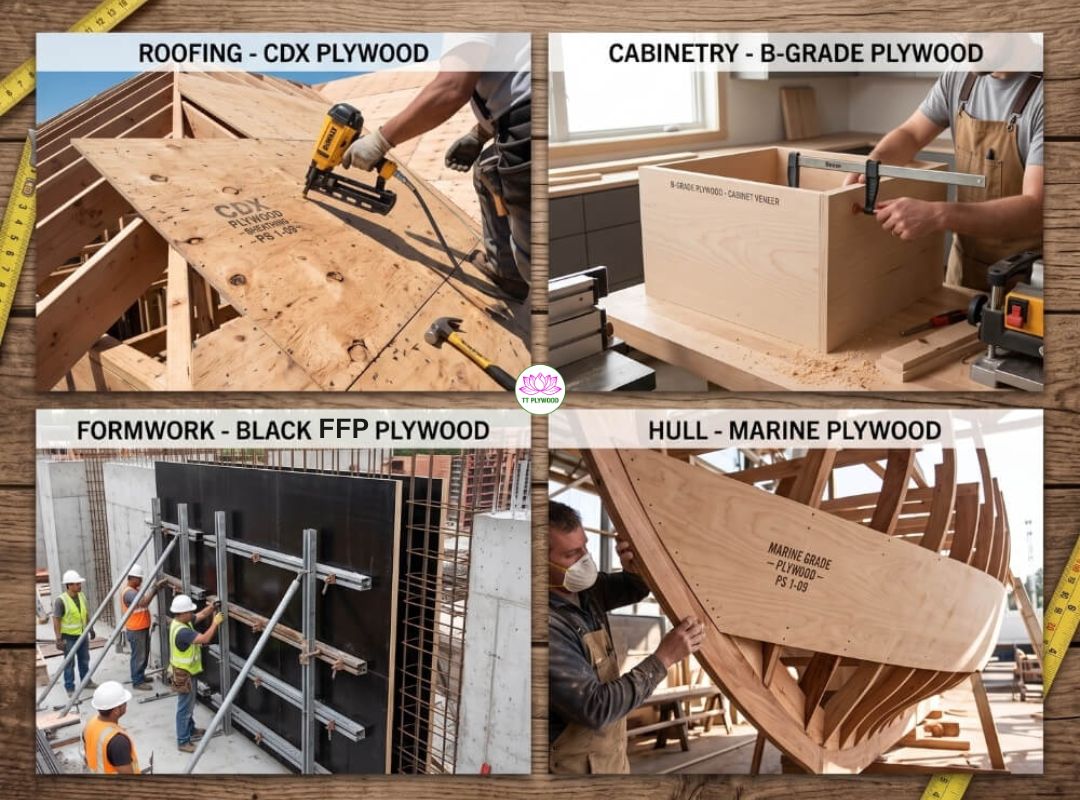
Different applications require very different panel characteristics.
Plywood used for furniture production may need a smooth surface, clean edges, and accurate machining. Construction plywood may require stronger bonding and better dimensional stability. Packaging plywood often needs to balance strength, nail-holding performance, weight, and cost.
Common applications include:
- Furniture and cabinetry
- Interior decoration
- Flooring and wall panels
- Construction
- Concrete formwork
- Pallets and export packaging
- Wooden crates
- Vehicle flooring
- Industrial components
- Outdoor and moisture-prone applications
At TT Plywood, understanding the final application is usually the first step before recommending a plywood specification.
A company producing export crates, for example, may not need the same surface grade as a furniture manufacturer using CNC machines.
The right plywood is not necessarily the highest-grade panel. It is the panel that fits the job.
2. Understand the Different Types of Plywood
There is no single plywood product suitable for every application.
Wood species, veneer structure, adhesive systems, surface treatments, and production methods create plywood products with different characteristics.
Marine Plywood
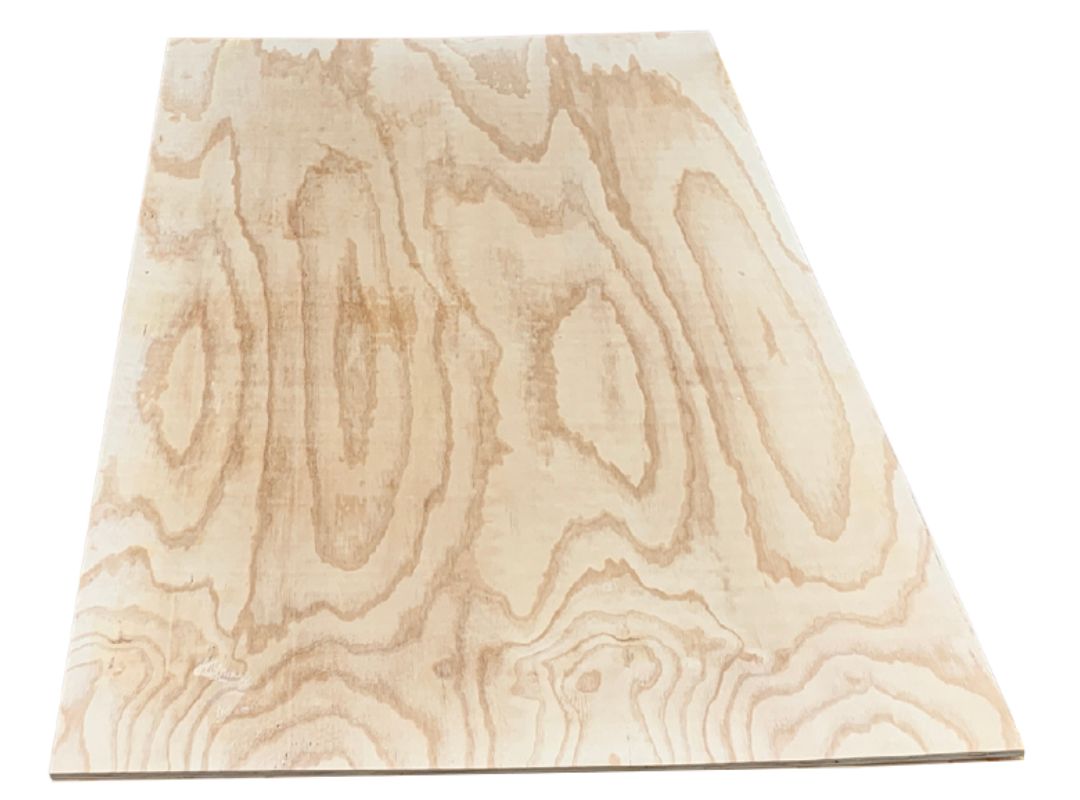
Marine plywood is commonly selected for applications where moisture resistance and bonding performance are particularly important.
It may be used in:
- Marine-related projects
- Outdoor furniture
- Transportation
- Moisture-prone environments
- Selected construction applications
However, buyers should not assume that every product labelled marine plywood has exactly the same performance.
Important factors still include:
- Core veneer quality
- Adhesive performance
- Panel construction
- Surface grade
- Thickness tolerance
- Intended exposure conditions
Marine plywood is also increasingly used outside traditional marine environments. When combined with suitable finishing and maintenance, it can be considered for selected outdoor furniture applications.
For more ideas on this application, see TT Plywood’s guide to marine plywood for luxury outdoor furniture, including design trends and practical tips.
For international buyers, TT Plywood recommends confirming the actual product specification rather than relying only on the word “marine.”
The construction of the panel matters more than the label.
Birch Plywood
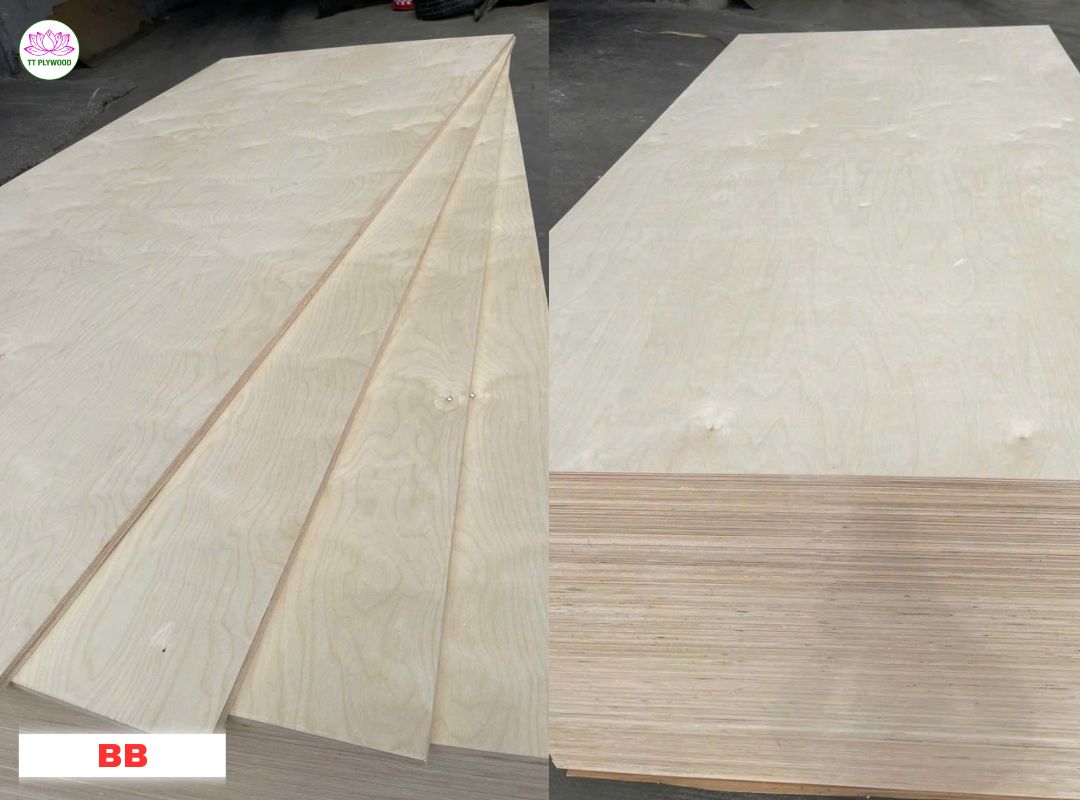
Birch plywood is widely valued for its strength, relatively uniform structure, attractive appearance, and good machining performance.
It is commonly used for:
- Furniture
- Cabinets
- Interior components
- CNC processing
- Flooring
- Industrial applications
Because of its relatively dense veneer structure, birch plywood can provide clean edges and stable processing performance.
This makes it particularly useful when panels need to be drilled, routed, cut, or assembled precisely.
However, birch plywood also comes in different grades and constructions. Buyers should still check the face grade, core quality, glue system, thickness tolerance, and intended application before ordering.
Film Faced Plywood
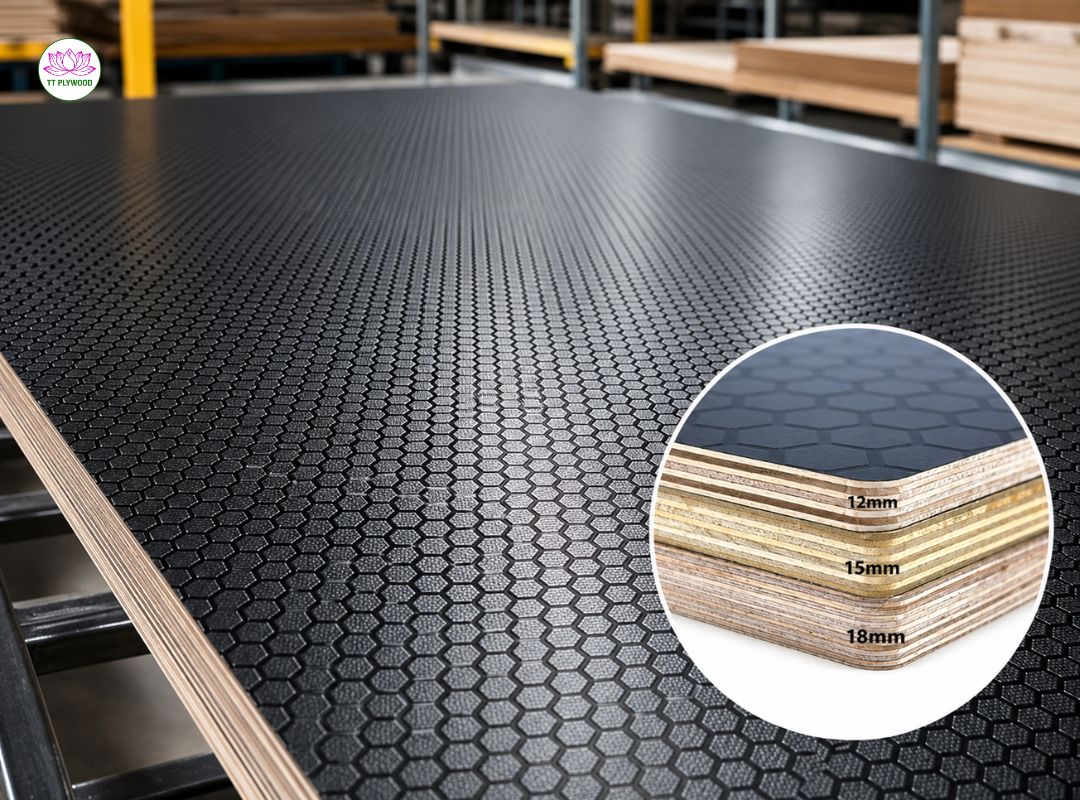
Film faced plywood is primarily used for concrete formwork.
Its surface is covered with a resin-impregnated film that helps protect the panel and create a smoother concrete finish.
At TT Plywood, we often remind buyers that the film alone does not determine the lifespan of formwork plywood.
Reuse performance also depends on:
- Core quality
- Glue bonding
- Pressing quality
- Edge sealing
- Site handling
Two panels with a similar-looking surface can perform very differently on a construction site.
Packing Plywood
Packing plywood is widely used for:
- Wooden crates
- Export boxes
- Pallets
- Industrial packaging
- Shipping protection
For these applications, decorative appearance is usually less important than core stability, cutting performance, nail holding, and cost efficiency.
TT Plywood also manufactures plywood and LVL materials for industrial packaging, where customers often prioritize reliable assembly performance over premium appearance.
3. Choose the Right Plywood Thickness
Thickness is one of the most important specifications when buying plywood.
Different plywood thicknesses provide different levels of rigidity, weight, processing flexibility, and load-bearing capability.
Common thicknesses include:
| Plywood Thickness | Common Applications |
|---|---|
| 3–5 mm | Decorative panels, crafts, backing panels |
| 6–9 mm | Furniture components, wall panels |
| 12 mm | Furniture, interior construction, packaging |
| 15 mm | Flooring, furniture, industrial applications |
| 18 mm | Shelving, furniture, flooring, construction |
| 21 mm | Formwork and heavier-duty applications |
| 24 mm+ | Industrial and specialized applications |
These are general examples rather than fixed rules.
The correct plywood thickness depends on factors such as load, support structure, wood species, panel construction, and working environment.
This becomes particularly important in packaging.
A panel that is too thin may not provide enough structural support, while unnecessarily thick plywood can increase material cost and shipping weight.
For buyers working with industrial packaging, TT Plywood has also prepared a more detailed packing plywood thickness guide covering practical considerations when selecting panel thickness.
Nominal Thickness vs Actual Thickness
Buyers should also pay attention to thickness tolerance.
For example, a panel sold as 18 mm plywood may have a small manufacturing tolerance depending on the specification agreed between the buyer and supplier.
This is especially important for:
- CNC machining
- Furniture assembly
- Flooring
- Automated production
- Precision components
At TT Plywood, customized orders can be discussed based on both nominal thickness and required tolerance.
Clear specifications at the inquiry stage can help reduce problems during downstream production.
4. Look Beyond the Surface
A plywood panel can look excellent from the outside while containing problems inside the core.
Core construction has a major influence on plywood stability and processing performance.
Potential defects may include:
- Large gaps
- Veneer overlaps
- Voids
- Uneven veneer thickness
- Weak bonding
- Excessive repairs
A more consistent core generally provides better performance during cutting, drilling, nailing, screwing, and assembly.
This is why professional buyers should evaluate more than surface appearance.
At TT Plywood, quality checks may include both surface inspection and internal panel evaluation depending on the product and customer requirements.
For new suppliers, asking for samples or cut-edge photos can also provide useful information about the internal structure.
5. Pay Attention to the Glue System
Plywood is produced by bonding several veneer layers together.
The adhesive system therefore plays a major role in determining how the panel performs in different environments.
Interior plywood may have different bonding requirements from plywood used in construction, humid environments, or outdoor applications.
Products such as marine plywood and film faced plywood generally require greater attention to bonding performance because they may face higher moisture exposure.
However, glue is only one part of outdoor durability.
Surface protection, edge sealing, panel construction, exposure duration, and maintenance also matter.
If you are considering plywood for exterior use, TT Plywood’s guide Can Plywood Be Used Outdoors? A Guide for Homeowners & Builders explains the main factors to consider before exposing plywood to outdoor conditions.
Before ordering, buyers should ask about:
- Glue type
- Intended application
- Moisture resistance
- Bonding performance
- Relevant testing requirements
At TT Plywood, glue specifications are selected according to the intended product and application rather than applying one adhesive system to every plywood category.
6. Match the Surface Grade to the Application
Higher surface grades are not always necessary.
If plywood will be used for visible furniture, decorative panels, or interior finishes, appearance becomes important.
If the panel will be hidden inside packaging or used as a structural component, paying extra for a premium decorative face may provide little additional value.
Before ordering, determine whether the plywood will be:
- Painted
- Laminated
- Covered
- Used as a visible surface
- Used structurally
- Used for packaging
Providing this information helps the manufacturer recommend a more cost-effective product.
For many industrial buyers, the goal should not be to purchase the highest grade available.
It should be to purchase the right grade for the application.
7. Plywood Cutting Accuracy Matters
Plywood rarely remains in its original large-sheet format.
Furniture factories, packaging manufacturers, construction companies, and industrial users often need panels cut into specific dimensions.
This is where a plywood cutting machine becomes important.
Depending on the production system, plywood may be processed using:
- Panel saws
- Beam saws
- CNC routers
- Automatic cutting systems
A suitable plywood cutting machine can help improve:
- Dimensional accuracy
- Edge quality
- Processing speed
- Material utilization
- Production consistency
At the TT Plywood factory, cutting and sizing are important steps when preparing customized plywood specifications for customers.
For cut-to-size orders, buyers should communicate the required dimensions and tolerances clearly before production.
For example:
1220 × 2440 × 18 mm
is much more useful than simply requesting “18 mm plywood.”
Precise information helps reduce cutting errors and unnecessary material waste.
8. Consider Machining Performance
Plywood is often processed further after leaving the factory.
Depending on the application, customers may need to:
- Cut
- Drill
- Nail
- Screw
- Sand
- Route
- CNC machine
Different plywood constructions behave differently during these processes.
For example, birch plywood is frequently chosen for applications requiring precise machining because its relatively consistent structure can help provide clean processing results.
Packaging materials may instead be evaluated based on nail-holding performance and resistance to splitting.
TT Plywood performs practical production checks depending on the product and application, including cutting or nail tests where relevant.
For industrial buyers placing large-volume orders, testing samples under actual production conditions can be a useful step before confirming bulk production.
9. Quality Control Should Be Part of the Purchase Decision
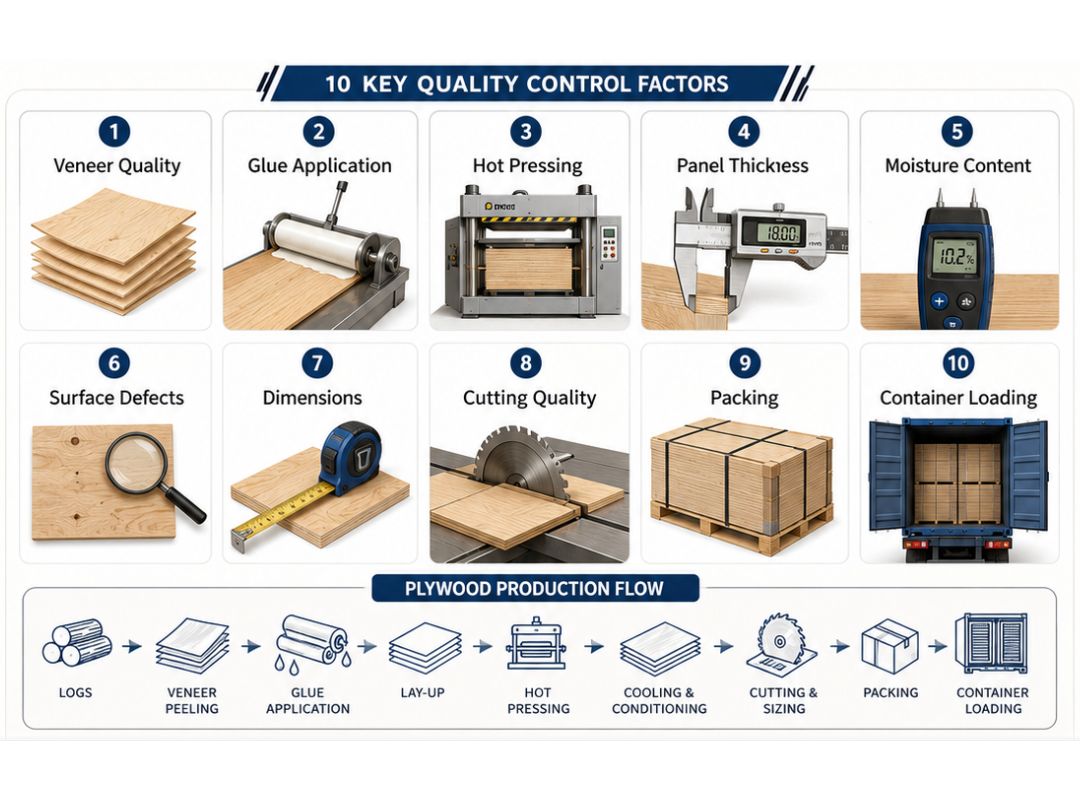
A competitive plywood price is useful, but consistency becomes even more important for repeat orders.
Typical quality control factors may include:
- Veneer quality
- Glue application
- Hot pressing
- Panel thickness
- Moisture content
- Surface defects
- Dimensions
- Cutting quality
- Packing
- Container loading
Depending on customer requirements, additional tests may also be carried out.
At TT Plywood, quality control is integrated across different production stages to help maintain consistency between batches.
For international buyers ordering regularly, consistency can be just as important as the quality of the first shipment.
10. Do Not Compare Plywood Only by Price
Plywood prices vary based on many factors.
These may include:
- Wood species
- Core construction
- Surface grade
- Glue type
- Thickness
- Sheet size
- Surface treatment
- Processing requirements
- Order quantity
- Packaging
- Transportation
A lower unit price does not automatically mean a lower overall cost.
If cheaper plywood creates more cutting waste, assembly problems, delamination, or product failures, the final cost can actually be higher.
Professional buyers should therefore consider:
Price + performance + consistency + processing efficiency
rather than price alone.
At TT Plywood, we normally recommend confirming the final application before selecting a specification.
Sometimes a lower-cost panel is perfectly suitable.
In other situations, a higher specification can reduce downstream production problems and replacement costs.
11. Test Samples Before Large Orders
When working with a new plywood product or supplier, sample testing can reduce purchasing risk.
A sample allows buyers to evaluate:
- Surface appearance
- Core structure
- Thickness
- Weight
- Cutting quality
- CNC performance
- Nail holding
- Screw holding
- Bonding
- General workmanship
Different industries can focus on different properties.
Furniture manufacturers may test CNC machining.
Packaging companies may perform nail tests.
Construction buyers may evaluate bonding or reuse performance.
TT Plywood can discuss samples and specifications with international buyers before larger export orders when appropriate.
12. Ask Better Questions Before Ordering
Instead of sending only:
“What is your plywood price?”
provide more information.
A useful plywood inquiry should include:
- Intended application
- Plywood type
- Required dimensions
- Thickness
- Surface grade
- Glue requirement
- Quantity
- Destination market
- Processing requirements
- Packaging requirements
For example:
“We need plywood for export packaging, 1220 × 2440 × 12 mm, approximately two containers per month, shipped to Poland.”
This provides a manufacturer with much more useful information than simply requesting a price list.
At TT Plywood, detailed inquiries allow our team to recommend specifications that better match the customer’s production requirements and target market.
Choose Plywood Based on the Complete Specification
Plywood performance is rarely determined by one factor.
Instead, buyers should consider the complete combination:
Wood species + core construction + glue + plywood thicknesses + surface grade + cutting + final application
Marine plywood may be suitable for one project while birch plywood performs better for another.
A high-quality plywood cutting machine may provide accurate dimensions, but the panel still needs a stable core and appropriate bonding.
Likewise, choosing the correct thickness means little if the plywood specification does not suit the final environment.
At TT Plywood, our approach is to evaluate plywood according to its intended application rather than simply offering the same standard panel to every customer.
For international buyers, this can help create a better balance between performance, processing requirements, and cost.
Frequently Asked Questions About Buying Plywood
1. What are the most common plywood thicknesses?
Common plywood thicknesses include 3 mm, 5 mm, 6 mm, 9 mm, 12 mm, 15 mm, 18 mm, and 21 mm.
The right thickness depends on the application, required strength, support structure, and panel construction. Buyers should also confirm thickness tolerance when plywood will be used for CNC machining, furniture assembly, or other precision applications.
2. What is marine plywood used for?
Marine plywood is commonly used where stronger moisture resistance and reliable bonding are required.
Typical applications include marine-related projects, outdoor furniture, transportation, construction, and other moisture-prone environments. Buyers should still check the actual glue system, core quality, and intended exposure conditions before ordering.
3. Why is birch plywood popular?
Birch plywood is valued for its strength, relatively uniform core structure, attractive appearance, and good machining performance.
It is commonly used for furniture, cabinetry, CNC processing, flooring, and industrial components where clean cutting and dimensional stability are important.
4. What machine is used to cut plywood?
A plywood cutting machine can include a panel saw, beam saw, CNC router, or automatic cutting system.
The right equipment depends on the required dimensions, cutting accuracy, production volume, and final application. Accurate cutting is especially important for customized plywood sizes and industrial processing.
Final Thoughts
Buying plywood is not simply about choosing between marine plywood, birch plywood, or another product name.
The most suitable plywood is the panel whose complete specification matches the intended application.
Before placing an order, evaluate the core structure, glue system, surface grade, plywood thicknesses, processing requirements, and manufacturing consistency.
It is also important to consider how the plywood will be processed after production. Accurate manufacturing equipment, including an appropriate plywood cutting machine, can influence dimensional consistency and finished panel quality.
At TT Plywood, we work with international buyers to develop plywood specifications for construction, furniture, packaging, and industrial applications.
If you are sourcing plywood for your market, share your required product type, dimensions, thickness, quantity, application, and destination with TT Plywood to discuss a suitable specification.


