


-
-
-
Total payment:
-



LVL vs Solid Timber: Which Is Better for Structural Applications?
Posted by Hoàng Anh Tuấn at 17/06/2026

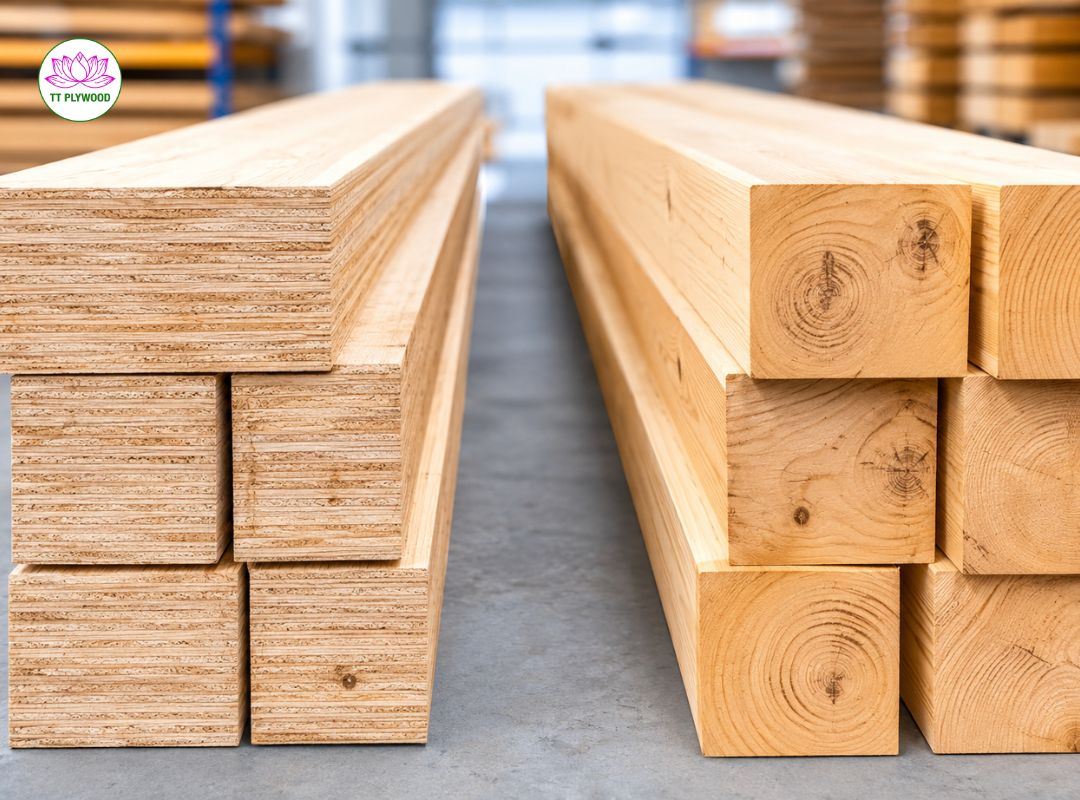
For structural applications, choosing between LVL and solid timber is not simply a matter of tradition versus technology. Both materials can perform well when specified correctly, but they behave very differently under load, moisture, and long-term use.
LVL, or Laminated Veneer Lumber, is an engineered wood product made by bonding multiple layers of veneer in the same grain direction. Solid timber is cut directly from logs and retains the natural structure of the tree. Because of this difference, LVL usually offers more predictable strength and dimensional stability, while solid timber remains a familiar choice for projects where natural appearance, local availability, or traditional construction methods matter.
What Is LVL?
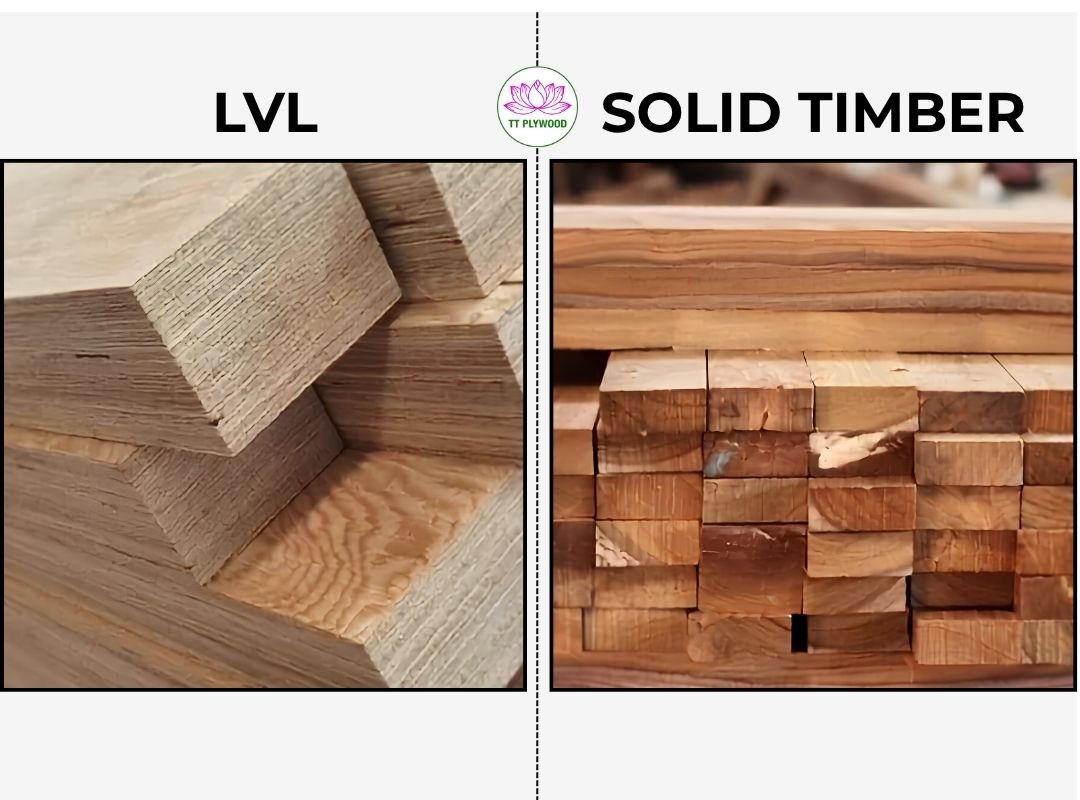
LVL stands for Laminated Veneer Lumber. It is made from thin wood veneers that are dried, graded, layered, and bonded together under heat and pressure. Most veneers are aligned in the same direction, which gives LVL high strength along its length.
This controlled manufacturing process allows suppliers to produce LVL in consistent thicknesses, widths, and lengths. For structural applications, that consistency is one of the biggest advantages. Builders and buyers can work with a material that has predictable performance instead of relying only on the natural variation of sawn timber.
What Is Solid Timber?
Solid timber is lumber cut directly from a log. It may be used as beams, posts, joists, rafters, studs, or other structural components. Depending on the species, grade, drying process, and source, solid timber can be strong and durable.
However, solid timber is a natural material. Knots, grain direction, cracks, density variation, and moisture content can affect performance. Two pieces of timber with the same nominal size may not always behave the same way under structural load.
LVL vs Solid Timber: Key Differences
1. Strength and Load-Bearing Performance
LVL is engineered for consistent structural strength. Because weak points are reduced during veneer grading and manufacturing, LVL can often carry heavier loads than solid timber of similar dimensions.
Solid timber can also be strong, especially when high-quality species and grades are used. But its strength is more dependent on natural defects, growth conditions, and grading accuracy.
For structural projects that require predictable load-bearing capacity, LVL is usually the safer and more consistent option.
Read more about LVL load-bearing strength
2. Dimensional Stability
LVL generally resists twisting, warping, and shrinking better than solid timber. The layered veneer structure helps balance internal stresses and reduce movement.
Solid timber is more likely to move as moisture changes. It may twist, cup, split, or shrink, especially if it has not been properly dried or stored.
For beams, headers, joists, and long structural members, dimensional stability can reduce installation problems and long-term maintenance issues.
3. Span and Length Availability
One major advantage of LVL is that it can be manufactured in long, consistent lengths. This makes it useful for structural spans where solid timber may be limited by log size or availability.
Solid timber length depends on the size and quality of available logs. Long solid timber beams can be expensive, difficult to source, or inconsistent in quality.
If a project needs long beams with predictable strength, LVL is often more practical.
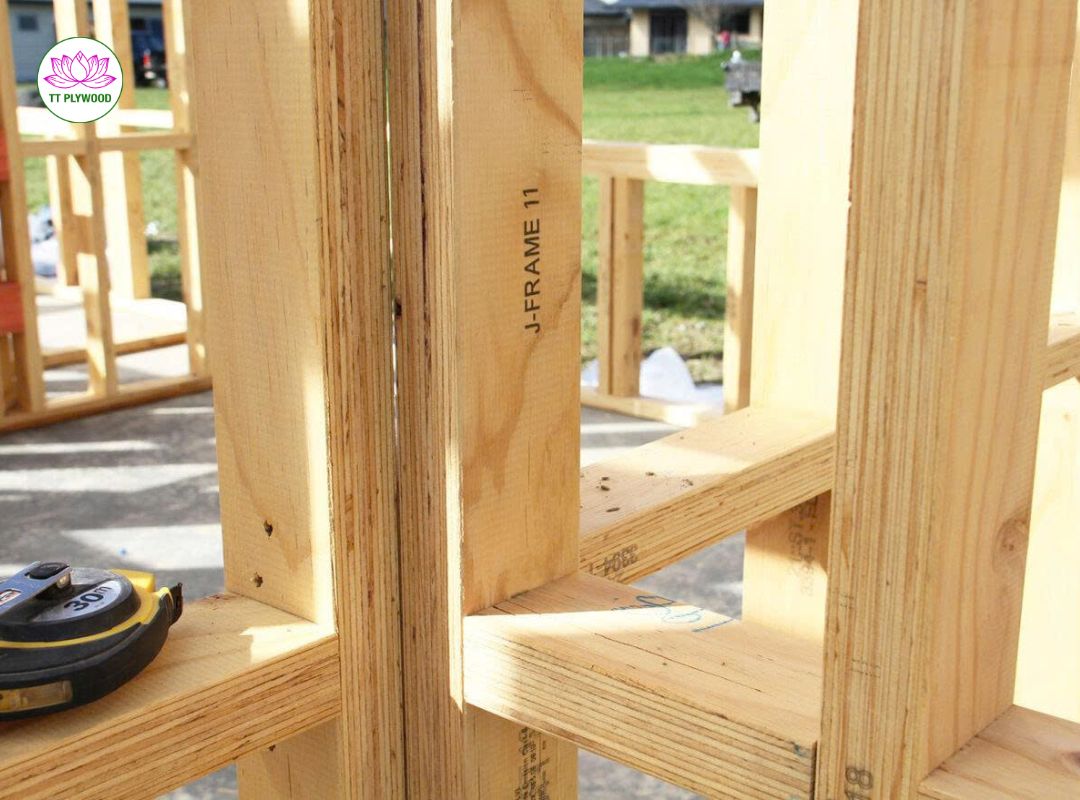
4. Moisture Behavior
LVL is more dimensionally stable than many solid timber options, but it is still a wood-based product. It must be protected from excessive moisture unless it is designed and treated for specific exposure conditions.
Solid timber can perform well outdoors when the correct species, treatment, and detailing are used. However, poor drying or moisture exposure can lead to checking, decay, or movement.
For both materials, the right glue system, treatment, storage, and installation environment are important.
5. Cost and Material Efficiency
Solid timber may be cheaper when locally available in standard sizes. However, high-grade, long-length, defect-free timber can be expensive.
LVL may have a higher unit cost than basic timber, but it can reduce waste, improve consistency, and support longer spans. In structural applications, the real comparison should be total installed cost, not only material price.
LVL can be more cost-effective when it reduces cutting waste, installation errors, replacement risk, or over-specification.
When Is LVL Better Than Solid Timber?
LVL is usually better when the project requires high strength, long spans, consistent dimensions, and predictable structural performance.
Choose LVL for:
- Beams and headers
- Floor joists
- Roof framing components
- Long structural spans
- Engineered timber construction
- Furniture frames requiring stable strength
- Export packaging or industrial components
LVL is especially useful when natural timber quality is inconsistent or when a project needs repeatable specifications across many pieces.
When Is Solid Timber Still a Good Choice?
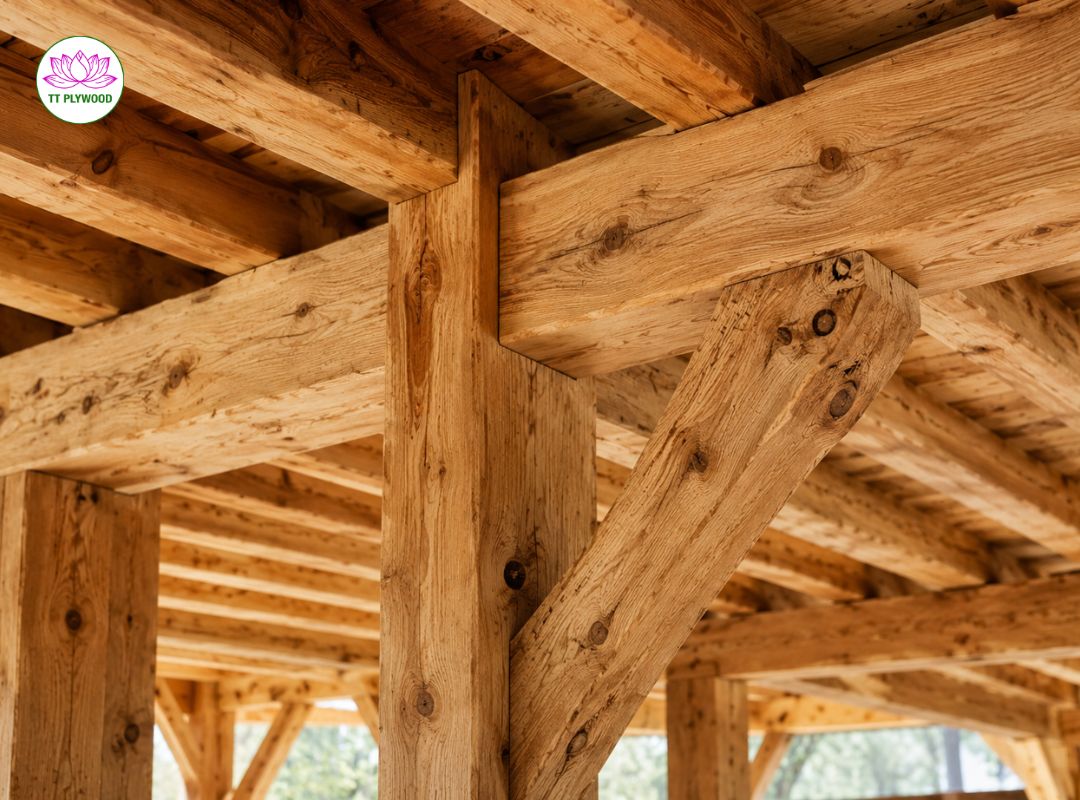
Solid timber is still suitable for many structural and semi-structural applications. It may be the better choice when local timber is affordable, the span is short, the load requirement is moderate, or the natural appearance of wood is important.
Choose solid timber for:
- Traditional framing
- Short-span beams
- Exposed rustic structures
- Projects using locally graded timber
- Applications where natural wood appearance matters
The key is to use the right species, grade, moisture content, and treatment for the application.
LVL vs Solid Timber Comparison Table
|
Criteria |
LVL |
Solid Timber |
|
Strength consistency |
Very consistent |
Depends on species, grade, and defects |
|
Long-span availability |
Excellent |
Limited by log size and supply |
|
Dimensional stability |
High |
More movement risk |
|
Natural appearance |
Less natural, engineered look |
Strong natural wood appearance |
|
Waste efficiency |
High |
Depends on cutting and defects |
|
Moisture performance |
Good when specified correctly |
Good with suitable species/treatment |
|
Best use |
Beams, headers, joists, engineered structures |
Traditional framing, exposed timber, short spans |
How to Choose Between LVL and Solid Timber
Before selecting a material, buyers should define the technical requirements of the project. The right choice depends on load, span, exposure, budget, appearance, and local building requirements.
Ask these questions before ordering:
- What load must the member carry?
- What span length is required?
- Will the material be exposed to moisture?
- Is appearance important?
- Are custom dimensions needed?
- Does the project require repeatable specifications?
- What standards or certifications are required in the target market?
For structural use, buyers should always confirm specifications with engineers, contractors, or qualified suppliers before finalizing material selection.
Know more about LVL vs core plywood
Conclusion
LVL is generally better than solid timber for structural applications that require predictable strength, long spans, and dimensional stability. Its engineered structure makes it a strong option for beams, headers, joists, and other load-bearing components.
Solid timber remains useful when natural appearance, local availability, or traditional building methods are important. However, because it varies more from piece to piece, it requires careful grading, drying, and selection.
For structural projects where consistency and performance matter most, LVL is often the more reliable choice.
FAQ
Is LVL stronger than solid timber?
LVL is often stronger and more consistent than solid timber of similar dimensions because it is engineered from graded veneers. However, the final performance depends on the LVL specification and project requirements.
Can LVL be used for load-bearing beams?
Yes. LVL is commonly used for beams, headers, joists, and other load-bearing applications. Buyers should confirm the required size, grade, and standard before use.
Does LVL warp less than solid timber?
Yes. LVL usually has better dimensional stability and is less likely to twist, warp, or shrink compared with many solid timber options.
Is solid timber cheaper than LVL?
Basic solid timber may be cheaper, especially when locally available. However, LVL can be more cost-effective when long spans, high consistency, or reduced waste are important.
Can LVL be used outdoors?
LVL can be used in some moisture-exposed applications only when the correct specification, adhesive, treatment, and protection are used. Always confirm exposure conditions with the supplier.


