


-
-
-
Total payment:
-


Acacia vs Styrax in Packing Plywood: Durability Comparison for Export Crates & Pallets
Posted by Đỗ Tiến Hải at 06/03/2024

As global trade expands, companies are demanding safer, more durable, and more cost-efficient solutions for transporting goods. One of the quiet pillars supporting international logistics is packing plywood the essential material behind crates, pallets, industrial boxes, and heavy-duty packaging systems. While it may appear simple, the long-term success of supply chains frequently depends on whether manufacturers choose the right core material. Today, the two most widely used in Vietnam - one of the world’s largest exporters of plywood are Acacia and Styrax.
Both species grow quickly, are readily available, and support large-scale production for export plywood. But when it comes to real-world performance heavy load capacity, resistance against moisture, protection during long sea shipments, and overall plywood durability, their behavior is very different. Choosing incorrectly can lead to crate deformation, pallet breakage, or compromised cargo safety, especially in long-distance exports.
This article examines the strengths and limitations of acacia core plywood and styrax core plywood, using a practical, application-focused approach. For packaging factories, freight forwarders, and manufacturers using plywood for crates/pallets, the insights below offer a clear, data-driven method to decide which core supports safer and more reliable shipping.
1. Understanding the Role of Cores in Packaging Plywood
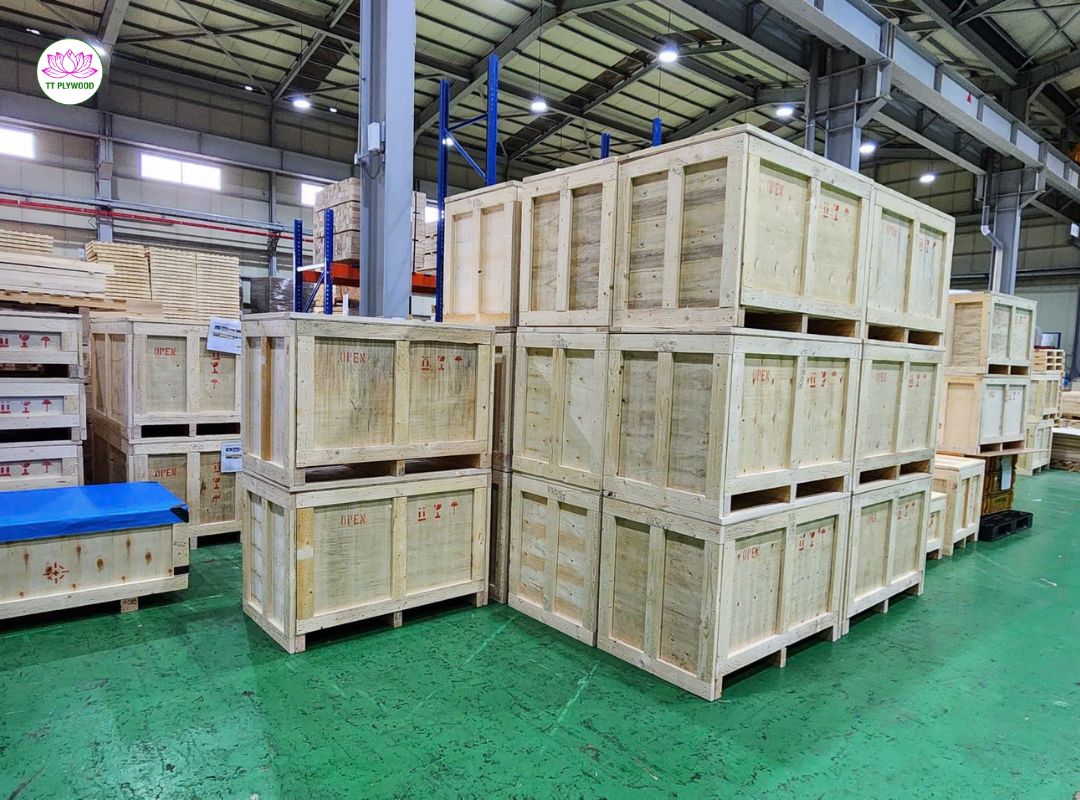
In plywood manufacturing, the core is not merely a filler. It is the structural backbone of the entire panel. While face veneers determine appearance, the core determines performance. For packaging plywood, the core directly affects:
- Load-bearing capacity during stacking
- Shock resistance during loading
- Dimensional stability under humidity changes
- Joint strength at corners and screw-holding ability
- Long-term performance during intercontinental transport
Acacia and Styrax both qualify as hardwoods, but their density, cellular structure, fiber length, and bonding behavior create distinct performance outcomes. To understand which works best for each packaging scenario, it is necessary to look at how each species behaves mechanically and operationally.
2. Acacia Core Plywood: Characteristics and Performance
Acacia (Acacia mangium and hybrid variants) is one of Vietnam’s most valuable plantation woods. With a density generally ranging from 620 to 660 kg/m³, it is considered a medium-heavy hardwood. Its short, interlocked fiber structure provides a strong balance between stiffness and impact absorption.
Factories producing acacia core plywood often highlight several consistent qualities: dimensional stability, structural rigidity, and resistance to cracking under pressure. These attributes come from Acacia’s naturally higher density and strong internal bonding. When used in packaging, this translates to plywood that performs well under high compressionsomething essential for stacking packaged goods in warehouses or containers.
Acacia also has a comparatively strong screw-holding capability. When manufacturers assemble crates or industrial boxes, the joints remain firm, reducing the risk of corner pops or screw loosening. This stability is especially needed in sectors such as mechanical engineering, metal components, automotive parts, and electronicsindustries that require more robust crates.
Another advantage is Acacia’s moisture behavior. Although no plywood is fully immune to environmental changes, Acacia tends to maintain equilibrium moisture content more consistently than Styrax under standard kiln-drying conditions. This helps limit warping, swelling, or delamination when crates travel between climates. For example, from hot, humid Southeast Asia to cold European winters.
In short, Acacia offers high reliability, durability, and predictability. For exporters prioritizing low risk, it stands out as a strong candidate for heavy-duty packaging plywood.
3. Styrax Core Plywood: Characteristics and Performance
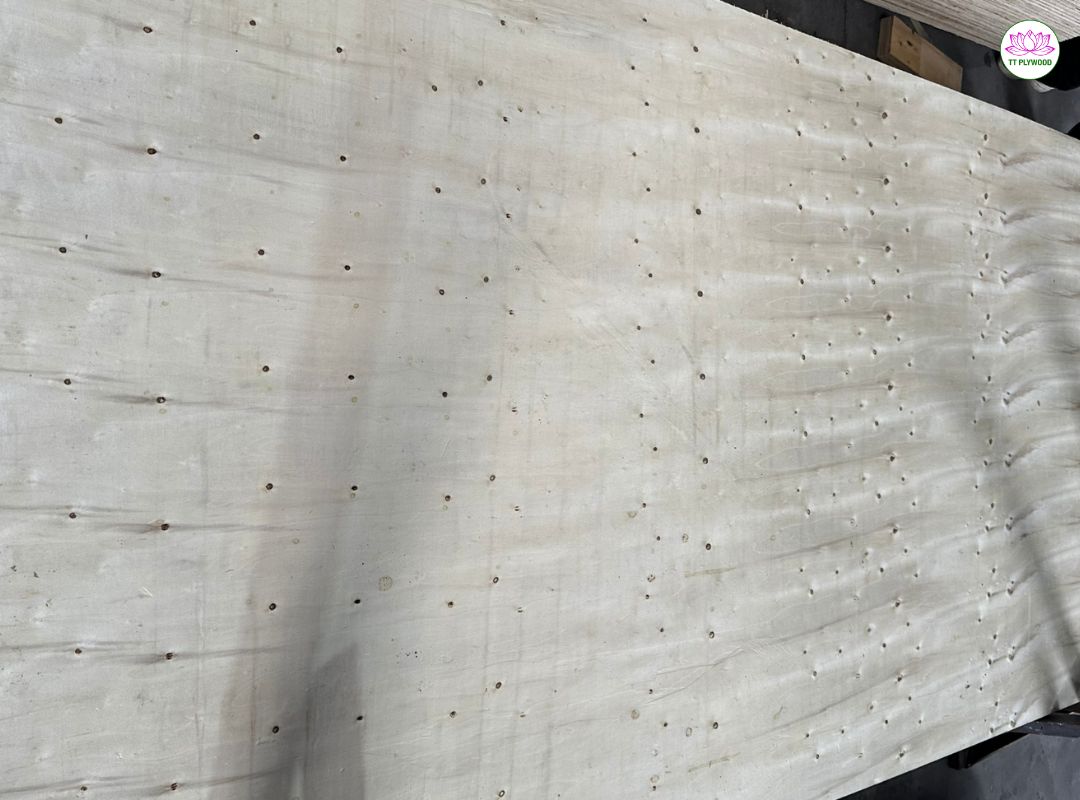
Styrax tonkinensis, sourced mainly from northern Vietnam, is lighter, softer, and more flexible than Acacia. Its density generally ranges from 550 to 600 kg/m³, making it a true medium-density hardwood. Because of this, many factories use Styrax to produce cost-effective export plywood, especially for markets where affordability and lightweight packaging are priorities.
Styrax’s longer wood fibers give it a uniform grain, making it easier to cut, sand, and process. Manufacturers using CNC machines often prefer Styrax because it reduces tool wear and allows for clean edges when producing custom packaging inserts or interior bracing components.
However, while Styrax performs reliably for light to medium loads, it is not as stiff as Acacia. Under high pressure, especially during stacking in container yards, it may begin to deform slightly sooner than Acacia-based panels. For this reason, many packaging manufacturers classify Styrax plywood as the economical option rather than the industrial-strength solution.
Styrax also behaves differently under moisture. If not kiln-dried carefully, it can swell more than Acacia. This does not disqualify Styrax as a packaging material, but it does require stricter quality control to ensure panels maintain stability during export shipments involving humidity fluctuations.
Overall, Styrax is ideal when weight, ease of processing, and cost reduction are the primary goals, and when customers are shipping goods that do not exert extreme weight or pressure on the packaging.
4. Acacia vs Styrax: A Practical Comparison for Packaging Use
To help packaging manufacturers and exporters clearly distinguish the two materials, the comparison below summarizes their performance differences in a concise, easy-to-scan format.
Performance Summary
• Acacia core plywood delivers higher density, stronger compression resistance, and better structural durability for heavy crates.
• Styrax core plywood is lighter, easier to machine, and more cost-efficient for light-to-medium packaging applications.
These two points encapsulate the most meaningful differences without oversimplifying. The first emphasizes Acacia’s strength advantages, while the second reflects Styrax’s suitability for cost-optimized packaging.
5. Real-World Applications Across Export Industries
Heavy Machinery and Industrial Equipment
When shipping engines, compressors, gearboxes, pumps, or industrial machines, packaging is subjected to two stress conditions at once: high weight and long-duration vibration. Crates made from acacia core plywood demonstrate superior resistance to crushing forces and sudden impacts, especially during forklift handling. Factories in Europe and the Middle East often request Acacia-cored crates because they withstand stacking during long sea transit despite temperature changes.
Consumer Goods and General Cargo
Styrax finds its strength in high-volume, lower-weight exports. Manufacturers shipping plastic products, household goods, textiles, and lightweight spare parts often choose styrax core plywood to reduce total crate weight. Air freight shipments especially benefit from the lighter panel.
Pallet Deckboards and Returnable Packaging
Pallets experience the highest static loads in the entire logistics chain. Panels made from Acacia cores maintain rigidity under repetitive load cycles. Styrax pallets work well for one-way shipments, but Acacia pallets show better performance when reused across multiple rotations.
CNC-Cut Packaging Components
Styrax remains the preferred option for CNC applications because of its easy machinability. Inserts, dividers, interior frames, and protective components can all be cut more efficiently with Styrax.
6. Moisture Resistance, Bonding Quality, and Pressing Standards
Wood species alone do not determine the durability of packing plywood. The glue line, pressing pressure, and moisture content play equally important roles. Most manufacturers use either melamine glue for standard packaging or phenolic glue for high-moisture environments.
Acacia’s short fiber structure helps glue penetrate effectively, creating a strong internal bond. Styrax absorbs glue more quickly because it is softer, so factories must control glue spread accurately to avoid oversaturation. This matters because weaker internal bonding may cause panels to break under stress.
Moisture is another factor influencing plywood durability. Both acacia and styrax must be kiln-dried to the correct moisture level usually around 10–12% before pressing. Poor moisture control can result in warping or delamination during export shipments. Manufacturers producing export plywood typically maintain detailed moisture logs for quality assurance.
7. Cost Structure and Market Preferences
In the current market, Styrax generally costs less, making it attractive for commercial packaging and high-volume orders. Acacia carries a slightly higher cost but delivers improved performance, making it a preferred choice in Australia, Europe, and the Middle East—regions that prioritize durability.
Many factories offer three configurations to balance performance with cost:
Core Options
• Full Styrax core for lightweight, cost-driven packaging.
• Full Acacia core for industrial-grade crates and pallets.
• Mixed cores (Styrax outer layers, Acacia center layers) for a performance-cost middle ground.
This represents the second and final bullet-point section of the article.
8. Environmental and Sustainability Perspective
Both species belong to fast-growing plantation forests, making them significantly more sustainable than slow-growing tropical hardwoods. Vietnam’s plantation cycle ranges from five to seven years, ensuring consistent supply. Acacia is often favored in certified programs because plantations are more established. Styrax is increasingly present in FSC-certified areas, though still developing in some regions.
Companies focused on sustainable supply chains often request documentation such as FSC Mix certificates, low-formaldehyde reports, and full traceability logs. These requirements help packaging manufacturers demonstrate compliance with tightening sustainability standards in the EU and other regulated markets.
9. Choosing the Right Core for Your Packaging Needs
The decision between Acacia and Styrax ultimately depends on the type of goods, transportation route, load weight, and cost structure. Heavy cargo traveling through long or multi-transshipment routes should rely on Acacia. Light cargo intended for cost-controlled markets or one-way shipments may benefit from Styrax because it reduces both crate weight and total freight charges.
Mixed-core solutions have also become popular. By combining Acacia in the center for strength and Styrax on the outer layers to reduce cost, manufacturers can achieve a balanced plywood panel suitable for both crates and pallets.
The best choice remains application-specific. Companies should evaluate cargo vulnerability, humidity exposure, and stacking risks before finalizing their packaging specification.
Conclusion
In the world of global logistics, choosing the right plywood core is a crucial decision. Acacia core plywood brings strength, stiffness, and reliability qualities that benefit industrial and heavy-duty shipments. Styrax core plywood, meanwhile, provides flexibility, machinability, and cost efficiency for lighter packaging. Neither is universally superior; each serves a distinct purpose in the packaging ecosystem.
As shipping requirements evolve and sustainability pressures increase, understanding these material differences helps manufacturers protect their goods more effectively. Whether you are building crates for machinery or preparing export pallets for consumer goods, the right choice of core determines long-term plywood durability.
If you are searching for reliable packaging plywood, custom-cut panels, or mixed-core solutions tailored for export plywood applications, our team can support you with density data, moisture reports, and technical specifications. Contact us to receive samples or consultation for your next shipment. Protect your cargo by choosing plywood engineered for your exact needs.
FAQ
1. Is Acacia always better than Styrax for crates and pallets?
Not always. Acacia is stronger and more durable, but Styrax is lighter and more affordable. The best choice depends on the weight of the cargo and the shipping route.
2. Does plywood durability depend only on the species?
No. Glue type, pressing quality, and veneer moisture content are equally important in determining long-term durability.
3. Is mixed-core plywood reliable for packaging?
Yes. Many factories use mixed cores to balance performance and cost, especially when customers require medium-strength packaging.
References
ITTO (2023). Global Plywood Market Trends. International Tropical Timber Organization.
Nguyen, T. and Le, Q. (2022). “Mechanical Properties of Vietnamese Acacia and Styrax Veneers.” Journal of Wood Science and Technology, 41(3), pp. 55–68.
Vietnam Ministry of Agriculture and Rural Development (2023). National Plantation Forest Report. Hanoi: MARD Publications.


