



-
-
-
Total payment:
-




Birch Plywood Sheets and Sizes: A Complete Buyer’s Guide for 2026
Posted by Thanh Uyên at 08/05/2026

Why Birch Plywood Remains a Preferred Choice in 2026
In 2026, birch plywood continues to hold a strong position in the global engineered wood market. Whether used for premium furniture, cabinetry, interior design, commercial fit-outs, or industrial applications, birch plywood is widely recognized for its strength, clean appearance, and machining precision.
For buyers in Europe and the United States, selecting the right birch plywood board involves much more than simply choosing a panel with an attractive surface. Understanding plywood sheet dimensions, thicknesses, core structures, and grading systems has become increasingly important as manufacturers focus on cost optimization, automation, and long-term durability.
Incorrect plywood sizing can lead to unnecessary cutting waste, inefficient CNC processing, higher transportation costs, and lower production efficiency. As a result, professional buyers are now paying closer attention to plywood sheet specifications as part of their sourcing strategy.
To better understand plywood structure and engineered wood classifications, buyers can review this complete guide to plywood and engineered wood materials.
What is Birch Plywood?
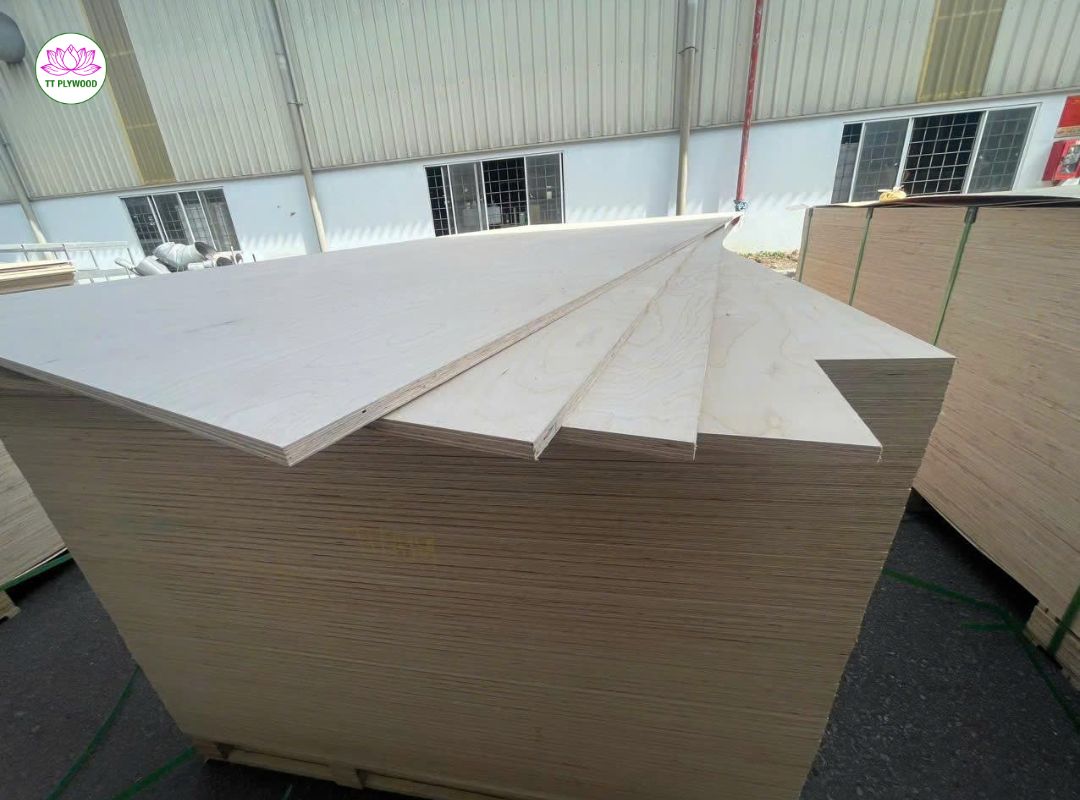
Birch plywood is an engineered wood panel manufactured by bonding multiple layers of birch veneer together under heat and pressure. Each veneer layer is arranged with alternating grain directions, creating a cross-laminated structure that improves strength and dimensional stability.
Compared with many alternative plywood materials, birch plywood offers several advantages:
- Excellent screw-holding performance
- Better structural consistency
- Smooth and attractive surface appearance
- Precision machining capability
- Improved dimensional stability
Because of these characteristics, birch plywood is commonly used for:
- Kitchen cabinets
- Furniture manufacturing
- CNC cutting applications
- Interior wall panels
- Shelving systems
- Packaging and industrial structures
Buyers looking for technical specifications and product options can explore this birch plywood product overview from TT Plywood.
Why plywood sheet size matters more than buyers expect
One of the most overlooked factors in plywood sourcing is sheet size selection. Many buyers focus heavily on face grade, glue system, or price while underestimating how dimensions affect overall production efficiency.
In reality, plywood sheet size has a direct impact on:
- Material optimization
- CNC nesting efficiency
- Transportation and container loading
- Cutting waste reduction
- Labor costs
For industrial furniture manufacturers, even a small improvement in sheet optimization can create significant savings over large production volumes.
This is especially important in 2026 as rising labor and logistics costs continue to push manufacturers toward more efficient production systems.
Common Birch Plywood Sheet Sizes in 2026
Different regions and industries prefer different plywood dimensions depending on machinery standards and production methods.
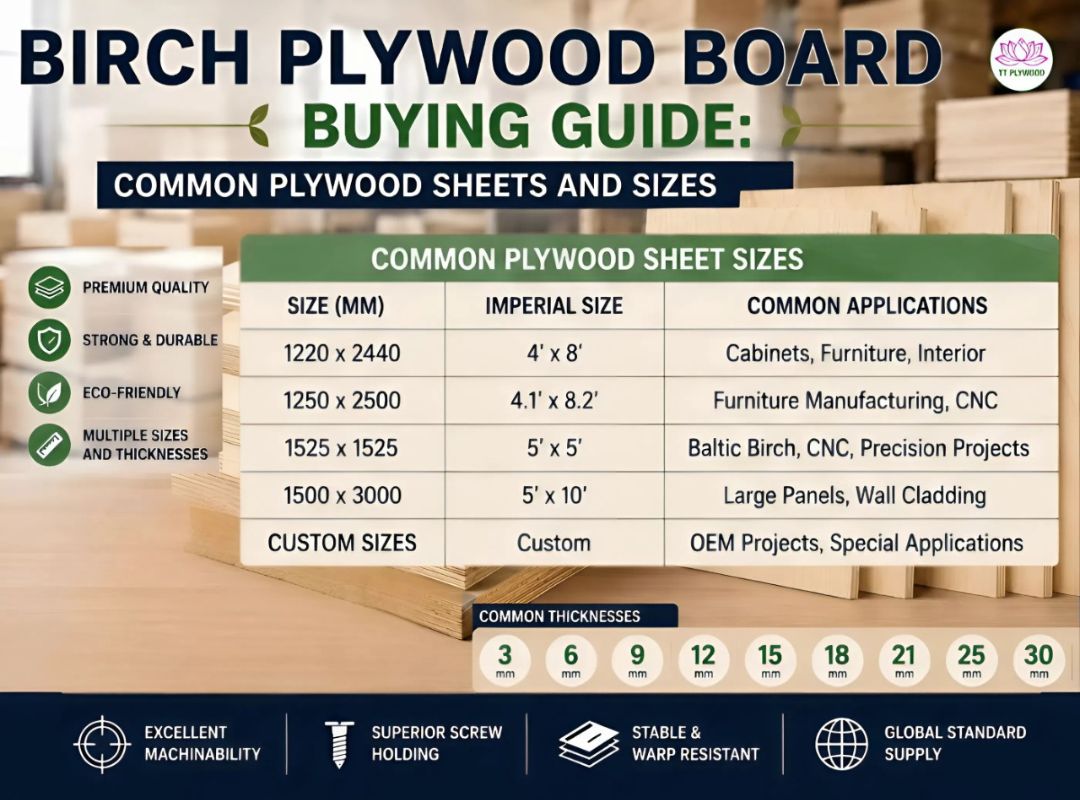
The following are the most common birch plywood sheet sizes used globally in 2026:
| Plywood Sheet Size | Imperial Size | Common Applications | Main Markets |
|---|---|---|---|
| 1220 × 2440 mm | 4' × 8' | Cabinets, furniture, construction, interior panels | Global / USA |
| 1250 × 2500 mm | Approx. 4.1' × 8.2' | Furniture production, CNC processing, interiors | Europe |
| 1525 × 1525 mm | 5' × 5' | Baltic birch applications, CNC cutting | Europe / USA |
| 1500 × 3000 mm | Approx. 5' × 10' | Large wall panels, commercial interiors | Commercial projects |
| Custom Sizes | Custom | OEM furniture production, industrial use | Global B2B buyers |
The 1220 × 2440 mm format remains the most widely used plywood sheet size worldwide due to its compatibility with standard woodworking machinery and optimized transportation efficiency.
In Europe, the 1250 × 2500 mm format is also highly common because it aligns well with European furniture production systems and automated processing equipment.
Meanwhile, the 1525 × 1525 mm Baltic birch format remains popular for CNC machining and precision furniture production because the square dimensions reduce cutting waste in certain layouts.
Custom-sized plywood sheets are also becoming more common as manufacturers seek to minimize downstream cutting and improve production efficiency.
Understanding Birch Plywood Thickness Options
Thickness selection plays a critical role in determining plywood performance. Different applications require different levels of strength, rigidity, and load-bearing capability.
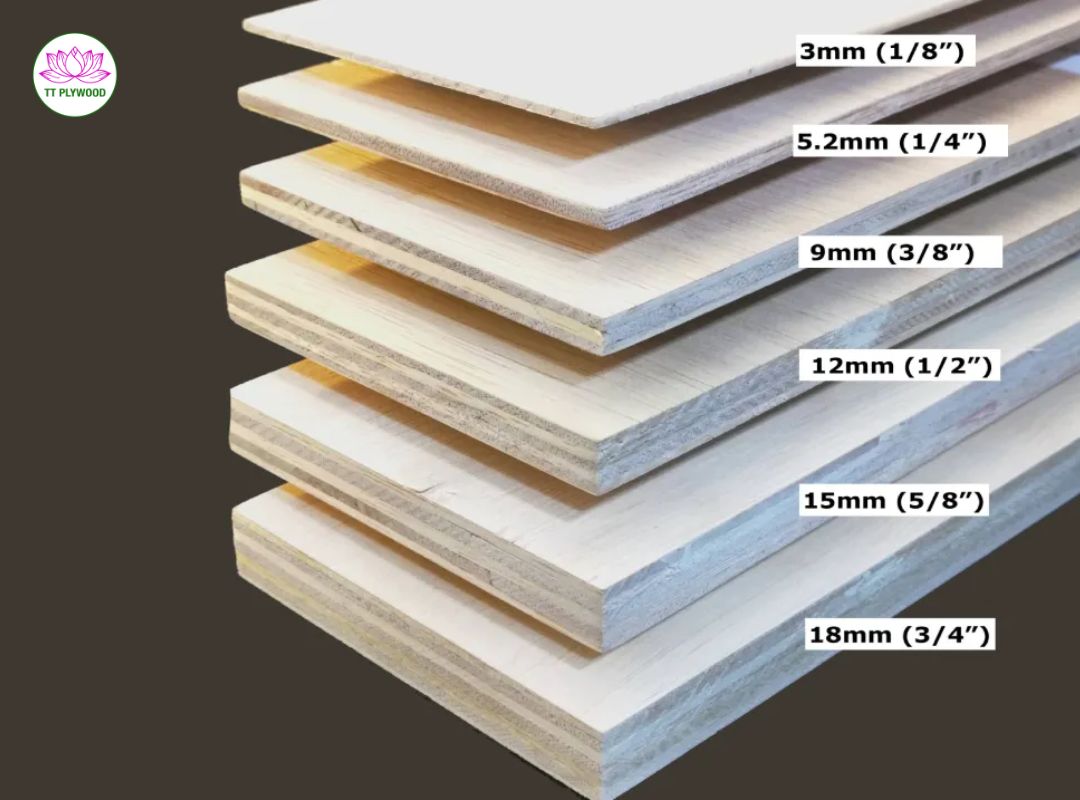
Thin birch plywood panels, typically between 3 mm and 6 mm, are commonly used for lightweight applications such as decorative panels, drawer bottoms, and backing components. These panels prioritize flexibility and surface quality over structural strength.
Medium-thickness panels, ranging from 9 mm to 18 mm, represent the most widely used category for cabinetry and furniture manufacturing. In particular, 18 mm birch plywood has become an industry standard for kitchen cabinets because it offers a strong balance between structural performance, machinability, and cost efficiency.
Thicker plywood panels above 21 mm are often selected for industrial applications, heavy-duty shelving, worktops, and structural components requiring higher load capacity.
Choosing the wrong thickness can lead to performance problems or unnecessary material costs. Professional buyers therefore evaluate thickness not only based on strength requirements but also on machining compatibility and project efficiency.
Birch Plywood Grades Explained
Birch plywood grades determine the surface appearance and allowable defects on each face of the panel.
Common birch plywood grades include:
- B/BB
- BB/BB
- BB/CP
- CP/CP
Higher grades such as B/BB provide cleaner and more visually attractive surfaces, making them suitable for premium furniture and visible applications. Lower grades are typically used for structural or hidden components where appearance is less important.
One of the most common sourcing mistakes is over-specifying plywood grades. Buyers sometimes select premium grades even when the surface will eventually be covered with laminate, paint, or veneer. This unnecessarily increases material cost without improving final product performance.
The best approach is to align plywood grade with the actual visibility and finishing requirements of the project.
The Importance of Core Quality in Birch Plywood
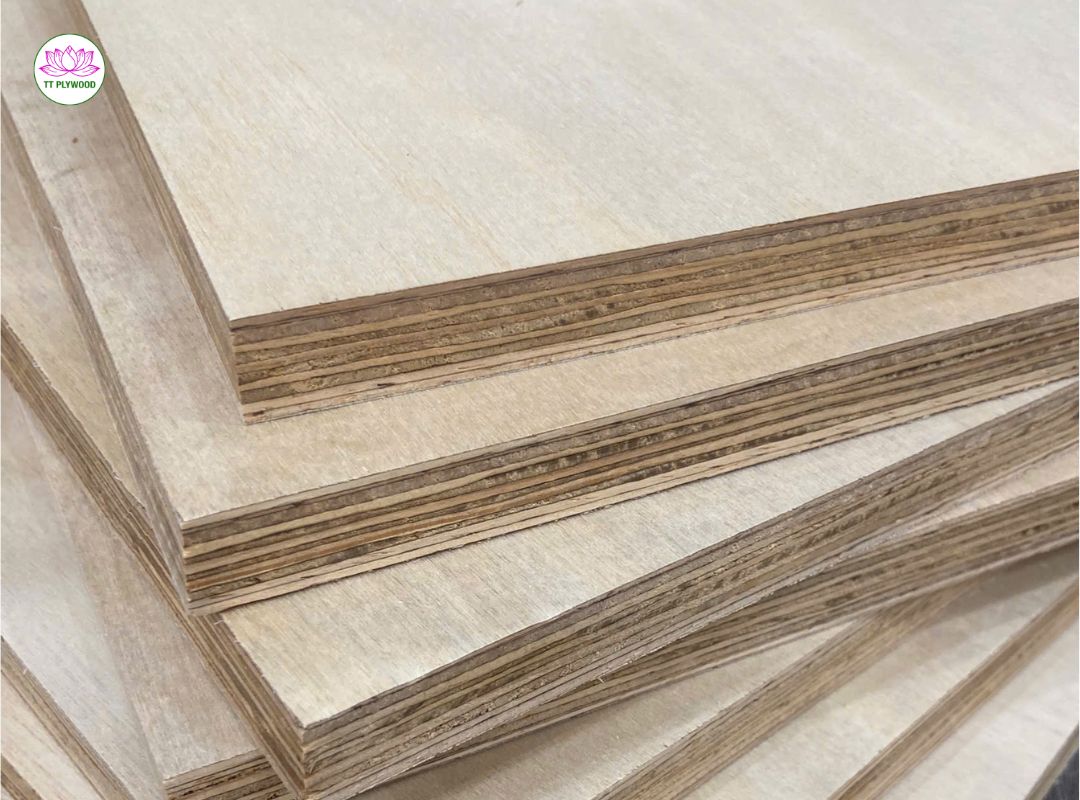
While face appearance receives significant attention, core quality is equally important. The internal structure of plywood determines much of its long-term performance.
A high-quality birch plywood core should provide:
- Consistent veneer layers
- Strong bonding integrity
- Minimal internal voids
- Stable moisture control
Poor core construction can lead to:
- Delamination
- Warping
- Reduced screw-holding capability
- Lower machining precision
For cabinet manufacturing and CNC applications, core consistency is critical because internal voids can disrupt cutting performance and weaken structural stability.
Why Glue Type Matters in Birch Plywood
Adhesive systems directly affect plywood durability and moisture resistance. Different glue types are designed for different application environments.
Interior plywood commonly uses:
- E0 glue
- E1 glue
- Melamine-based adhesives
Applications exposed to higher humidity or moisture generally require:
- Phenolic (WBP) glue systems
For kitchen cabinets and humid interior environments, buyers increasingly prefer plywood with stronger moisture resistance and lower formaldehyde emissions.
At TT Plywood, glue systems are selected based on the intended application environment to ensure stable export quality and long-term performance.
How CNC Manufacturing Influences Plywood Sheet Selection
As furniture production becomes more automated, CNC compatibility has become a major consideration when selecting plywood sheets.
Manufacturers now evaluate plywood dimensions based on:
- Nesting optimization
- Cutting efficiency
- Waste reduction
- Machine compatibility
Larger sheets may reduce seams and improve material utilization, but they also require compatible handling systems and transportation planning.
This is why many industrial buyers now request custom plywood dimensions tailored to their production layouts.
Moisture Control and Dimensional Stability
Birch plywood performance is strongly influenced by moisture content control. Wood naturally absorbs and releases moisture depending on environmental conditions.
If moisture is not properly controlled during manufacturing or shipping, plywood may:
- Warp
- Expand
- Shrink
- Experience bonding stress
This is particularly important for export shipments to regions with changing climates, such as Europe and the United States.
Professional suppliers implement strict moisture monitoring systems throughout production to ensure stable panel performance.
Why Birch Plywood Continues to Grow in Popularity
Despite competition from MDF, particle board, and alternative engineered panels, birch plywood continues to grow in popularity because it offers a balanced combination of:
- Structural reliability
- Attractive appearance
- Precision machining capability
- Long-term durability
In premium furniture and cabinetry applications, buyers increasingly prioritize reliability and performance over the lowest initial cost.
This trend is expected to continue throughout 2026 as manufacturers focus more heavily on product lifespan and sustainability.
Why Vietnam Is Becoming a Major Birch Plywood Supply Base
Vietnam has emerged as one of the world’s key plywood manufacturing hubs due to its expanding production capacity, export experience, and competitive pricing structure.
Suppliers such as TT Plywood continue to invest in quality control systems, moisture management, and production consistency to meet growing international demand.
For buyers seeking reliable birch plywood solutions for furniture, cabinetry, and industrial applications, the TT Plywood product portfolio offers a wide range of specifications and export-grade products.
Common Mistakes Buyers Should Avoid
Many sourcing issues are caused by incomplete specification planning rather than actual product defects.
Common mistakes include:
- Selecting incorrect plywood sheet sizes
- Ignoring production optimization requirements
- Over-specifying surface grades
- Choosing unsuitable glue systems
- Focusing only on panel price instead of total production efficiency
Professional buyers increasingly evaluate plywood based on total project performance rather than simply comparing raw material costs.
Smart Birch Plywood Buying Starts with Understanding Specifications
In 2026, professional plywood sourcing requires more than simply choosing a board with a good appearance. Buyers must understand how plywood sheet size, thickness, core quality, glue systems, and grading all influence performance and production efficiency.
Birch plywood remains one of the most versatile and reliable engineered wood materials available today. When properly selected, it provides excellent durability, machining precision, and long-term value across a wide range of applications.
For buyers in Europe and the United States, understanding these technical details is essential for making smarter sourcing decisions and improving manufacturing efficiency.
FAQ
1. What is the standard birch plywood sheet size?
The most common birch plywood sheet size is 1220 × 2440 mm (4' × 8'). European markets also commonly use 1250 × 2500 mm panels.
2. What thickness is best for kitchen cabinets?
18 mm birch plywood is one of the most popular choices for kitchen cabinets because it provides strong structural stability and excellent screw-holding performance.
3. Is Baltic birch different from regular birch plywood?
Yes. Baltic birch plywood is typically manufactured with more veneer layers and commonly produced in 1525 × 1525 mm sheets for precision applications.
4. Which birch plywood grade is best for furniture?
B/BB and BB/BB grades are commonly used for furniture because they provide cleaner and more visually attractive surfaces.
References
Forest Products Laboratory. (2010). Wood Handbook: Wood as an Engineering Material.
APA – The Engineered Wood Association. (2020). Engineered Wood Products Guide.
European Panel Federation. (2023). Wood-Based Panels Market Overview.


