



-
-
-
Total payment:
-




Understanding CE Marking for Plywood Cores Imported into Europe
Posted by Thanh Uyên at 11/12/2025

For plywood manufacturers exporting to the European Union, CE Marking is one of the most important compliance requirements. Far more than a label, it serves as a declaration that the product meets EU expectations for safety, mechanical performance, environmental responsibility, and suitability for use in construction. As the market becomes increasingly regulated, exporters of hardwood core plywood, eucalyptus core plywood, birch core plywood, veneer core plywood, and full-core structural panels must understand how CE Marking applies to their products and what is required to achieve it.
This article explains CE Marking from a practical, journalism-style perspective, focusing on how the certification works, which EN standards apply, how plywood cores influence the results, and what European buyers expect from suppliers.

1. What CE Marking Represents for Plywood Cores
CE Marking falls under the EU Construction Products Regulation (CPR 305/2011). When applied to plywood, it confirms that the product has been tested according to relevant EN standards and meets essential safety and performance thresholds. Testing covers parameters such as bonding quality, bending strength, stiffness, reaction to fire, formaldehyde emissions, dimensional stability, and moisture behavior.
Although CE certification evaluates the entire plywood panel, the core is a determining factor in nearly every technical assessment. Factors such as veneer species, internal gaps, bonding uniformity, glue type, and press accuracy directly influence the outcome.
2. Why CE Marking Matters to European Buyers
For EU importers, CE Marking is a baseline requirement that simplifies regulatory approval and ensures the plywood is legally usable in construction. Because contractors, architects, and distributors must provide traceable documentation for every product installed in a project, CE-marked plywood offers confidence that the material performs consistently and meets declared specifications.
This mark is also important during customs inspections. CE-certified plywood typically clears faster and faces fewer technical objections, even when the product is intended for non-structural use. As a result, suppliers without CE documentation often struggle to enter or maintain access to the EU market.
3. The EN Standards Behind CE Marking
Plywood certified under CE Marking must comply with EN 13986, the main standard governing wood-based panels used in construction. This standard refers to a series of additional EN tests depending on the characteristics being evaluated. Bonding quality relies on EN 314-2, bending strength and modulus of elasticity follow EN 310, tolerances are assessed using EN 315, density and moisture content align with EN 322 and EN 323, swelling after water immersion is measured with EN 317, and formaldehyde emissions are tested using EN 717-1.
European labs evaluate how the plywood behaves under these conditions and whether its performance values match those declared by the manufacturer.
4. What Manufacturers Must Prepare Before Declaring CE Marking
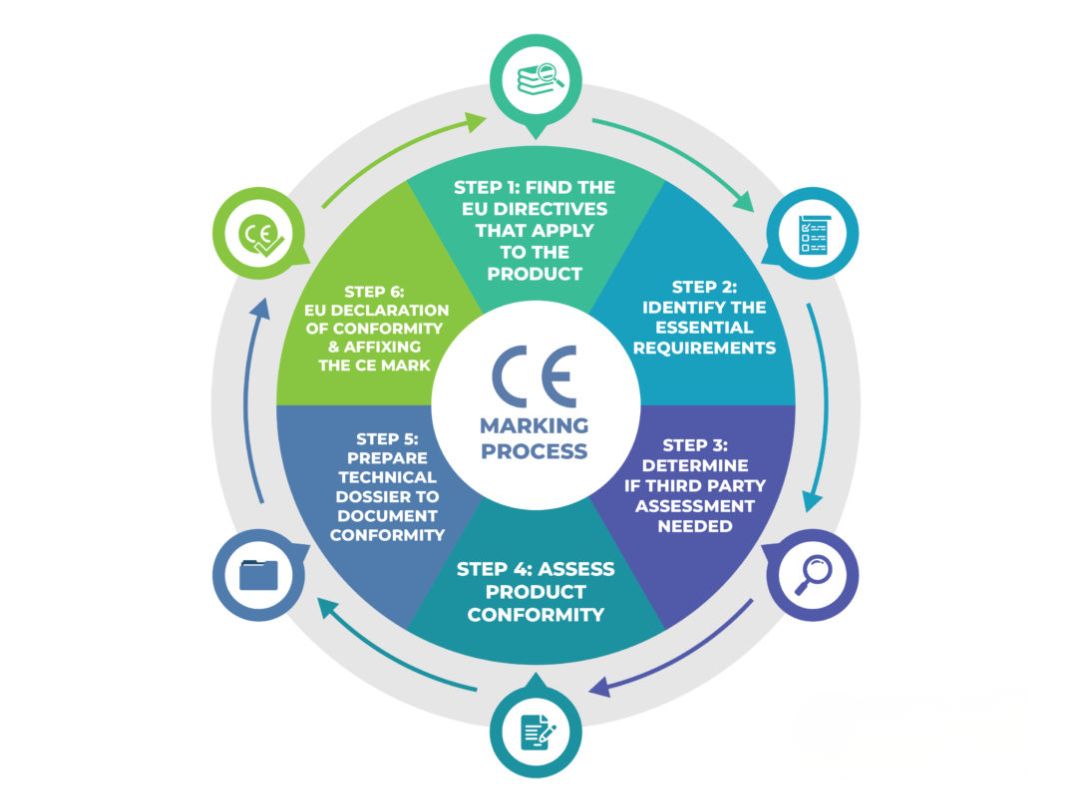
Manufacturers must complete several mandatory components before placing CE Marking on plywood. These include:
• Initial Type Testing performed by an accredited laboratory to establish the product’s technical performance.
• A Factory Production Control (FPC) system demonstrating that every batch is produced consistently and meets EN 13986 requirements.
In addition, the producer must prepare a Declaration of Performance (DoP) summarizing the test results and performance values. The CE label must be displayed on packaging or documentation, identifying the intended use, bonding class, and relevant EN standards.
5. How Plywood Cores Influence CE Certification
Although CE tests are conducted on the entire plywood panel, the core largely determines the technical outcome. Panels constructed with consistent hardwood, eucalyptus, or birch cores generally achieve more stable bending values and better resistance to delamination. In contrast, panels containing voids or poorly bonded layers may fail bonding or strength tests.
Dimensional stability is another critical factor, especially for buyers in Northern and Western Europe where humidity fluctuations are significant. Panels must also meet strict formaldehyde emission limits, reinforcing the need for high-quality adhesives and controlled production processes.
6. Common Challenges Faced by Exporters Outside Europe
Many exporters from Asia and South America encounter difficulties when certifying plywood under CE requirements. Inconsistent veneer moisture, uneven bonding, irregular hot-press cycles, and insufficient documentation can all lead to rejected test results. Manufacturers producing eucalyptus or mixed-hardwood cores often struggle with variations in raw material density, while birch-core producers may face issues related to veneer gaps and thickness calibration.
These challenges highlight why CE certification requires not just testing, but stable and documented factory control.
7. How CE Marking Shapes EU Purchasing Decisions
CE Marking serves as the foundational requirement in the European plywood supply chain. Once it is confirmed, procurement teams shift their focus to factors such as core structure, veneer uniformity, glue performance, surface grading, and the supplier’s documentation reliability. Increasingly, buyers also prioritize sustainability credentials, particularly FSC certification, and expect low-emission materials compliant with European air-quality expectations.
Consistency across shipments is essential. Many EU importers maintain long-term contracts only with suppliers who repeatedly achieve the same performance values listed in their Declaration of Performance.
8. CE-Certified Plywood Supply from TT Plywood
TT Plywood partners with accredited European laboratories to obtain CE certification for panels made with hardwood cores, eucalyptus cores, birch cores (on request), veneer cores, and full-core constructions. Production follows controlled moisture levels, calibrated veneer layups, accurate hot-press cycles, and adhesive quality checks to maintain performance stability.
This process ensures that buyers in Europe receive panels that align with EN 13986 requirements while benefiting from transparent documentation, consistent quality, and available FSC-certified options.
Conclusion
CE Marking is an essential gateway for entering the European plywood market. It verifies that a product meets structural, safety, and environmental standards defined by the EU. For exporters, understanding the CE process, maintaining consistent manufacturing quality, and preparing the necessary documentation enable smoother access to one of the world's most regulated markets. For European buyers, CE-marked plywood provides confidence, traceability, and predictable performance in construction applications.
Contact for CE-Certified Plywood Supply
Email: info@ttplywood.com
WhatsApp: +84 32 694 2288
Website: https://ttplywood.com
Our technical team provides CE documentation assistance, sample evaluations, and tailored plywood specifications for EU importers.
FAQ
1. Does all plywood entering Europe need CE Marking?
No. CE Marking is required for plywood intended for construction use under EN 13986, but many buyers still prefer CE-certified materials for consistency and easier customs clearance.
2. Is the plywood core tested separately during certification?
The tests apply to the entire panel, but the core construction directly affects bonding strength, bending values, dimensional stability, and emission levels.
3. Do EU buyers request FSC certification in addition to CE?
Yes. FSC has become increasingly important for sustainability compliance and is frequently requested alongside CE documents.


