


-
-
-
Total payment:
-



How to Choose a Reliable Plywood Supplier in Vietnam
Posted by Hoàng Anh Tuấn at 15/06/2026

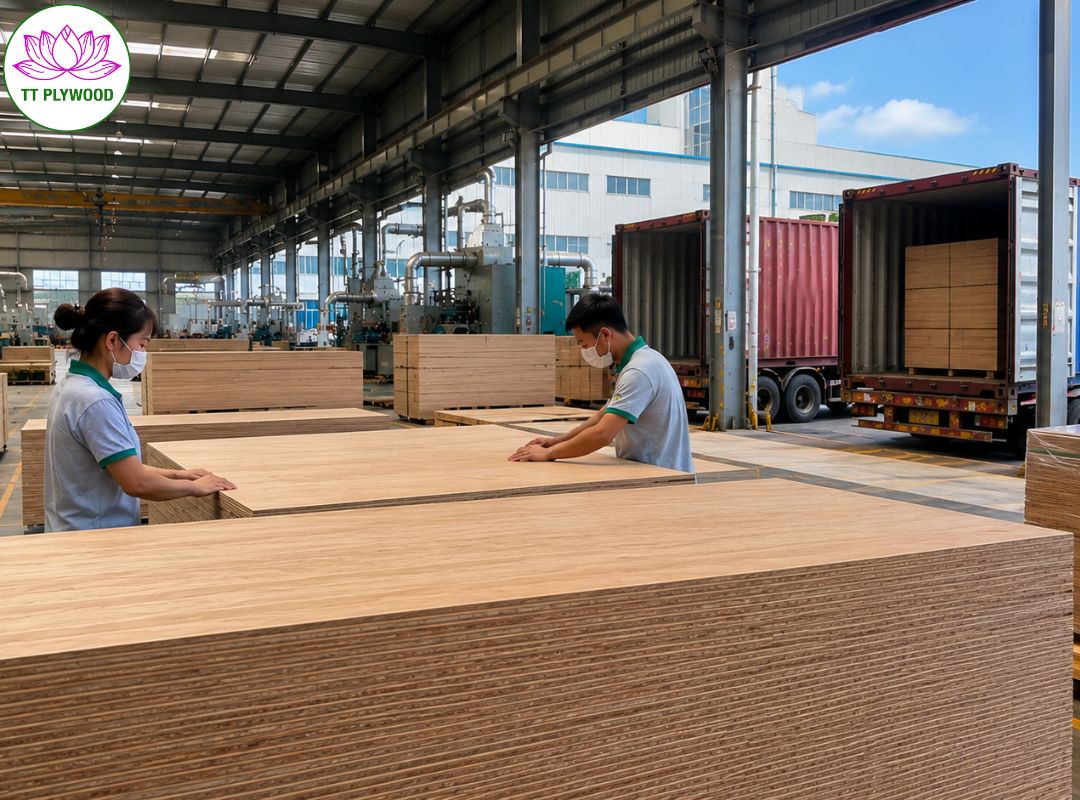
For international buyers, choosing a plywood supplier is not simply about finding the lowest quotation. A supplier that looks competitive on price today may create expensive problems later through inconsistent quality, shipment delays, weak packaging, or poor communication.
Vietnam has become one of Asia’s important plywood sourcing destinations thanks to its manufacturing capacity, competitive pricing, and growing export experience. However, not every supplier offers the same level of reliability. Some companies focus on long-term quality control, while others compete mainly on price.
This guide explains how global importers, distributors, wholesalers, and manufacturers can evaluate a reliable plywood supplier in Vietnam before placing an order.
Why Vietnam Is a Strong Sourcing Destination for Plywood
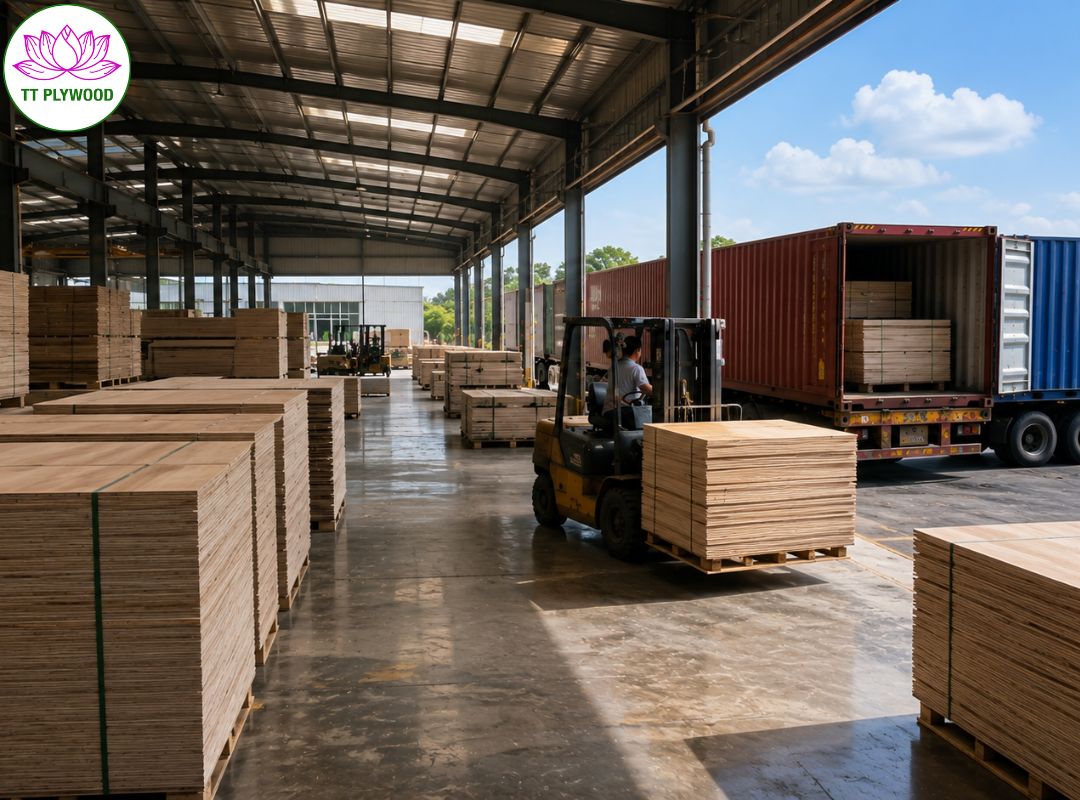
Vietnam has developed a strong position in the global wood products supply chain. The country has experience exporting plywood and engineered wood products to multiple international markets, supported by a growing manufacturing base and an improving logistics network.
For many buyers, Vietnam offers a practical balance between cost efficiency and production capability. Compared with some mature manufacturing markets, Vietnamese suppliers can often provide competitive pricing while still meeting the needs of international buyers who require stable supply, customized specifications, and export-ready packaging.
Another reason buyers source from Vietnam is product diversity. Vietnamese plywood suppliers often serve different industries, including furniture, construction, packaging, interior decoration, and distribution. This gives buyers more flexibility when sourcing different plywood types from one market.
Manufacturer or Trading Company: Which One Should Buyers Choose?
One of the first questions buyers should ask is whether they are dealing with a manufacturer, a trading company, or a supplier that combines both roles.
Working directly with a manufacturer can provide better control over production, quality standards, and technical specifications. Buyers can often communicate more clearly about thickness tolerance, core quality, glue type, surface requirements, and packaging details.
A trading company may still be useful in some situations, especially when buyers need a wider product mix or smaller quantities from different factories. However, the key issue is transparency. A reliable supplier should be clear about its role in the supply chain and should be able to explain how quality is controlled before shipment.
For long-term importers, the best supplier is usually not just the one with the lowest price, but the one that can provide consistent product quality, stable communication, and clear accountability.
Product Range Can Reflect Supplier Capability
A supplier’s product range can tell buyers a lot about its manufacturing experience and market focus. A company that understands multiple plywood applications is usually better prepared to serve international buyers with different requirements.
For example, buyers sourcing plywood for furniture and interior use may need stable surface quality, suitable core construction, and consistent thickness. In this case, product information about commercial plywood should be easy to access and technically clear.
- For construction-related buyers, especially those involved in concrete formwork or building projects, film faced plywood is often a key product category. A reliable supplier should understand durability, surface film quality, glue bonding, and repeated-use performance.
- For customers looking for higher-grade panels for furniture, cabinetry, or precision applications, birch plywood may be more suitable. In this category, buyers should pay close attention to face quality, layer structure, density, and finishing consistency.
- A strong product range does not mean the supplier must offer every wood product available. Instead, it should show that the supplier understands the main applications of plywood and can recommend the right product based on the buyer’s market.
How to Evaluate Plywood Quality Before Ordering
Product quality is one of the most important factors when choosing a plywood supplier in Vietnam. In export business, small differences in quality can create major issues once the goods arrive at the destination market.
Buyers should not judge plywood only by appearance. Surface quality is important, but internal structure matters even more. A clean face veneer may hide problems such as weak core bonding, uneven layers, high moisture content, or poor glue performance.
A reliable supplier should be able to explain the product’s core structure, veneer grade, glue type, moisture control, thickness tolerance, and intended application. These details help buyers understand whether the plywood is suitable for furniture, construction, packaging, or distribution.
Here is a simple quality evaluation table buyers can use before confirming an order:
|
Quality Factor |
Why It Matters |
|
Core quality |
Affects strength, stability, and cutting performance |
|
Glue bonding |
Determines panel durability and resistance to delamination |
|
Moisture content |
Reduces risk of warping, mold, and dimensional changes |
|
Thickness tolerance |
Important for furniture production and project consistency |
|
Surface quality |
Affects finishing, appearance, and customer acceptance |
|
Packaging |
Protects goods during sea shipment and inland transport |
The most reliable suppliers are usually transparent about these specifications. They do not avoid technical questions, and they are willing to provide samples, photos, inspection details, or test information when required.
Samples Are Important, But They Are Not Enough
Requesting samples is a smart step before placing a large plywood order. Samples allow buyers to check surface appearance, thickness, core structure, and basic workmanship. However, samples alone do not guarantee that the final container will match the same quality.
This is why buyers should also ask about production consistency. A reliable supplier should have a system to control quality during mass production, not only when preparing samples.
Before confirming an order, buyers should clarify whether the production goods will follow the approved sample. They should also confirm packaging method, labeling, loading plan, and inspection process. These details reduce misunderstandings and help both sides avoid disputes after shipment.
In B2B plywood import, consistency is often more valuable than a perfect sample. Buyers need a supplier who can repeat the same standard across multiple orders.
Export Experience Reduces Buyer Risk
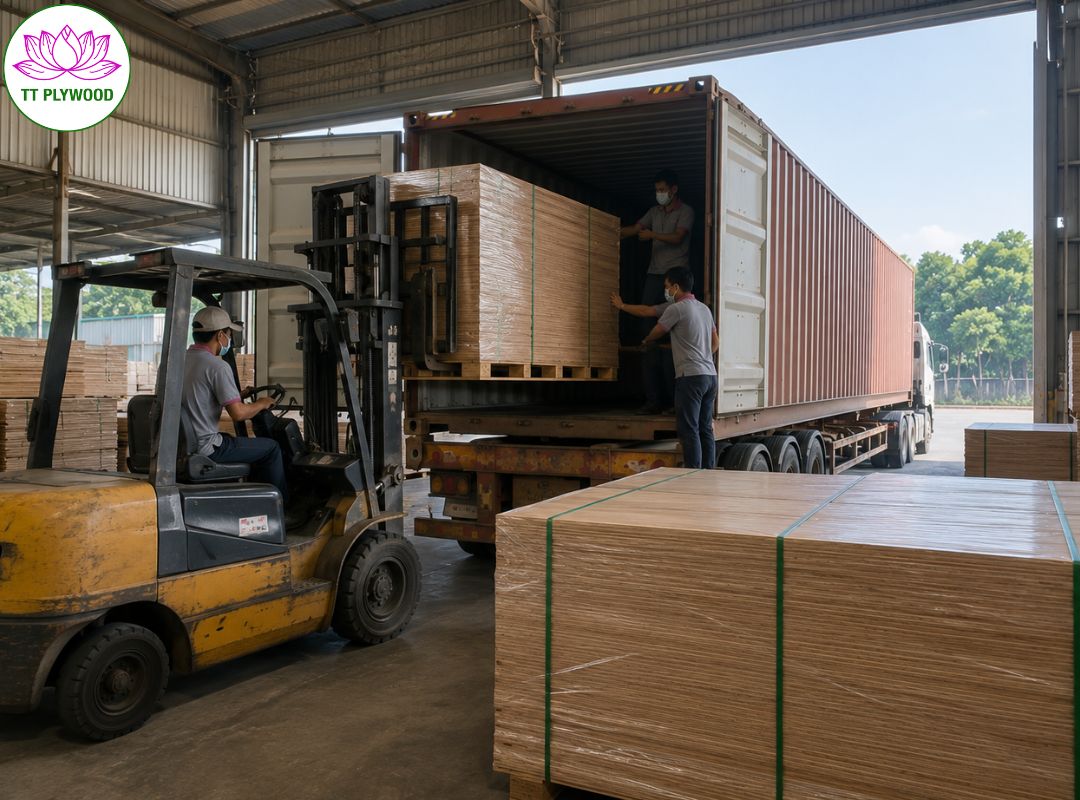
Export experience is another key factor when choosing a plywood supplier in Vietnam. A company may produce good plywood, but if it lacks export experience, buyers may still face problems with documentation, packaging, shipment coordination, or loading.
Experienced exporters understand that international buyers need more than products. They need accurate proforma invoices, packing lists, commercial invoices, certificates when required, loading photos, container details, and timely shipping updates.
For plywood, export packaging is especially important because panels may travel long distances by sea. Poor packaging can lead to edge damage, moisture exposure, broken pallets, or customer complaints at destination.
A professional plywood exporter should be able to explain how products are packed, how containers are loaded, and how goods are protected during shipment.
Communication Is a Major Sign of Reliability
In international sourcing, communication quality often reveals supplier quality before the first order is placed.
A reliable plywood supplier should respond clearly, professionally, and consistently. The supplier should understand buyer questions and provide useful answers instead of vague promises. When communication is slow or unclear during the quotation stage, it may become even more difficult during production or shipment.
Good communication includes clear quotations, product specifications, realistic lead times, sample updates, production photos, and shipment tracking. It also includes honesty when something cannot be done.
For B2B buyers, this matters because delays and unclear information can affect customer commitments in the destination market. A supplier that communicates well helps buyers plan inventory, sales, and logistics with more confidence.
Do Not Choose Based on Price Alone
Price is important, but it should not be the only reason for choosing a plywood supplier.
- A very low quotation may look attractive at first, but it can sometimes indicate lower-grade materials, weaker glue, unstable core quality, or insufficient quality control. These issues may not appear immediately in photos or samples, but they can create serious problems once the plywood is used by end customers.
- A better approach is to compare total value. Buyers should consider product quality, reliability, communication, export experience, lead time, and after-sales support. In many cases, paying slightly more for a stable supplier is cheaper than dealing with claims, rejected goods, delayed shipments, or lost customers.
The best plywood supplier is not always the cheapest supplier. It is the supplier that helps buyers protect their market reputation and maintain long-term profit.
What Buyers Should Confirm Before Placing an Order
Before confirming a plywood order, buyers should make sure all important details are agreed in writing. This helps reduce misunderstandings and creates a clearer basis for production.
The most important points to confirm include product type, size, thickness, grade, glue type, core material, moisture requirement, quantity, packaging method, lead time, payment terms, loading port, and required documents.
A professional supplier will welcome this level of clarity because it helps both sides work more efficiently. In export business, clear expectations are one of the best ways to prevent disputes.
Why Buyers Work with TTP Plywood
TTPLYWOOD supports international buyers with plywood products for furniture, construction, interior, and distribution applications. The company focuses on consistent product quality, practical export support, and long-term business relationships.
For buyers looking for a plywood supplier in Vietnam, TTPLYWOOD aims to provide not only competitive products but also clear communication and dependable service throughout the sourcing process.
To understand more about the company’s background and capabilities, buyers can visit the TTPLYWOOD company profile.
Conclusion
Choosing a reliable plywood supplier in Vietnam requires a careful evaluation of more than price. Buyers should look at product range, manufacturing capability, quality control, export experience, communication, and long-term reliability.
A good supplier helps buyers reduce risk, maintain stable quality, and build a stronger supply chain. For importers, distributors, wholesalers, furniture manufacturers, and construction material companies, this can make a significant difference in both customer satisfaction and business growth.
If you are looking for a trusted plywood supplier in Vietnam, TTP Plywood is ready to support your sourcing needs with product information, samples, and export consultation.
FAQs
What should I consider when choosing a plywood supplier in Vietnam?
Buyers should consider product quality, production capability, export experience, communication, packaging standards, and the supplier’s ability to maintain consistent quality over time.
Is Vietnam a good country to source plywood from?
Vietnam is a strong sourcing destination for plywood because of its manufacturing capacity, competitive pricing, product diversity, and growing export experience.
Should I choose a manufacturer or a trading company?
Both can be suitable depending on the buyer’s needs. However, buyers should always check transparency, quality control, product knowledge, and accountability before placing an order.
Why should buyers request samples before ordering plywood?
Samples help buyers evaluate surface quality, thickness, core structure, and workmanship before confirming a larger shipment. However, buyers should also confirm that mass production will follow the approved sample.
How can I contact TTP Plywood for an export inquiry?
Buyers can send product requirements, size, thickness, quantity, destination port, and target application to TTPLYWOOD.


