



-
-
-
Total payment:
-




3/4 Plywood Thickness: 23/32″ or 18mm? Actual Size Explained
Posted by Thanh Uyên at 31/12/2025

3/4 plywood does not always measure exactly 0.750 inch (19.05 mm). Many panels commonly sold around this size measure approximately 23/32 inch (0.71875 inch / 18.26 mm), while metric plywood may be supplied at 18 mm. The exact finished thickness depends on the panel standard, sanding, and manufacturing tolerance..
Understanding the difference between nominal thickness and actual thickness is critical. This discrepancy affects structural performance, code compliance, load capacity, and long-term durability especially in subfloor systems, heavy-duty panels, and export-grade plywood applications.
This guide explains what the actual thickness of 3/4 plywood really is, why the difference exists, and how it impacts real-world performance.
What Is the Actual Thickness of 3/4 Plywood?
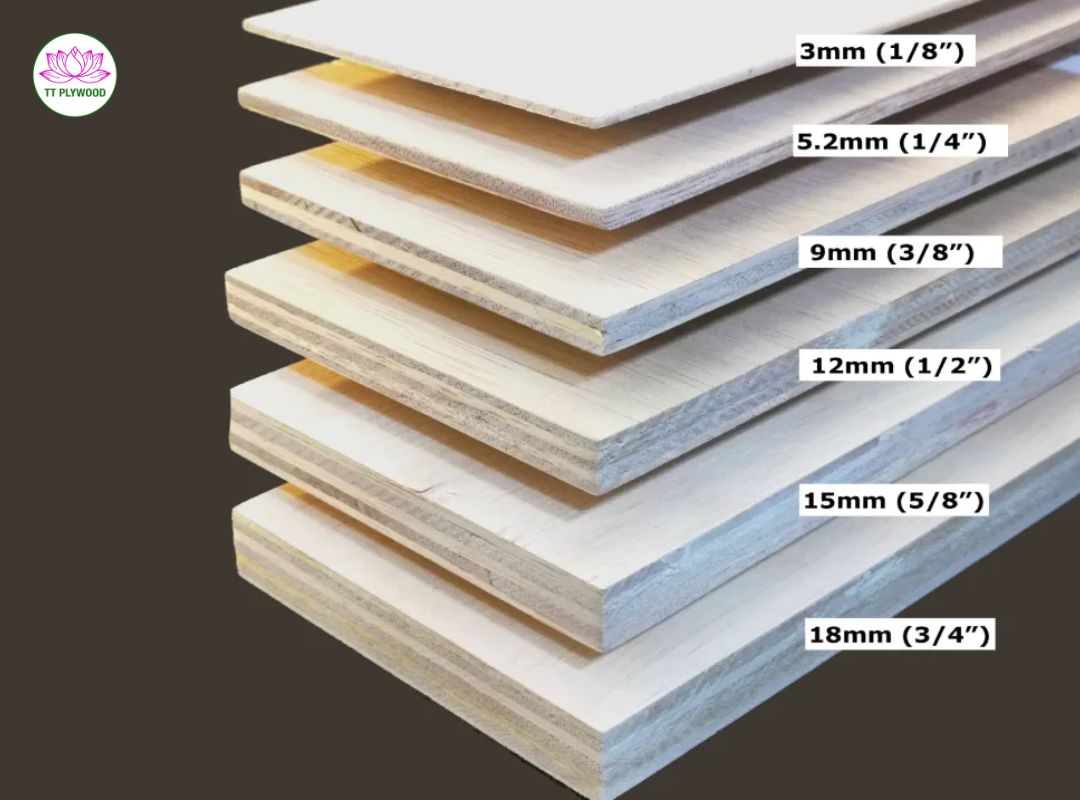
In modern manufacturing, 3/4 plywood typically has an actual thickness of approximately 23/32 inch, which equals about 0.718 inches or 18.3 mm.
While the difference between 3/4 inch (0.750") and 23/32 inch (0.718") may seem small, it becomes significant when plywood is used in load-bearing applications, tight-fit assemblies, or flooring systems where deflection tolerances are minimal.
This sizing standard applies across most softwood and hardwood plywood products sold in the US market, including construction-grade and industrial plywood.
Nominal Thickness vs Actual Thickness Explained
The reason for this difference lies in how plywood dimensions are defined and produced.
Nominal thickness is the name used to identify the product category, while actual thickness reflects the final measurement after manufacturing processes such as pressing, sanding, and finishing. During production, plywood panels are sanded to achieve smooth surfaces and consistent thickness, which slightly reduces the final dimension.
As a result, plywood sold as “3/4 inch” is labeled based on its nominal size, even though its actual thickness is slightly less.
Why the Difference Matters in Real Applications
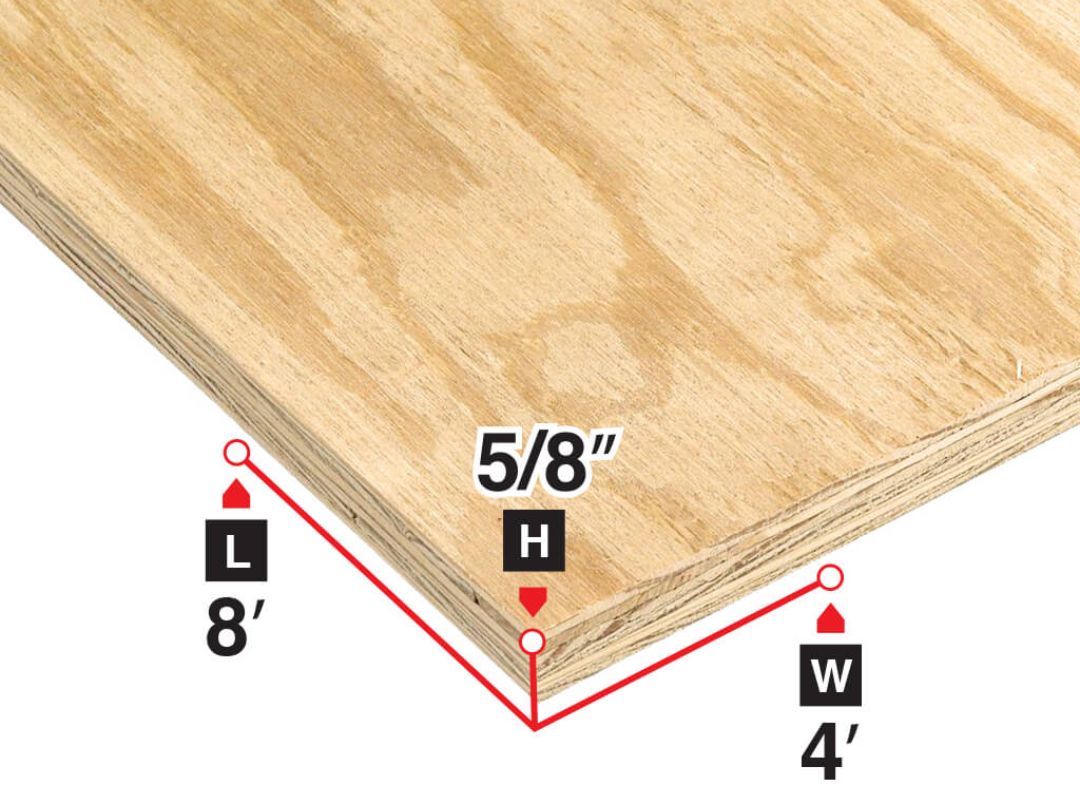
In many applications, the difference between nominal and actual thickness is not merely academic it has practical consequences.
For subfloor systems, actual thickness directly affects floor stiffness, deflection, and long-term performance especially when plywood is installed over standard joist spacing. If you’re evaluating subfloor performance in detail, see our guide on subfloor plywood thickness and joist spacing requirements.
In industrial and export packaging, thickness tolerance can also influence load distribution, stacking strength, and resistance to vibration during transport.
3/4″ vs 23/32″ vs 18mm Plywood
When comparing 3/4 plywood, 23/32 plywood, and 18mm plywood, the numbers may look very similar, but they should not automatically be treated as identical specifications.
| Specification | Inches | Millimeters | What It Means |
|---|---|---|---|
| Nominal 3/4″ | 0.750″ | 19.05 mm | Product size reference |
| 23/32″ | 0.71875″ | 18.26 mm | Common U.S. panel thickness designation |
| 18 mm | 0.7087″ | 18.00 mm | Common metric plywood thickness |
| 19 mm | 0.748″ | 19.00 mm | Very close to a full 3/4″ dimension |
A full 3/4 inch equals 19.05 mm, while 23/32 inch equals approximately 18.26 mm. Standard 18mm plywood is slightly thinner again at about 0.709 inch.
For many general applications, these differences may appear minor. However, a drawing specifying 18 mm should not automatically be converted to 3/4 inch, and a 23/32-inch panel should not automatically be assumed to meet a full 3/4-inch requirement.
The distinction becomes particularly important in CNC machining, fitted assemblies, flooring systems, furniture production, and international plywood purchasing, where even small differences in panel thickness can affect fit, alignment, joint dimensions, and final product performance.
Why Is 3/4 Plywood Not Exactly 3/4 Inch?
The term “3/4 plywood” can be confusing because the stated size does not always represent the exact finished thickness of the panel.
During plywood manufacturing, multiple veneer layers are bonded together under pressure and heat. After pressing, panels may be calibrated or sanded to achieve the required surface quality, flatness, and thickness consistency. These manufacturing processes can slightly change the final panel dimension.
This is where the difference between nominal thickness and actual thickness becomes important.
Nominal thickness is generally used to describe the product size category, while actual or finished thickness refers to the measurable thickness of the plywood panel after production.
For example, a panel described commercially as being around the 3/4-inch category may be produced as 23/32 inch, 18 mm, 19 mm, or another specified finished thickness, depending on the applicable standard and manufacturing requirements.
Other factors can also influence the final measurement, including veneer construction, sanding, face treatment, pressing conditions, and allowable manufacturing tolerance.
For general woodworking, small differences may not create significant issues. However, buyers working with precision components, CNC-cut parts, flooring systems, or products manufactured to technical drawings should always confirm the required finished thickness and allowable tolerance before production.
When Actual Thickness Becomes Critical
Actual thickness matters most in applications where plywood acts as a structural component rather than a decorative surface.
- In subflooring, insufficient thickness can cause floor bounce, squeaking, and premature wear.
- In heavy-duty furniture or industrial panels, reduced thickness can compromise load-bearing capacity.
- In export crates and packaging, thinner panels may increase the risk of deformation under stacking or vibration.
In these cases, relying solely on nominal thickness can lead to under-specification and performance issues.
Is 23/32 Plywood the Same as 3/4 Plywood?
Not necessarily. Although 23/32 plywood and 3/4 plywood are sometimes treated as interchangeable in everyday purchasing, they are not mathematically the same thickness and should not automatically be considered the same technical specification.
A full 3/4 inch measures 0.750 inch, or 19.05 mm, while 23/32 inch measures 0.71875 inch, or approximately 18.26 mm.
That creates a difference of approximately:
0.03125 inch, or 0.79 mm.
For general woodworking, shelving, or applications with generous dimensional tolerance, this difference may have little practical effect. However, it can become important when plywood is used for CNC machining, dado or groove joints, flooring systems, engineered assemblies, or components manufactured according to technical drawings.
The same principle applies to international sourcing. A buyer requesting “3/4 plywood” may expect a different finished thickness from a manufacturer working primarily with metric panel sizes such as 18 mm or 19 mm.
For commercial orders, the safest approach is therefore to specify the required finished thickness, acceptable tolerance, panel dimensions, and intended application rather than relying only on the term “3/4 plywood.”
For example, instead of writing:
3/4 plywood
a purchasing specification can be written more precisely as:
18 mm finished plywood, thickness tolerance ±0.5 mm, 1220 × 2440 mm
This gives both the buyer and manufacturer a clear, measurable specification and helps reduce the risk of dimensional misunderstandings during production and inspection.
Common Mistakes When Using 3/4 Plywood
Many problems arise not from poor-quality plywood, but from misunderstandings about thickness standards.
- Assuming 3/4 plywood measures exactly 0.750 inches
- Ignoring actual thickness when calculating load or span
- Mixing nominal and metric specifications without adjusting tolerances
These mistakes can be avoided by checking technical data sheets and confirming actual thickness before installation or fabrication.
How to Choose the Right Thickness for Your Project
Rather than focusing on nominal size alone, buyers should consider actual thickness, application requirements, and performance expectations.
- For subfloor systems, actual thickness should match joist spacing and load conditions.
- For furniture and cabinetry, thickness tolerance affects joinery and fastener performance.
- For industrial and export packaging, thickness selection must account for dynamic loads and handling conditions.
For applications beyond residential construction, such as industrial panels or packing plywood, reviewing export-grade plywood specifications can help ensure consistent performance.
Conclusion: Why Actual Thickness Matters More Than the Label
The difference between nominal thickness and actual thickness may appear minor on paper, but in real-world applications, it can have a measurable impact on structural performance, durability, and long-term reliability.
For panels labeled as 3/4 plywood, understanding that the actual thickness is typically 23/32 inch (≈18.3 mm) helps prevent under-specification in load-bearing systems. Whether the plywood is used for subfloors, cabinetry, industrial panels, or export packaging, relying solely on nominal sizing can lead to incorrect assumptions about stiffness, deflection, and load capacity.
In performance-critical applications, plywood should be selected based on actual thickness, tolerance control, and system-level design requirements, rather than product naming conventions alone. This approach aligns with modern building practices and reduces the risk of costly installation issues or premature failure.
By treating thickness as an engineering parameter not just a label builders, manufacturers, and buyers can make more informed decisions and achieve more consistent results across different applications and markets.
Understanding the actual thickness of plywood is essential for building safe, durable, and cost-effective structures. Whether you are working on subfloors, furniture manufacturing, or export packaging, selecting the correct thickness helps prevent costly mistakes.
If you need technical guidance on plywood thickness or are sourcing export-grade plywood for industrial or packaging applications, TT Plywood can support you with specification advice and reliable supply solutions.
👉 Contact our team today to discuss your project requirements.
Frequently Asked Questions (FAQ)
Is 3/4 plywood strong enough for subfloors?
Yes, when properly installed. With 16-inch joist spacing, 3/4 plywood (23/32") provides excellent stiffness and long-term durability for most subfloor applications.
Why isn’t plywood sold by its actual thickness?
Nominal sizing is a long-standing industry convention that simplifies product categories, even though actual thickness is slightly reduced during manufacturing.
Is 23/32 plywood the same as 3/4 plywood?
In practice, yes. 23/32 inch is the actual thickness of most plywood sold as 3/4 inch.
Does actual thickness vary by manufacturer?
Minor variations are possible, but most manufacturers follow standardized tolerances to ensure consistency and code compliance.
References
Forest Products Laboratory (2021) Wood Handbook: Wood as an Engineering Material. Madison, WI: USDA Forest Service.
American Plywood Association (APA) (2022) Plywood Performance and Thickness Standards. Tacoma, WA: APA – The Engineered Wood Association.
European Committee for Standardization (2012) EN 636: Plywood – Specifications. Brussels: CEN.


