



-
-
-
Total payment:
-




What Makes Birch Plywood Special? Strength, Weight & Cost Explained
Posted by Thanh Uyên at 22/12/2025

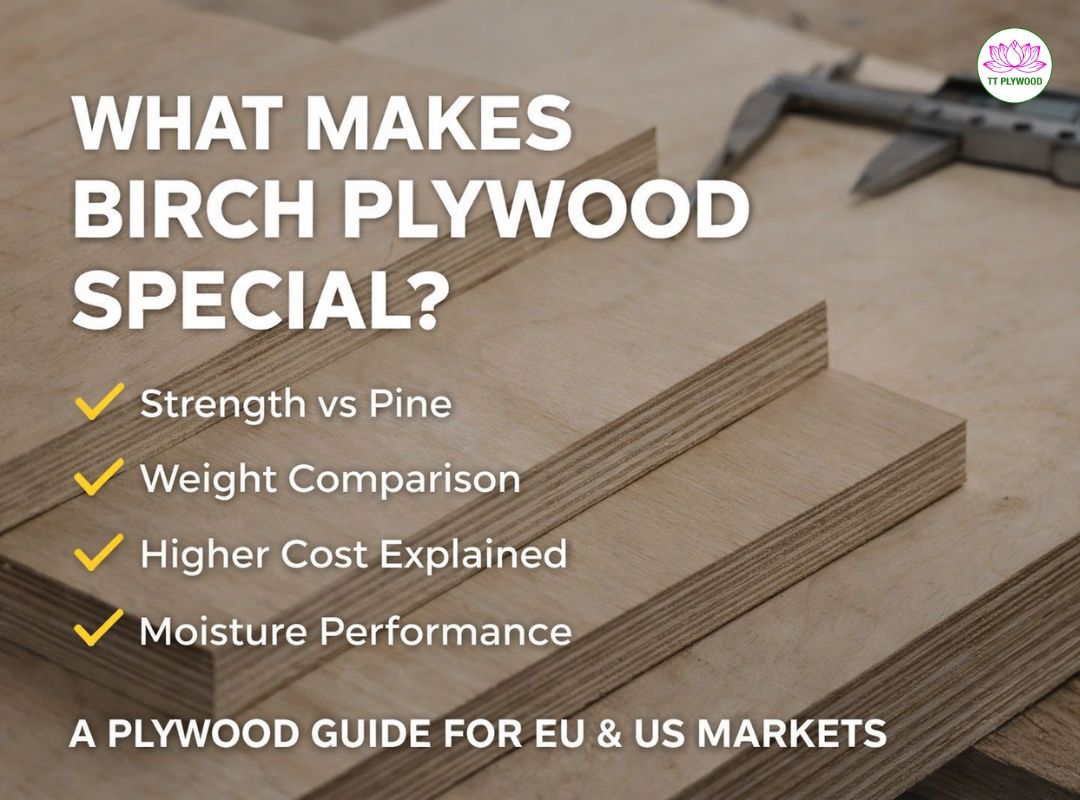
Strength, Weight, Cost, and Performance Explained for EU & US Markets
Birch plywood has long been regarded as a premium panel material across Europe and North America. From Scandinavian furniture manufacturers to U.S. cabinetmakers and industrial packaging users, birch plywood consistently appears in applications where strength, reliability, and surface quality matter most.
Yet many buyers especially those sourcing internationall still ask the same core questions: Is birch plywood really stronger than pine? Is it heavy? Why is it more expensive? What happens if it gets wet?
This article answers those questions clearly and objectively, helping importers, wholesalers, and manufacturers make informed material decisions.
What Is So Special About Birch Plywood?
The defining characteristic of birch plywood lies in its construction quality. Unlike many mixed-hardwood or softwood plywoods, birch plywood is typically produced with all-birch veneers, cross-laminated evenly throughout the panel. This results in a dense, balanced structure with very high mechanical performance.
From a technical perspective, birch plywood offers excellent bending strength, superior screw-holding capacity, and stable dimensional behavior. From a commercial perspective, it delivers consistency sheet after sheet, shipment after shipment which is essential for EU and US buyers operating under strict quality and compliance expectations.
Visually, birch plywood also stands out. The surface is smooth, light-colored, and uniform, making it suitable for both exposed applications and further finishing such as painting, staining, or clear coating.
In short, birch plywood is special because it performs reliably across structural, aesthetic, and regulatory requirements something not all plywood types can claim simultaneously.
Is Birch Plywood Heavy?
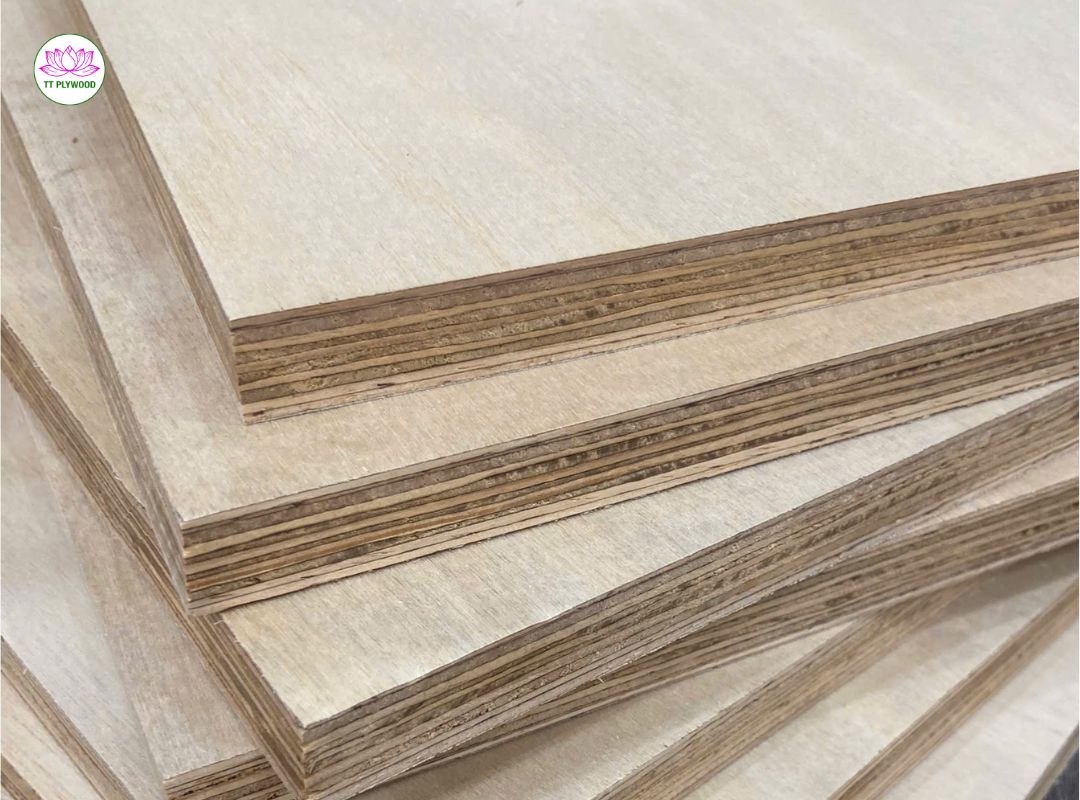
Yes, birch plywood is heavier than most softwood plywoods and that weight is not a drawback, but a performance indicator.
Birch has a naturally higher density than pine or poplar. As a result, birch plywood panels typically range from 650 to 700 kg/m³, depending on thickness, moisture content, and production standard. This density contributes directly to strength, impact resistance, and long-term durability.
In logistics terms, higher density means slightly higher shipping weight per cubic meter. However, for most EU and US buyers, the trade-off is justified: heavier panels translate into fewer defects, longer service life, and reduced risk of failure in demanding applications such as furniture frames, CNC-cut components, and industrial flooring systems.
What Is Stronger: Birch or Pine Plywood?
Between birch and pine plywood, birch plywood is unequivocally stronger in almost all measurable aspects.
This strength advantage comes from both the raw material and the construction method. Birch veneers are denser and harder than pine veneers, and they are usually layered more uniformly. As a result, birch plywood demonstrates higher modulus of rupture (MOR), higher modulus of elasticity (MOE), and superior fastener resistance.
Key structural advantages of birch plywood include:
- Higher load-bearing capacity under bending stress
- Better edge strength for machining and CNC routing
- Reduced risk of delamination under repeated use
Pine plywood, by contrast, is lighter and more economical, making it suitable for construction sheathing or non-visible applications. However, when precision, durability, and mechanical reliability are required, birch plywood remains the preferred option in both EU and US markets.
Why Is Birch Plywood So Expensive?
The higher price of birch plywood is driven by material quality, production complexity, and market expectations rather than branding alone.
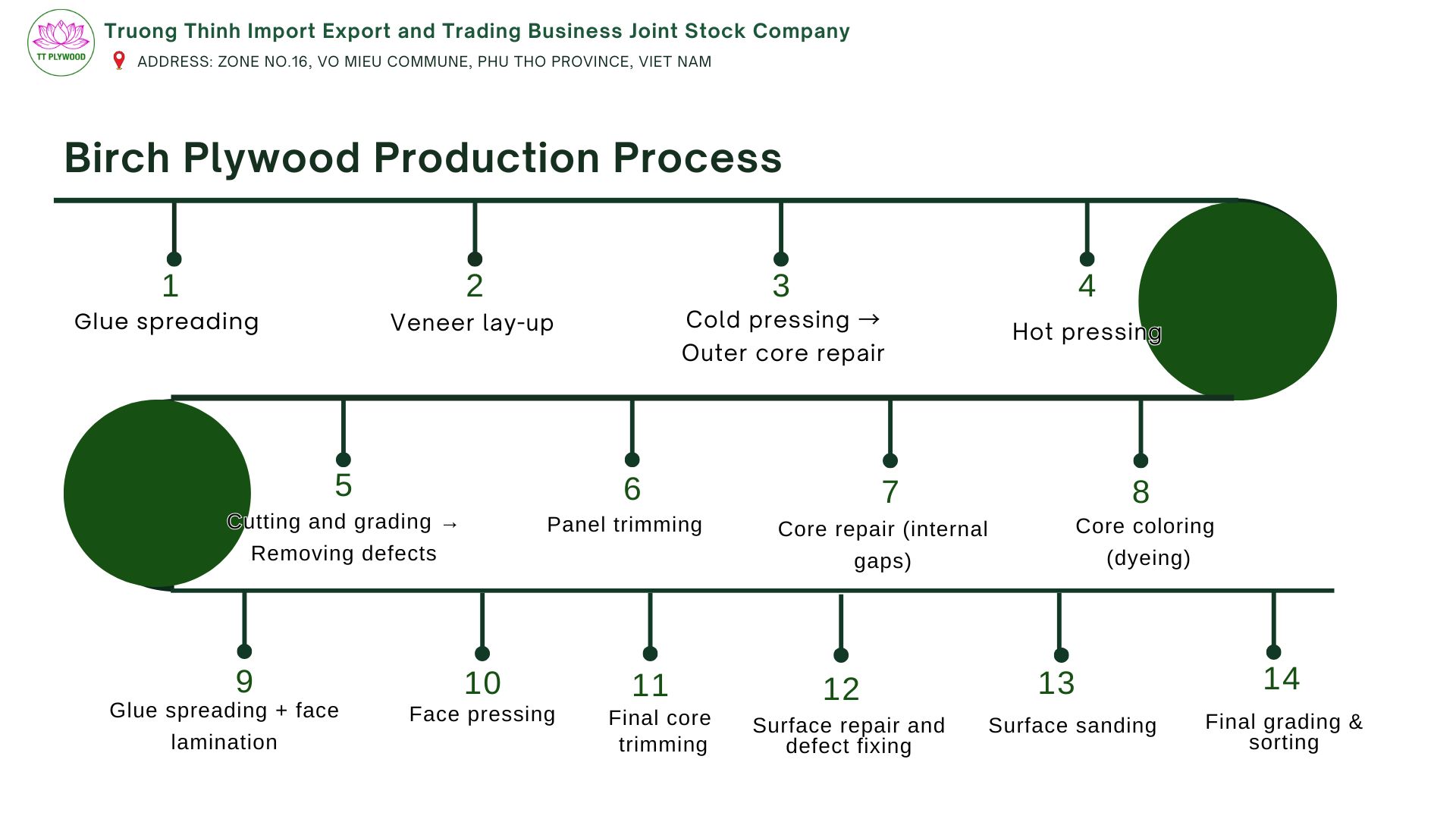
Birch logs suitable for plywood production are primarily sourced from Northern Europe and the Baltic region, where forest management standards are strict and harvesting cycles are longer. This limits raw material availability and raises base costs. In addition, producing all-birch plywood requires tighter veneer grading, more controlled pressing processes, and higher-quality adhesives often compliant with CARB Phase 2, EPA TSCA Title VI, or EN standards.
Another factor is performance consistency. Birch plywood is not designed to compete on lowest price; it competes on predictability. For buyers supplying furniture chains, interior fit-out projects, or industrial clients, material failure can cost far more than the price difference between birch and lower-grade alternatives.
What Type of Plywood Is the Strongest?
When comparing plywood types globally, 100% birch plywood consistently ranks among the strongest commercially available plywood panels.
That said, “strongest” depends on application. Marine plywood, for example, is optimized for moisture resistance rather than pure mechanical strength. Film-faced plywood is designed for reuse cycles in concrete formwork. Birch plywood distinguishes itself by delivering high structural strength combined with surface quality, making it unusually versatile.
For buyers seeking a balance between mechanical performance, machinability, and visual appeal, birch plywood remains one of the most technically complete solutions available on the market today.
What Happens If Birch Plywood Gets Wet?
Birch plywood is not inherently waterproof but it is highly moisture-resistant when produced to the correct standard.
Most commercial birch plywood is bonded with phenol-formaldehyde (WBP) adhesive, which allows the panel to withstand short-term exposure to moisture without delaminating. This makes it suitable for humid indoor environments, covered outdoor use, and applications where occasional water contact may occur.
However, prolonged exposure to standing water or outdoor conditions without edge sealing can still cause surface swelling or discoloration. As with all high-quality plywood products, proper handling, storage, and finishing are essential to preserve performance.
Where Birch Plywood Is Commonly Used

(Birch Plywood For Cabinet)
Birch plywood’s technical profile explains why it is widely specified across professional industries rather than low-cost DIY segments.
Typical applications include:
- Furniture frames, cabinets, and shelving systems
- CNC-cut components and engineered furniture parts
- Vehicle flooring, wall panels, and interior fit-outs
These uses reflect a consistent theme: birch plywood is selected when performance failure is not an option.
Birch Plywood vs. Economical Alternatives
In price-sensitive projects, buyers often compare birch plywood with mixed hardwood or softwood panels. While these alternatives can meet basic requirements, they often lack the uniform density, bonding strength, and surface consistency expected in EU and US supply chains.
For buyers supplying regulated markets or premium end-users, birch plywood reduces downstream risk fewer complaints, fewer returns, and better long-term customer satisfaction.
If you are evaluating different plywood grades, you may find it useful to compare birch plywood with other engineered wood solutions discussed in TT Plywood’s technical resources
FAQ – Frequently Asked Questions About Birch Plywood
Is birch plywood suitable for outdoor use?
Birch plywood can handle moisture when bonded with WBP glue, but it is not designed for permanent outdoor exposure without proper sealing or coating.
Does birch plywood warp easily?
No. Thanks to its balanced veneer structure, birch plywood has excellent dimensional stability compared to many mixed-core panels.
Is birch plywood environmentally compliant for EU and US imports?
Yes, when sourced responsibly. Most export-grade birch plywood is available with FSC certification and complies with EUTR/EUDR and CARB Phase 2 requirements.
Can birch plywood be CNC machined?
Absolutely. Its uniform density and strong edges make it one of the best plywood options for CNC processing.
If you are sourcing birch plywood for EU or US markets and need a supplier who understands technical standards, certifications, and export requirements, TT Plywood is ready to support you.
📩 Contact our team today to request specifications, samples, or a tailored quotation so you can choose the right birch plywood for your application with confidence.
References
European Panel Federation (2023) Plywood technical properties and applications. Brussels: EPF.
Forest Products Laboratory (2021) Wood handbook: Wood as an engineering material. Madison, WI: U.S. Department of Agriculture.
EN 636:2012 (2012) Plywood – Specifications. European Committee for Standardization (CEN).


