



-
-
-
Total payment:
-




Why Is Concrete Sticking to Film-Faced Plywood?
Posted by Hoàng Anh Tuấn at 19/10/2026

Concrete left on a formwork panel after stripping means extra cleaning and can damage the film, mark the concrete surface and delay preparation for the next pour.
The cause is not always poor-quality plywood. Uneven release-agent coverage, hardened residue, damaged facing and stripping practices can all contribute. Before replacing panels or applying more oil, check where the concrete is sticking and what condition the surface is in.
This guide explains how to identify the problem, prevent it from recurring and decide whether a panel is suitable for reuse.
Why Does Concrete Stick to Film-Faced Plywood?
Missing or Uneven Release-Agent Coverage
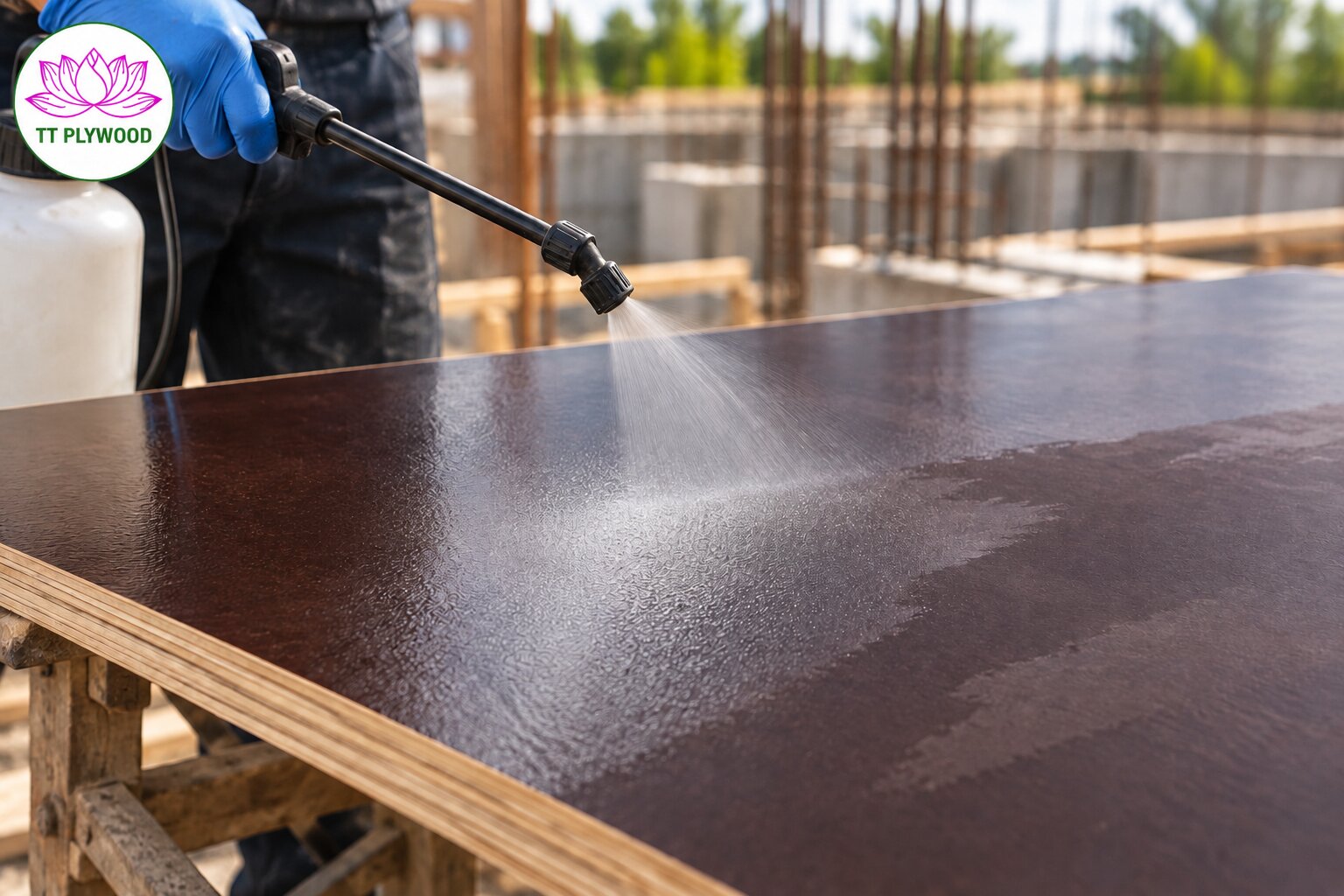
A smooth film surface helps concrete release, but it does not automatically eliminate the need for a release agent.
Conventional film-faced plywood generally needs a compatible product applied according to the manufacturers’ instructions. Missed areas leave parts of the facing unprotected. Sika recommends uniform spraying to avoid gaps and uncoated patches.
Check the instructions for the actual panel. Some specialised facings have different release-agent requirements, so the same preparation method should not be assumed suitable for every coated sheet.
Concrete Residue from Previous Pours
When deposits remain on the face, fresh concrete contacts old residue instead of a clean, prepared overlay. Repeated use without proper cleaning creates an increasingly uneven working surface.
Waiting until deposits fully harden makes removal more difficult. WISA warns that delayed cleaning can damage the panel when cured concrete is removed.
Scratched, Worn or Peeling Film
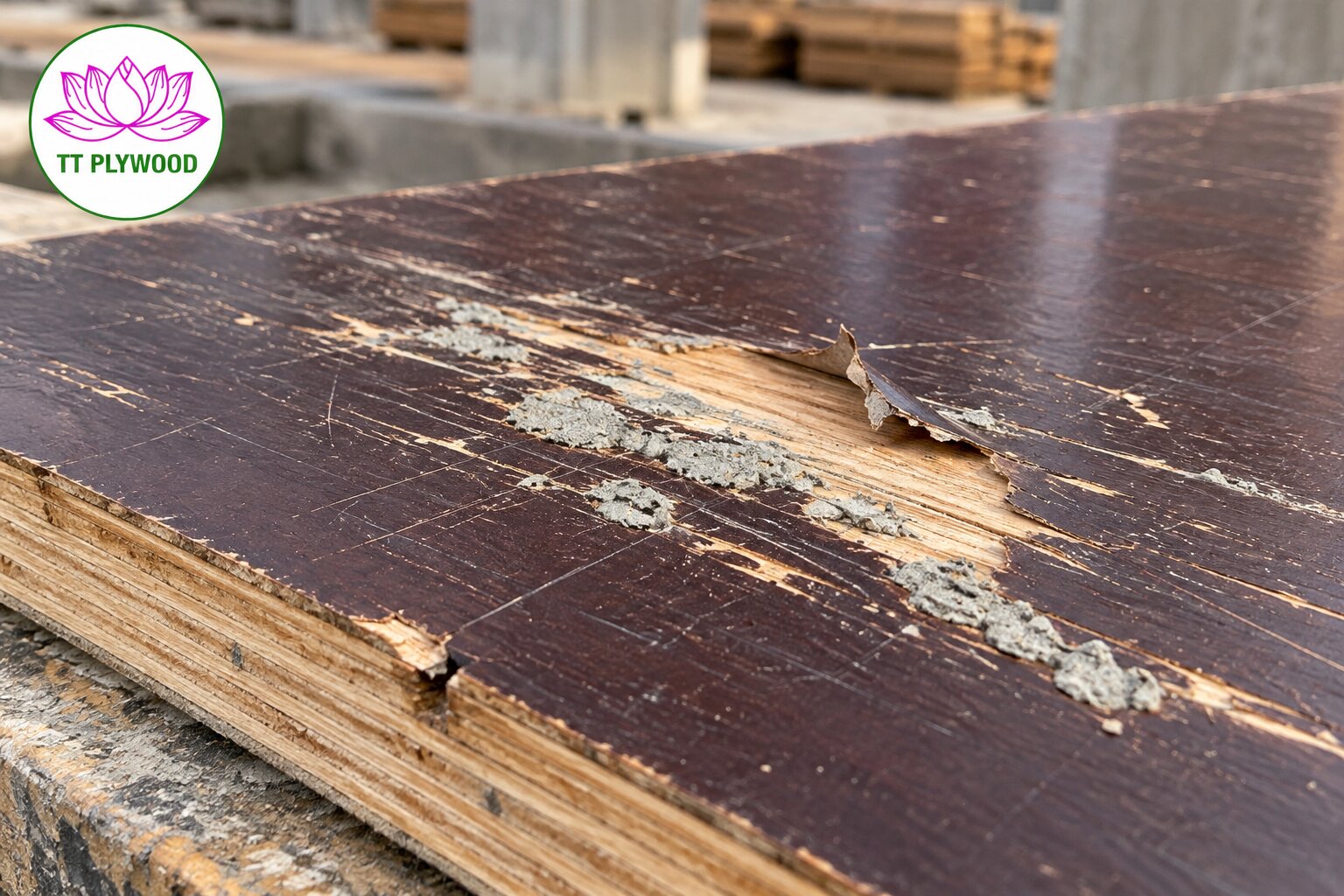
Look for sticking that follows scratches, exposed veneer or lifted sections of film. Damage may have developed during cutting, stacking, stripping or cleaning.
A panel that released well during earlier pours can perform differently once its facing is damaged. If the veneer layers are separating, investigate plywood delamination before considering further use
Problems During Stripping
Concrete surface damage is not always caused by excessive adhesion. Stripping before the concrete has sufficient strength can also damage the formed surface.
Follow the approved removal procedure and strength requirements for the project. ACI’s formwork guidance relates stripping time to concrete strength; a fixed waiting period is not suitable for every mix, element or site condition.
How to Identify and Fix the Problem
Inspect the panel and its corresponding concrete surface before removing all the evidence. Photograph affected areas and record the panel batch, release agent and preparation method.
Use the following observations to guide the investigation. A visible pattern suggests what to check, but does not prove the cause on its own.
|
What you notice |
Possible cause |
What to check or change |
|
Isolated patches on intact film |
Missed coverage or contamination |
Check the nozzle, spray pattern and surface preparation |
|
Sticking along scratches or exposed wood |
Damaged overlay |
Inspect handling practices, cleaning tools and previous repairs |
|
Deposits worsening after successive pours |
Incomplete cleaning |
Remove existing residue before preparing the next pour |
|
Damage around joints and holes |
Grout leakage or damaged details |
Inspect joint seals, drilled holes and cut edges |
|
Concrete tearing while the film remains intact |
Insufficient concrete strength or stripping problems |
Review strength records and the approved removal procedure |
Clean Before Applying Release Agent
Remove deposits promptly after stripping, using cleaning methods approved for the panel. WISA recommends plastic or nylon tools for its formwork plywood to avoid damaging the surface.
Do not apply release agent over hardened concrete or loose debris. Once the face is clean, inspect it for damage that was hidden beneath the residue.
Apply a Thin, Continuous Layer
Select a release agent compatible with the overlay and the required concrete finish. Follow its instructions for surface condition, coverage and any waiting time before pouring.
More product is not necessarily better. Doka recommends an extremely thin, even layer and warns that excessive application can spoil the concrete finish. Remove runs or excess product as directed by the manufacturer.
Check corners and repaired areas carefully. When changing products, trial the proposed system on a small, non-critical area before wider use.
Protect Edges, Holes and Joints
Cutting and drilling expose areas that need renewed protection. Seal them with a suitable coating, and detail panel joints to minimise grout leakage.
WISA identifies cut-edge protection, tie-bolt holes and joint sealing as important parts of form preparation.
After cleaning, store panels flat on level supports, off the ground and protected from prolonged moisture and direct sunlight. Keep sharp debris away from the faces during stacking.
When Should Formwork Plywood Be Replaced?
Removable deposits and damaged panels require different responses. Concrete residue alone does not necessarily mean a sheet has reached the end of its service life.
When Cleaning or Local Repair May Be Enough
A panel with intact film may remain suitable after approved cleaning and preparation. Minor local repairs may also be possible, depending on the product and intended application.
However, a repaired face may produce a different concrete appearance. WISA notes that repairs can remain visible in the finished surface, even when carefully completed.
A repair acceptable for concealed concrete may therefore be unsuitable for an exposed architectural finish.
When to Set the Panel Aside
Set aside panels showing extensive peeling, delamination, significant deformation or suspected loss of strength for assessment. Extra release agent cannot restore damaged veneers or bonding.
When ordering replacements, confirm the facing type, core construction, bonding performance, thickness, relevant design data and recommended maintenance. Ask what conditions support any claimed reuse performance rather than selecting only by price or film colour.
Frequently Asked Questions
Does New Film-Faced Plywood Need Release Agent?
Conventional film-faced panels generally require a suitable release agent before first use. Specialised products may have different instructions, so confirm the requirements for the specific facing.
Will Applying More Release Agent Stop Concrete Sticking?
Not necessarily. Check cleanliness, coverage and film condition first. Excess product can affect the concrete finish without correcting damaged facing.
Does Concrete Sticking Mean the Plywood Is Poor Quality?
No. Material defects are one possibility, but preparation, cleaning and stripping also need investigation. Compare affected panels and site records before deciding whether the problem comes from the material or its use.
Conclusion
When concrete sticks to film-faced plywood, start by checking the pattern of residue, the condition of the overlay and the preparation method.
Clean promptly, apply a compatible release agent evenly, protect exposed details and follow the approved stripping procedure. Replace unsuitable panels when necessary, while correcting the handling or preparation problems that could damage the next batch.
References
American Concrete Institute (2014) Formwork for concrete. 8th edn. Available at: https://www.concrete.org/store/productdetail.aspx?ItemID=SP48TH&Language=English&Units=US_Units (Accessed: 15 October 2026).
Doka (2018) Large-area formwork Top 50 S: User information. Available at: https://direct.doka.com/_ext/downloads/downloadcenter/999762014_2018_06_online.pdf (Accessed: 15 October 2026).
Doka (n.d.) Multi-ply formwork sheets. Available at: https://www.doka.com/me/system-groups/doka-system-components/formwork-sheets/multi-ply-formwork-sheets/index (Accessed: 15 October 2026).
Sika (n.d.) Sika® Form Release 8000. Available at: https://usa.sika.com/en/construction/concrete/concrete-accessories/architectural-concrete-formliners/sika-form-release8000.html (Accessed: 15 October 2026).
UPM Plywood (2025) Site guidance note. Available at: https://www.wisaplywood.com/siteassets/documents/brochures/site-guidance-note-en.pdf.pdf (Accessed: 15 October 2026).
UPM Plywood (n.d.) Good site practice. Available at: https://www.wisaplywood.com/siteassets/documents/brochures/wisa_concrete-forming-plywood-en.pdf (Accessed: 15 October 2026).


